Play-Based Learning Activities: The What, The Why And The How
Key Points
- Play-based learning activities combine fun, curiosity, and discovery to build lifelong skills.
- Children learn best through hands-on, open-ended play experiences.
- Both child-led and guided play encourage cognitive, social, and emotional growth.
- Parents can support learning at home with simple, everyday play setups.
- The long-term benefits include confidence, creativity, and adaptability.
Have you ever watched your child build a tower, proudly step back, and then knock it straight down? It may look like simple fun, but moments like these are filled with learning.
This is play-based learning in action – a way of learning that blends curiosity, discovery, and hands-on exploration. Through these everyday play moments, children strengthen their thinking skills, build confidence, and develop the social and emotional tools they’ll use throughout life.
What Is Play-Based Learning Activities?
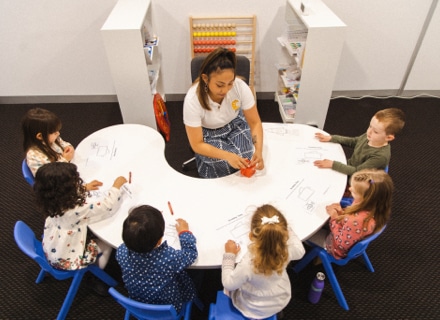
Play-based learning is a child-centred approach where children explore, experiment, and discover new ideas through meaningful play. It includes two key types:
- Free play (unstructured play): Child-led play where children choose what to do and how to do it. This type of play builds creativity, confidence, and independence.
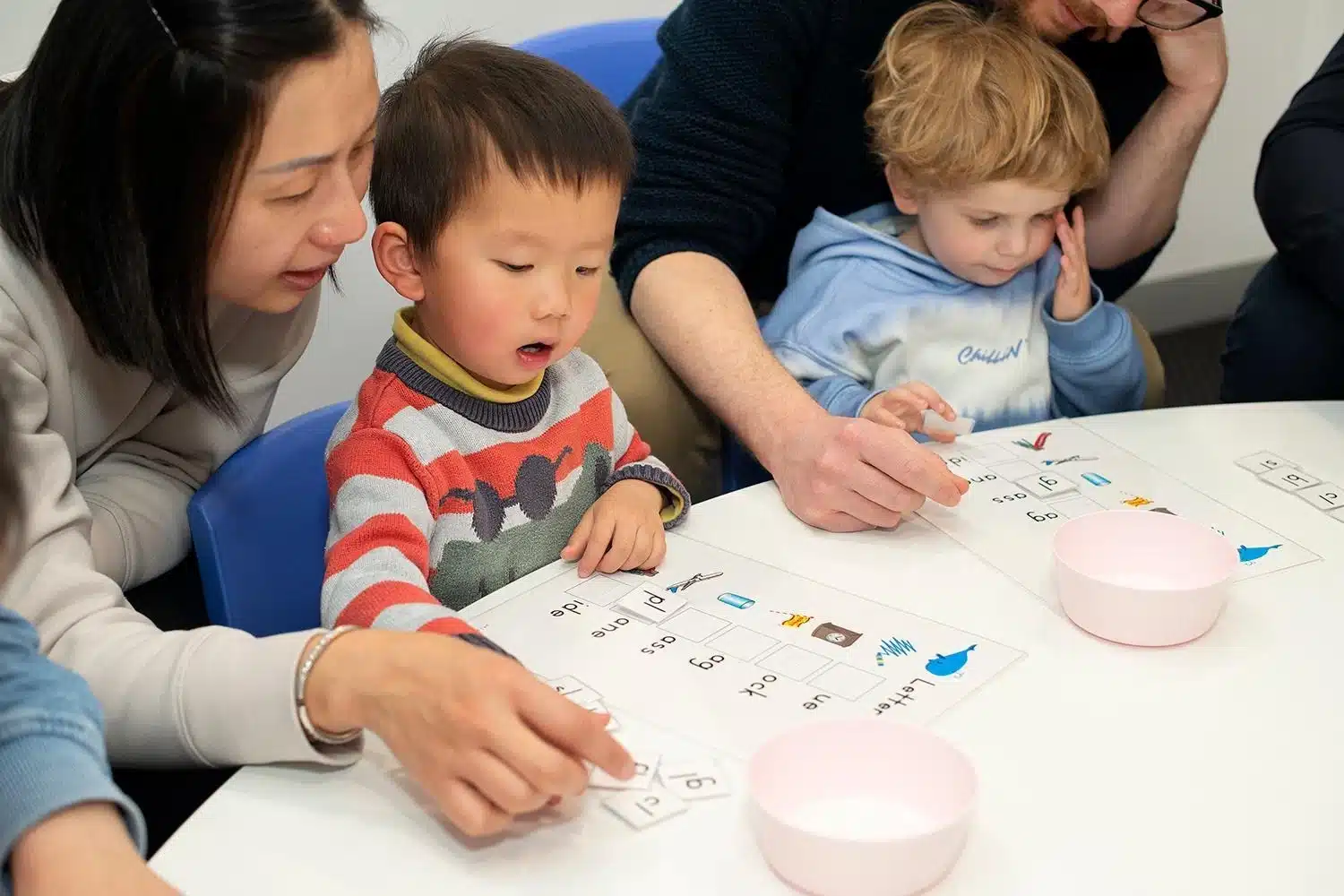
- Guided play (adult-supported play): Play that is still child-led but gently supported by an adult. Parents or educators set up inviting activities, ask open-ended questions, or introduce simple challenges that help children think more deeply.
Both forms of play work together. Free play lets children explore at their own pace, while guided play helps strengthen specific skills without taking away the joy of discovery. Play-based learning activities have amazing outcomes for early learners – regardless of your approach.
Key Definitions in Play
This “Play Spectrum” shows that learning doesn’t need to be rigid or chaotic. Every kind of play has value when curiosity drives it.
| Type of Play | Who Leads It? | Description |
|---|---|---|
| Free Play | Child | Completely child-initiated; imaginative or spontaneous play. |
| Guided Play | Shared | Adult provides materials or prompts but allows child to explore. |
| Child-Initiated Play | Child with gentle support | The child begins the activity; adult helps extend it. |
| Teacher/Parent-Facilitated Play | Adult | Structured setup, but flexible enough for exploration. |
Play-Based Learning vs. Traditional Teaching
In traditional classrooms, learning often looks like sitting still and completing tasks. In contrast, play-based learning for preschoolers involves movement, exploration, and interaction.
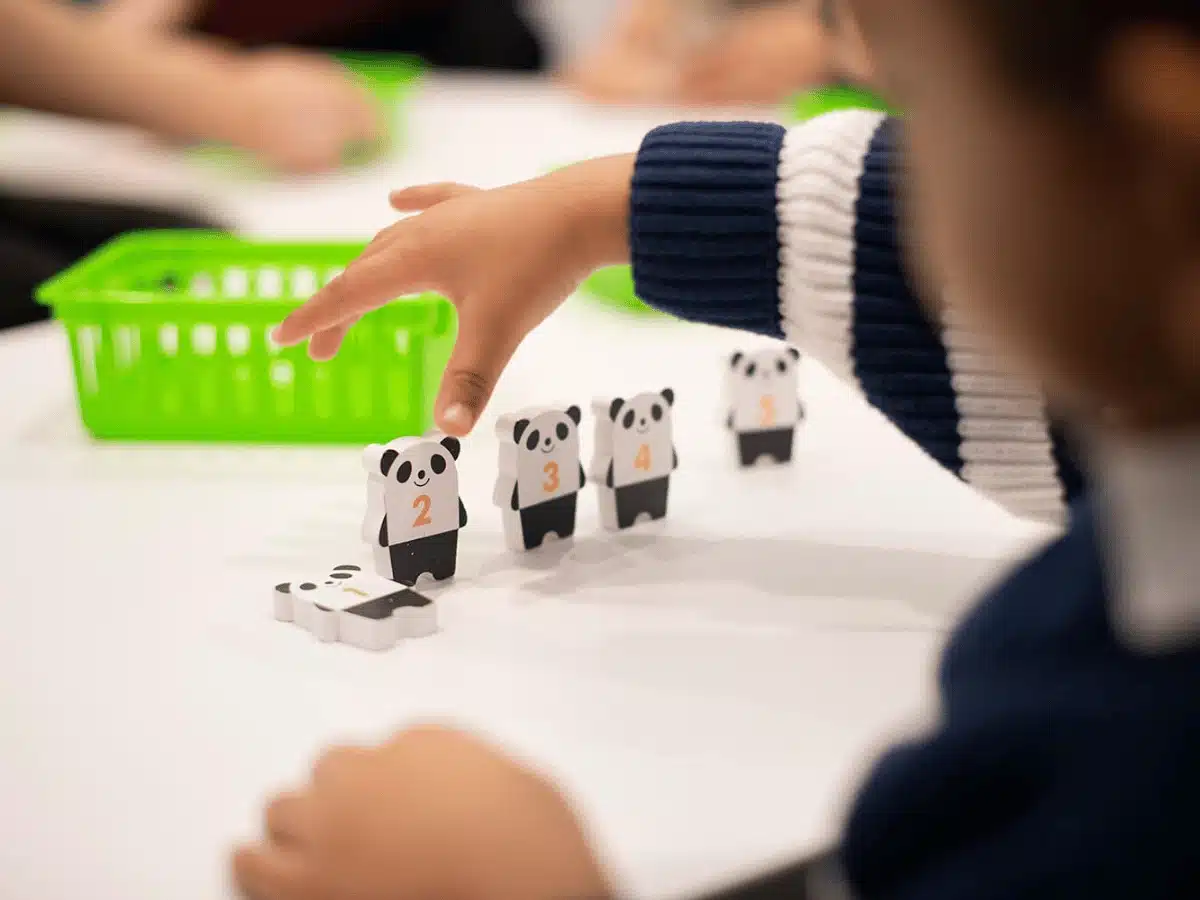
Imagine two children learning numbers. One traces digits on a worksheet; the other counts toy cars while lining them up by colour. Both are learning, but the second child is also practising classification and problem-solving.
Traditional teaching tends to be more rigid, while play-based learning nurtures holistic development.
Why Play-Based Learning Works (The Research)
Play is how children make sense of the world. Research consistently shows that it builds the foundations for lifelong learning – boosting focus, motivation, and brain development.
Did you know? Studies have found that children in guided play settings often learn concepts faster than those taught through direct instruction alone (Source: Gowrie NSW).
Cognitive and Academic Growth
Through play, children experiment with cause and effect, categorise objects, and solve problems creatively. Building a tower teaches balance and planning; pretend cooking introduces sequencing and early maths.
Early learning research also shows that children engaged in play-based learning develop stronger attention spans, memory skills, and abstract thinking – learning about size, weight, and numbers through real-life experience instead of rote memorisation.
In short, cognitive development through play turns everyday fun into brain training.
Social-Emotional and Self-Regulation Skills
Play offers a natural setting for practising social skills. During pretend play, children negotiate roles, take turns, and express feelings. When conflicts arise, they learn empathy and problem-solving.
Educational frameworks in Australia emphasise that play-based learning helps children develop resilience, independence, and confidence in social settings. It also nurtures emotional regulation – understanding frustration, excitement, or disappointment in safe, familiar contexts.
The Adult’s Role: Support, Don’t Direct
In guided play, adults create opportunities for exploration but allow the child’s ideas to lead. This approach respects the child’s autonomy while subtly steering learning towards meaningful outcomes.
Play-Based Learning in Practice: Home & Preschool
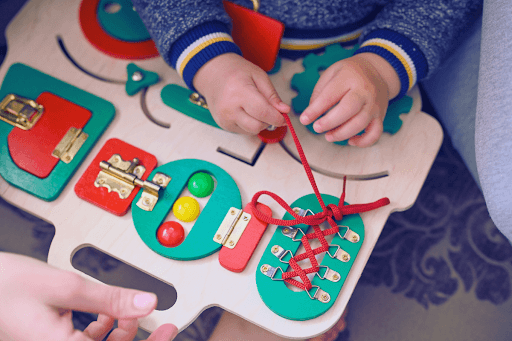
A play-rich environment can be created with simple, everyday objects.
Setting Up a Play-Rich Environment
- Rotate toys to keep interest fresh.
- Include open-ended materials like blocks, scarves, and recycled boxes.
- Create small “zones” for pretend play, building, and art.
- Follow your child’s current interests – space, animals, food, or movement.
Activities by Age
Ages 1-2:
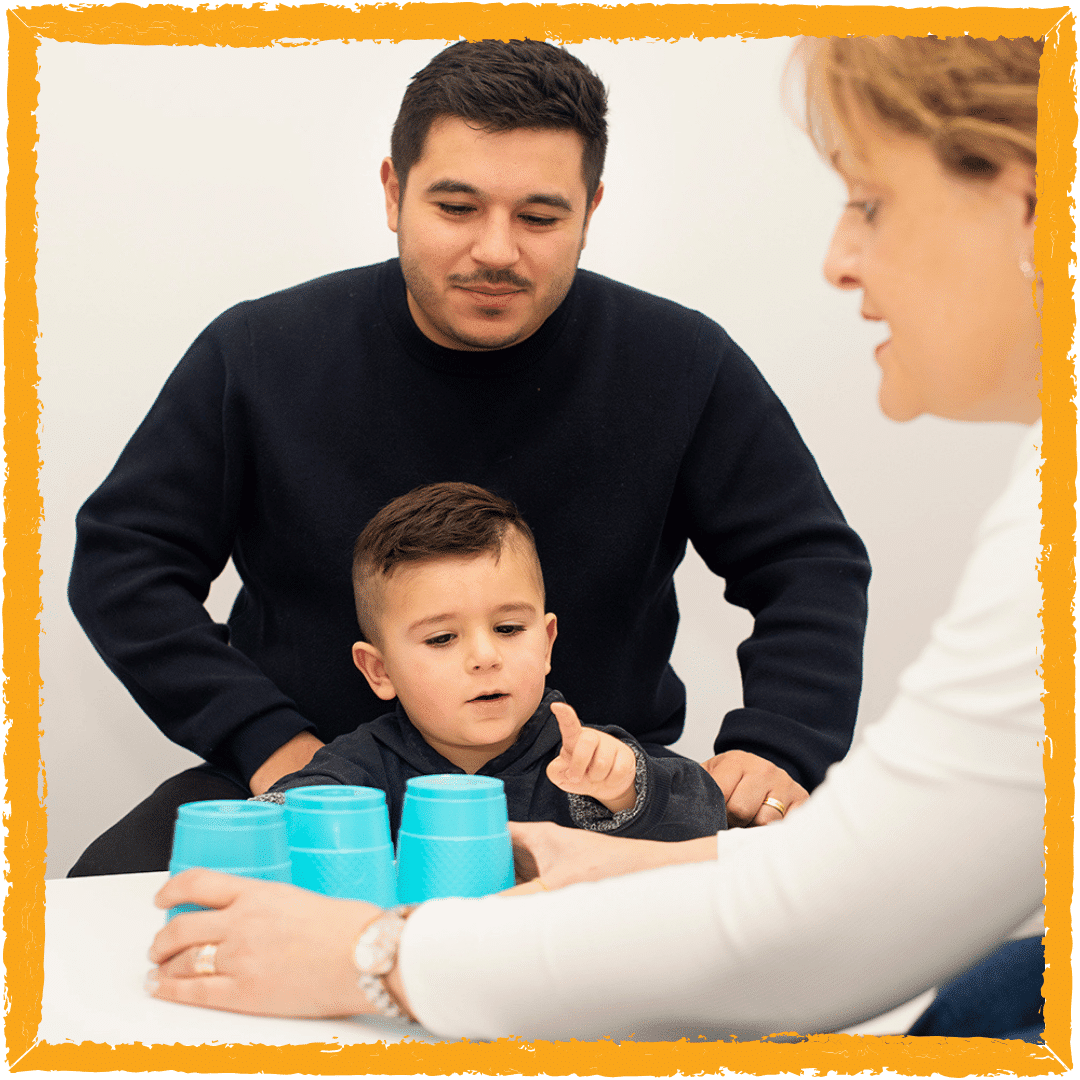
- Stack cups and knock them down.
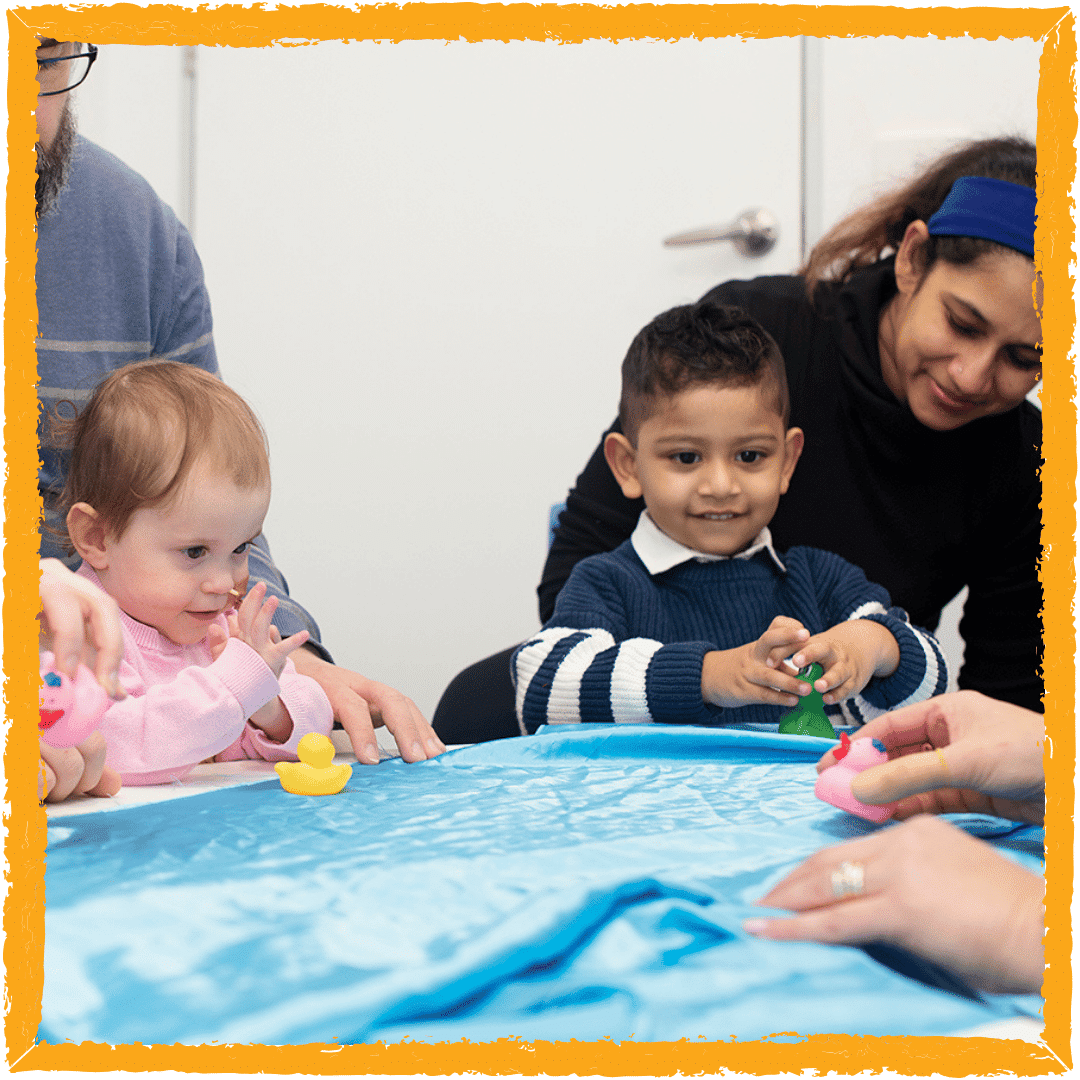
- Sensory play with water, sand, or soft fabrics.
Ages 3-5:
- Pretend shop, kitchen, or animal doctor.
- Storytelling with puppets or soft toys.
- Counting snacks, sorting buttons, or matching socks.
Ages 5-7:
- Board games to practise turn-taking and patience.
- Building challenges using Lego or recycled boxes.
- Writing signs or menus for pretend play.
Choosing the Right Preschool
When looking for a preschool curriculum based on play, observe the environment:
- Are children active, engaged, and curious?
- Do teachers join in play rather than simply instruct?
- Are activities open-ended and responsive to children’s interests?
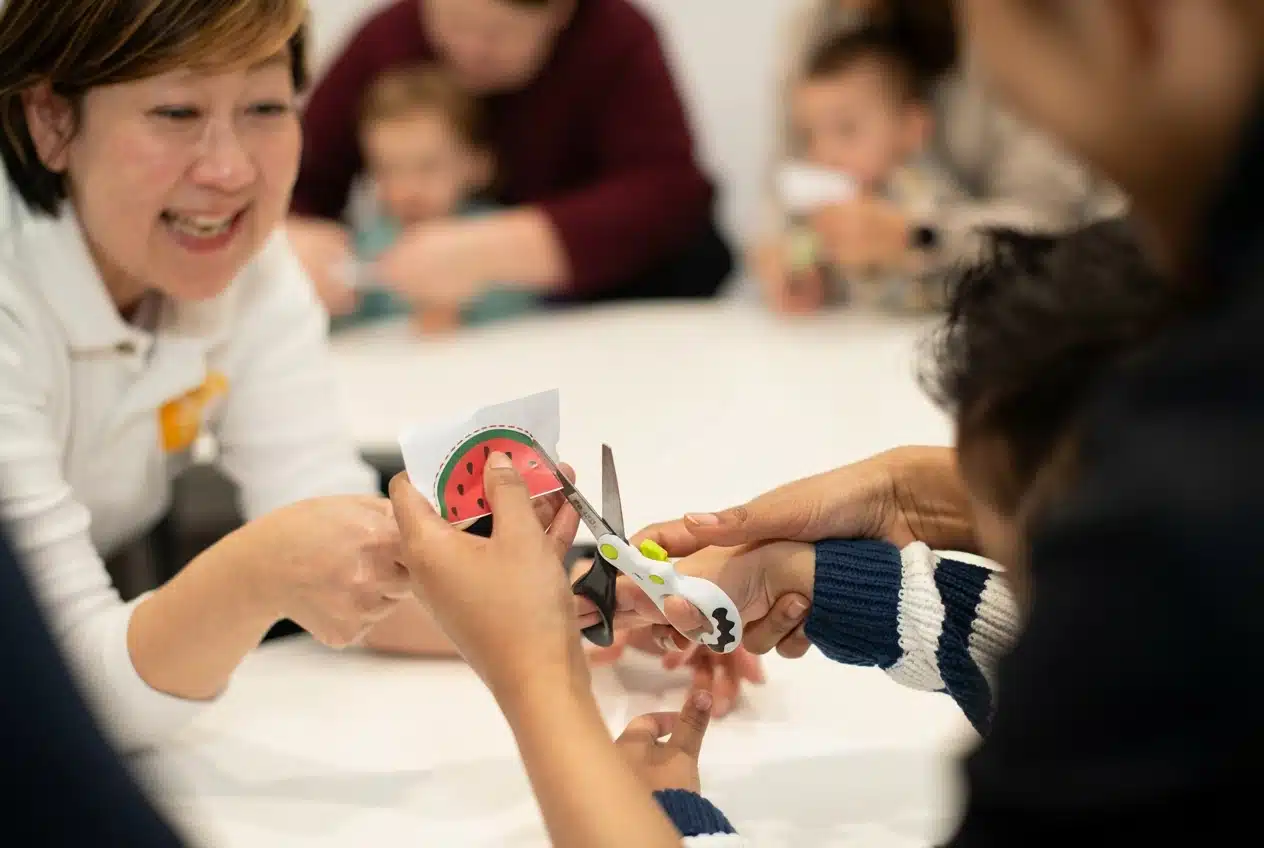
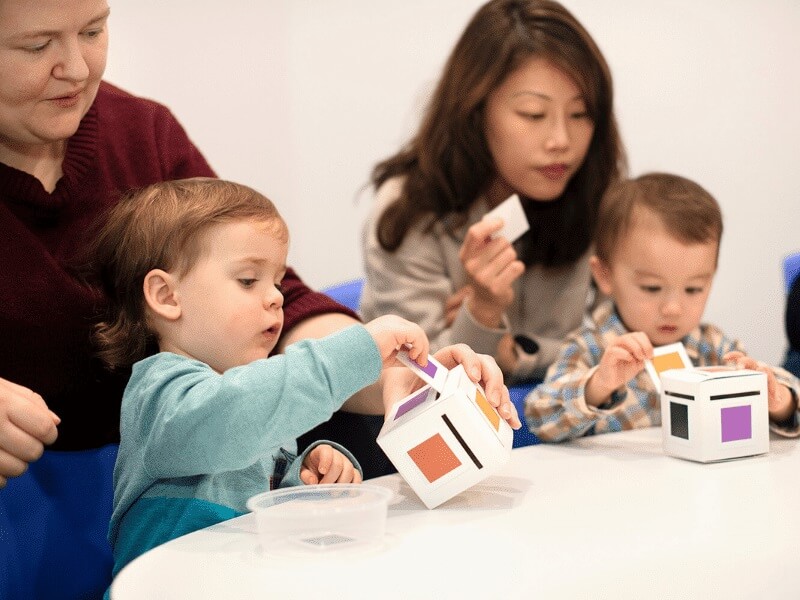
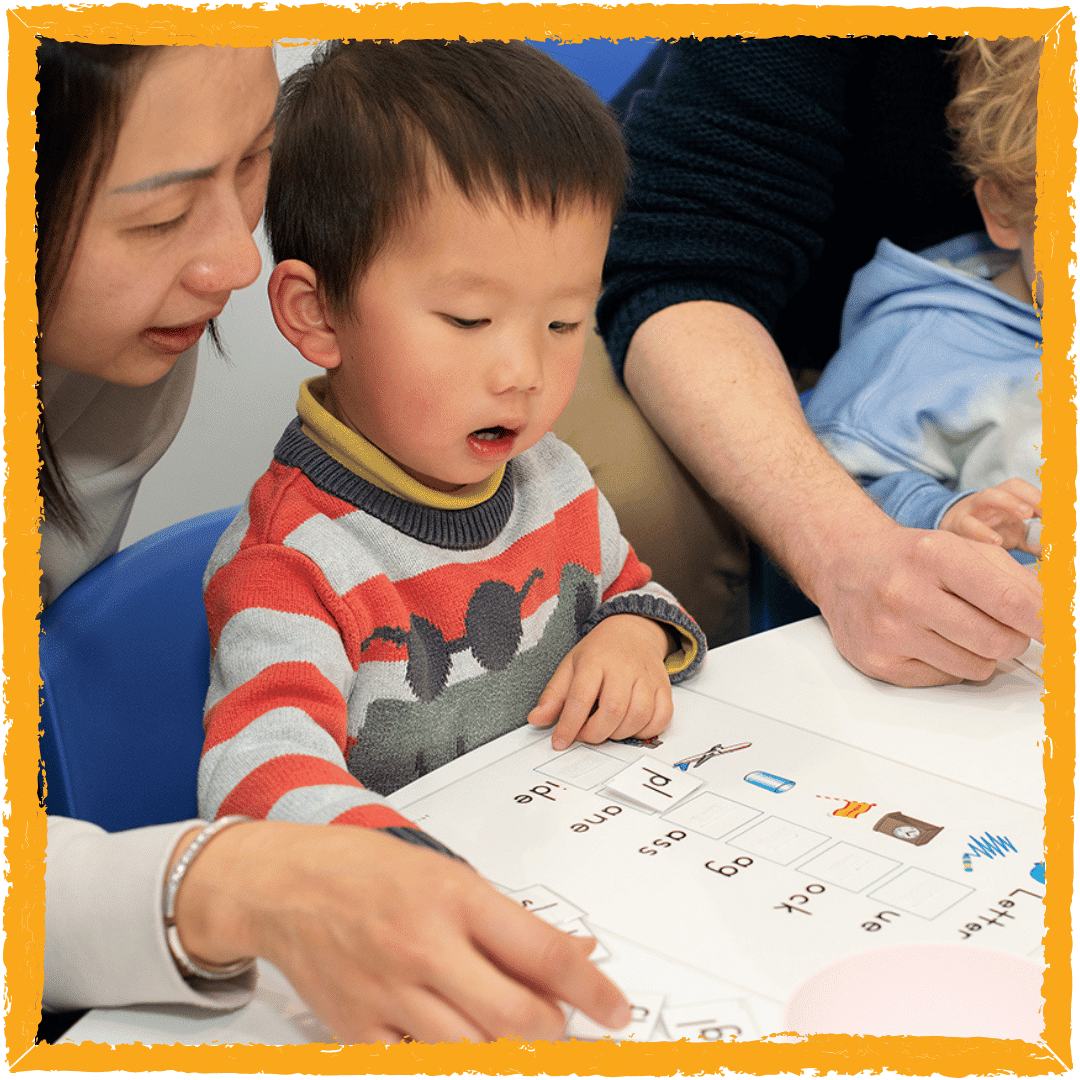
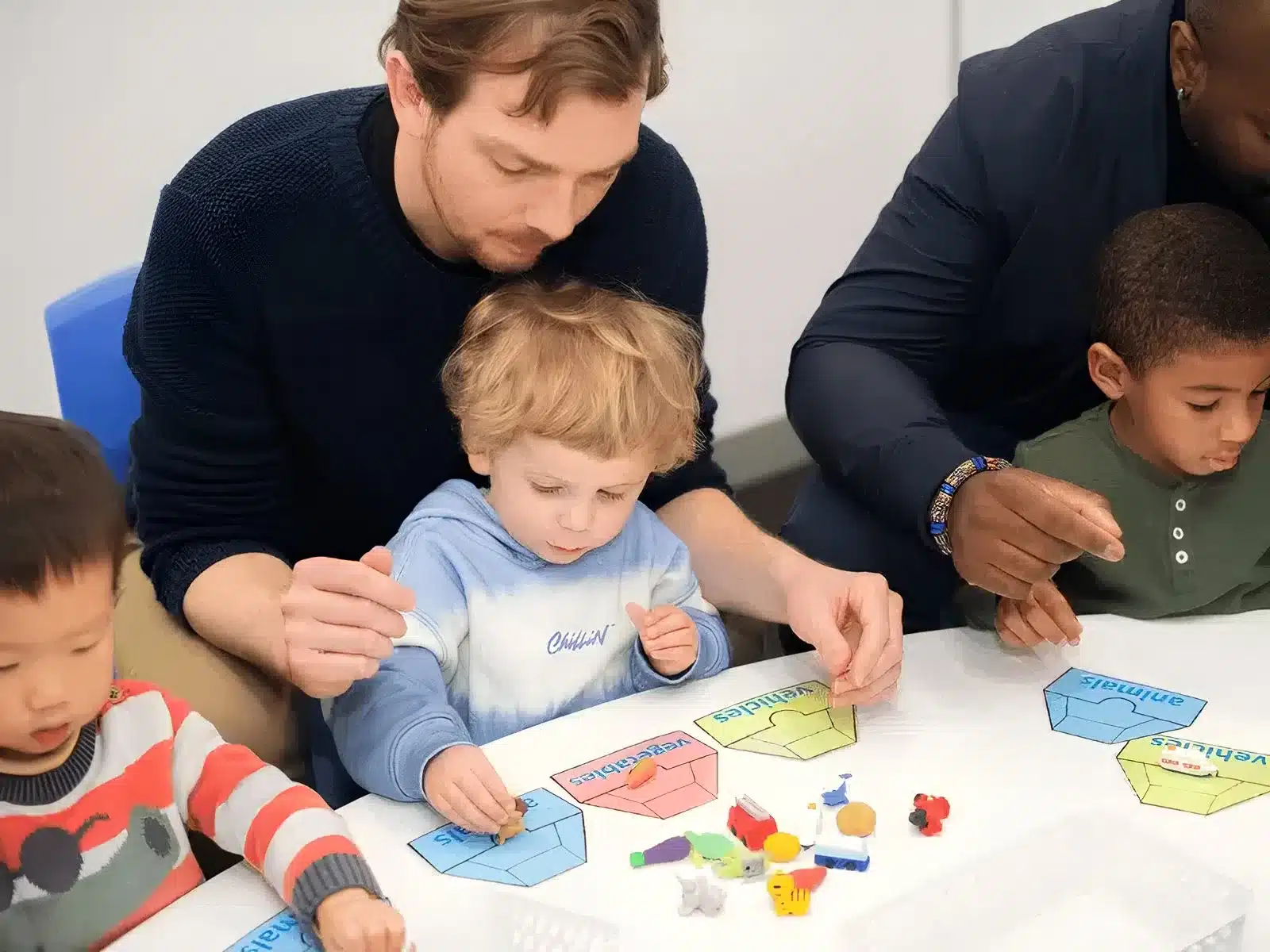
Image by Shichida Australia: A preschooler practises cutting rounded edges, guided by both his parent and his Shichida teacher.
Common Myths and Misconceptions
“It’s just playing.”
Play-based learning is structured through intention. Children are developing essential literacy, numeracy, and social skills while having fun.
“It doesn’t prepare children for school.”
Actually, it does the opposite – it builds the focus, motivation, and emotional control needed for academic success.
“Children need direction to learn.”
Guidance matters, but play gives children ownership of their learning. Adults act as co-explorers, not taskmasters.
Bringing Play Into Everyday Life
Learning doesn’t stop when structured play ends. You can weave play-based moments into daily routines:
✅ Cooking: Let your child count ingredients or mix colours in icing.
✅ Laundry: Ask them to sort clothes by colour or size.
✅ Shopping: Encourage spotting letters or prices on shelves.
✅ Outdoor walks: Collect leaves, stones, or sticks and discuss patterns.
✅ Storytime: Ask, “What do you think happens next?”
Overcoming Real-World Challenges
Short on time? Even five minutes of imaginative play can be meaningful. Turn chores into games, race to tidy up or guess the next step in dinner prep.
Too much screen time? Replace passive watching with interactive digital play, apps that promote problem-solving, storytelling, or creativity.
Limited space? A small corner with a basket of open-ended toys is enough. Play is about mindset, not materials.
Long-Term Payoffs of Play
Children who learn through play grow into adaptable thinkers and confident communicators. Play strengthens curiosity, resilience, and problem-solving, the very skills needed for the 21st-century world.
Children who engage in purposeful, guided play often show stronger collaboration, persistence, and creative thinking – abilities that shape not just school readiness but lifelong success.
Summary & Next Steps
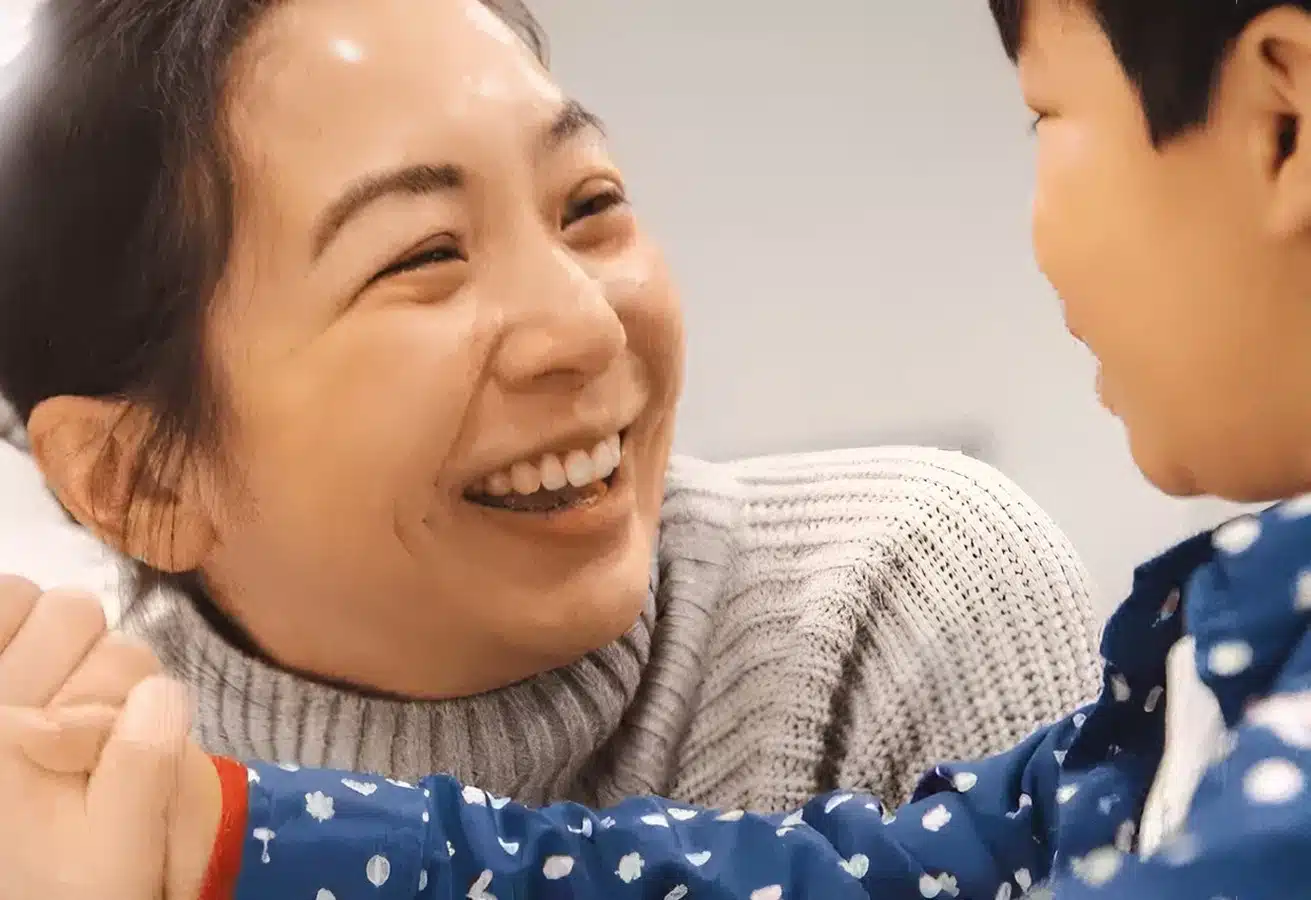
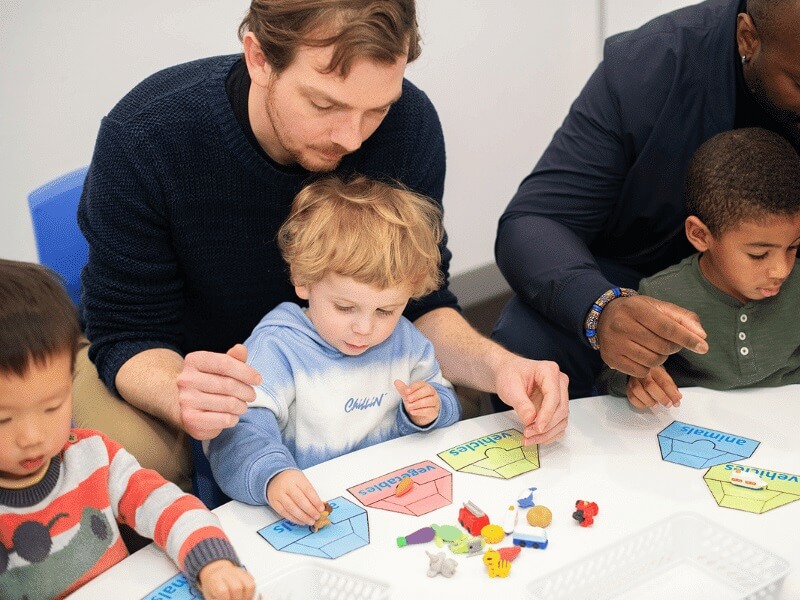
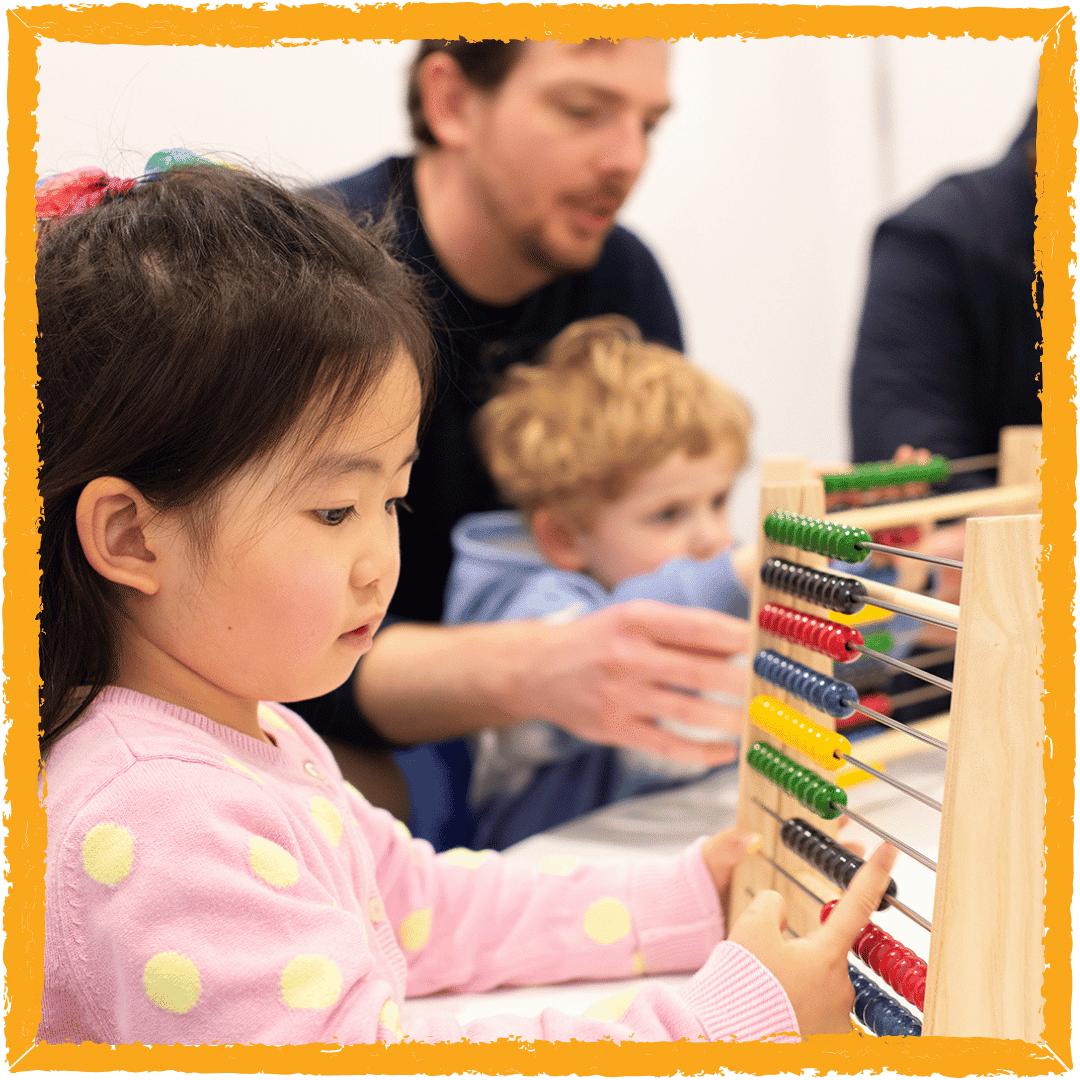
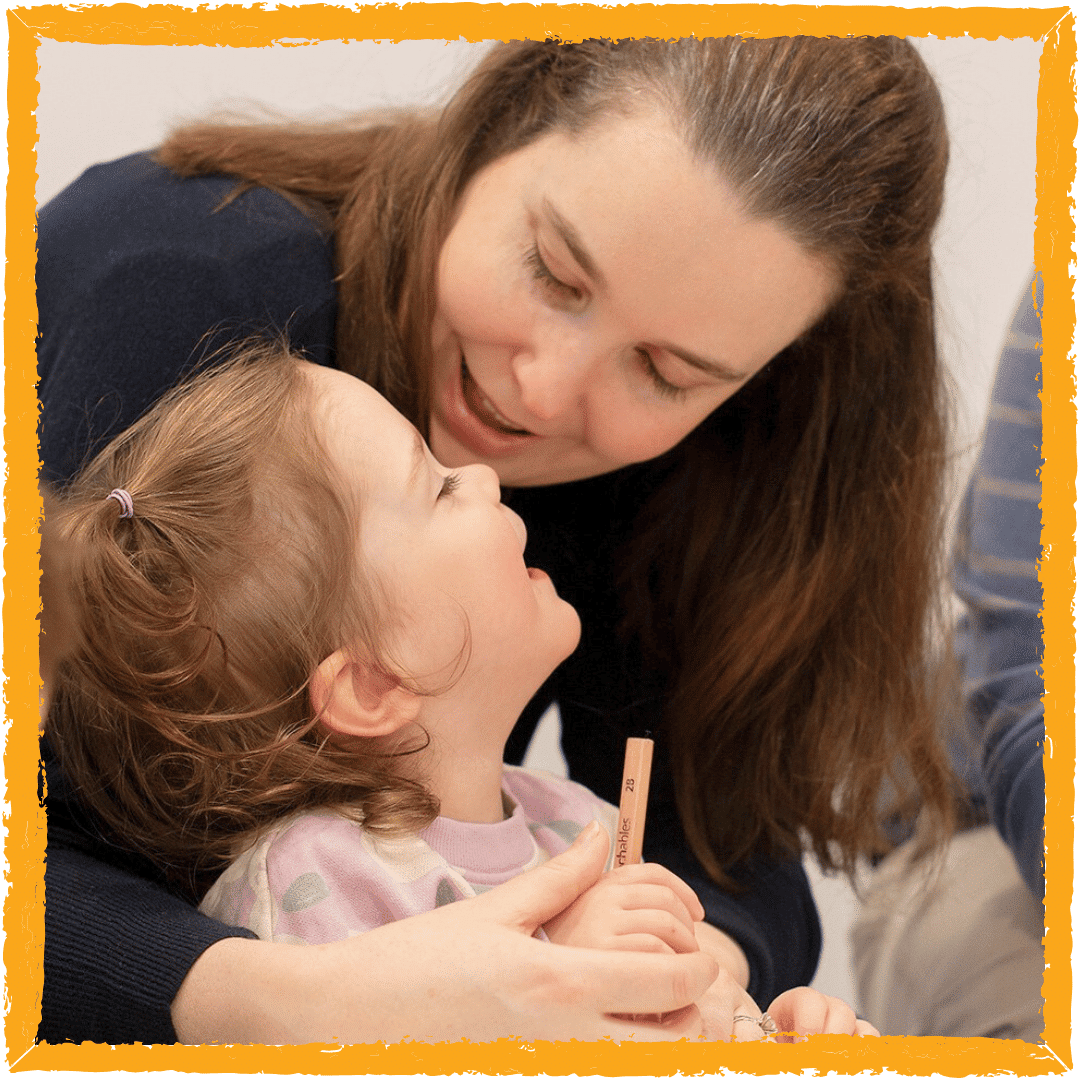
Image by Shichida Australia: Celebrating small wins during play helps children build confidence, motivation, and a positive attitude towards learning. Here, a mum tells her son she’s proud of his efforts during a Shichida play-based learning class.
Actionable Steps for Parents:
- Set aside daily time for uninterrupted play.
- Observe your child’s interests and follow their lead.
- Add open-ended materials like blocks, art supplies, and nature finds.
- Ask questions that encourage thinking instead of giving answers.
- Celebrate small discoveries – learning hides in every playful moment.
Want more play-based ideas? Explore Shichida’s free early learning activity resources and discover how guided play nurtures right-brain development, creativity, and memory.
Book a Trial Class at Shichida Australia to experience how play becomes the foundation for lifelong learning!
FAQs: Play-Based Learning Activities
It’s a structured yet flexible approach where play is intentionally used to teach concepts. Children explore freely, but adults guide learning subtly through questions and environment setup.
From birth onwards! Infants explore through sensory play, while toddlers and preschoolers engage in imaginative and social play.
No. Play-based learning strengthens foundational academic skills in ways that are more meaningful and lasting than rote methods.
Focus on quality, not quantity. Use small play boxes, rotate toys, and integrate learning moments into daily routines.
Seek an environment where teachers participate in play, and learning feels joyful rather than rigid.
Yes. Shichida’s classes blend guided play with short, purposeful activities that strengthen memory, numeracy, creativity, and problem-solving. Children learn through hands-on experiences, parent–child bonding, and fun challenges that feel like play while still building important skills.
Play-based learning activities are hands-on, engaging experiences – such as puzzles, pretend play, sensory exploration, building, art, and movement games – that help children develop essential cognitive, social, emotional, and physical skills through play. These activities encourage curiosity, problem-solving, creativity and focus, making learning feel natural and enjoyable. Programs like Shichida use structured play-based learning activities to strengthen memory, attention, early literacy, numeracy and emotional regulation in young children.