When Do Babies See Colour? Understanding Infant Visual Development
Parents often wonder when do babies see colour? Babies begin to see colour between one and three months, starting with red and green before moving to a full spectrum by the time they’re five months old. While newborns don’t see the world in high definition yet, their vision develops rapidly as their eyes and brain learn to work together. Understanding these milestones helps you choose the right activities to support your child’s growth.
Key Takeaways
- High contrast is best for newborns. In the first few weeks, babies primarily see in black, white, and shades of grey.
- Red and green appear first. These are the first distinguishable hues your baby will recognise as their colour vision matures.
- Focus is limited at birth. Newborns can only focus on objects about 20 to 30 centimetres away, which is roughly the distance to your face during a feed.
- Visual stimulation matters. Using tools like high-contrast flashcards helps strengthen the neural pathways responsible for sight.
What Do Infants See in the First Month?
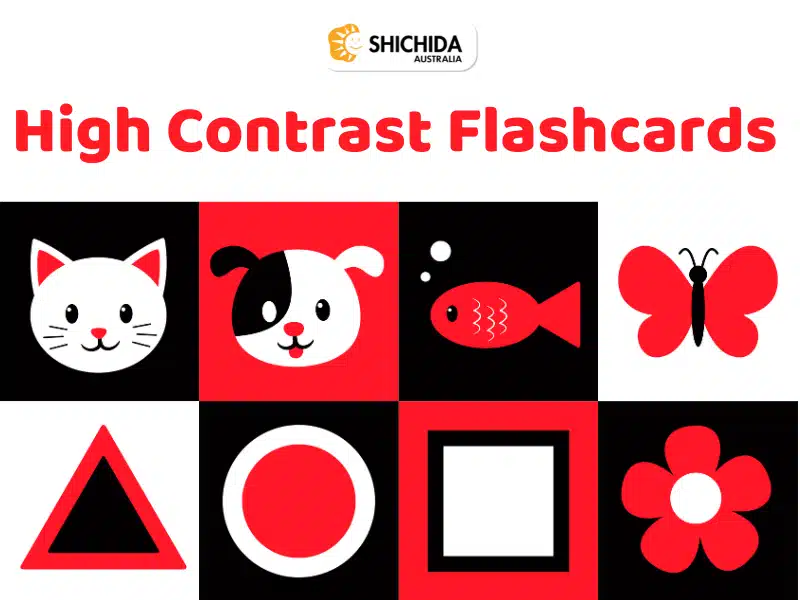
At birth, a newborn’s vision is quite blurry. They’re naturally drawn to faces, but they can’t yet distinguish between similar tones or see distant objects. During this phase, they’re most responsive to high-contrast patterns and bright lights.
Because their world is mostly black and white, showing them bold patterns is the best way to capture their attention. This early visual input is vital for their brain development. It helps them begin to make sense of shapes and movement before their colour vision fully kicks in.
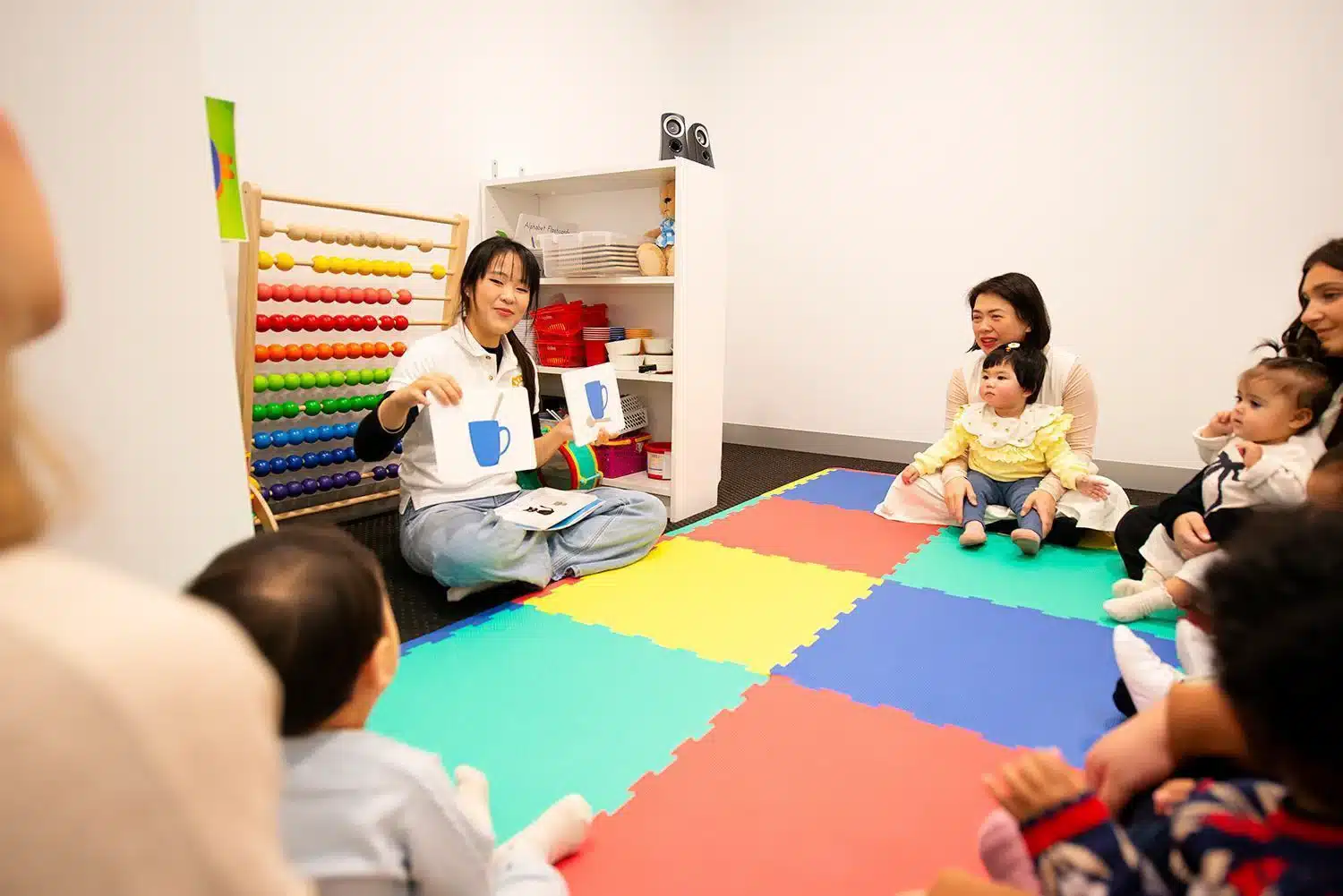
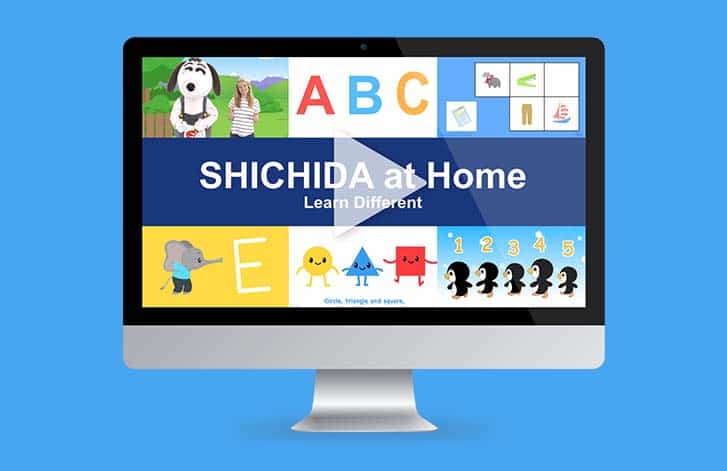
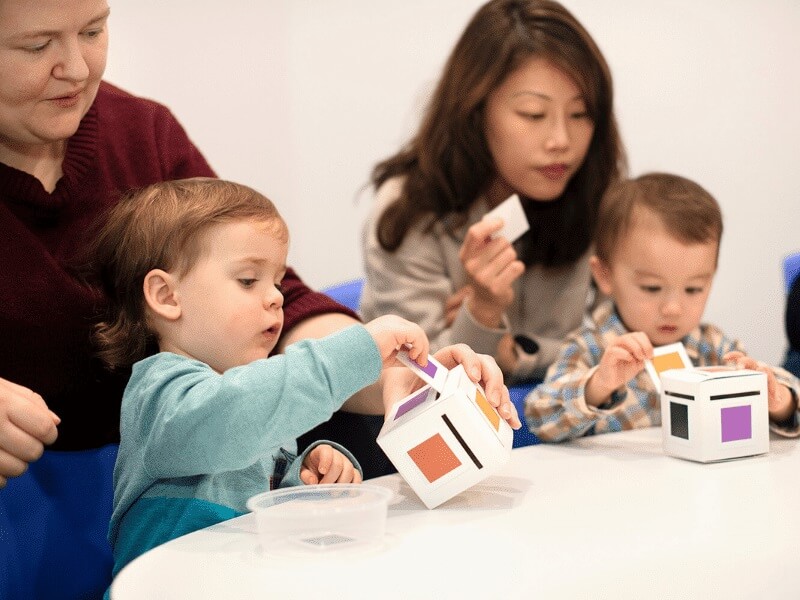
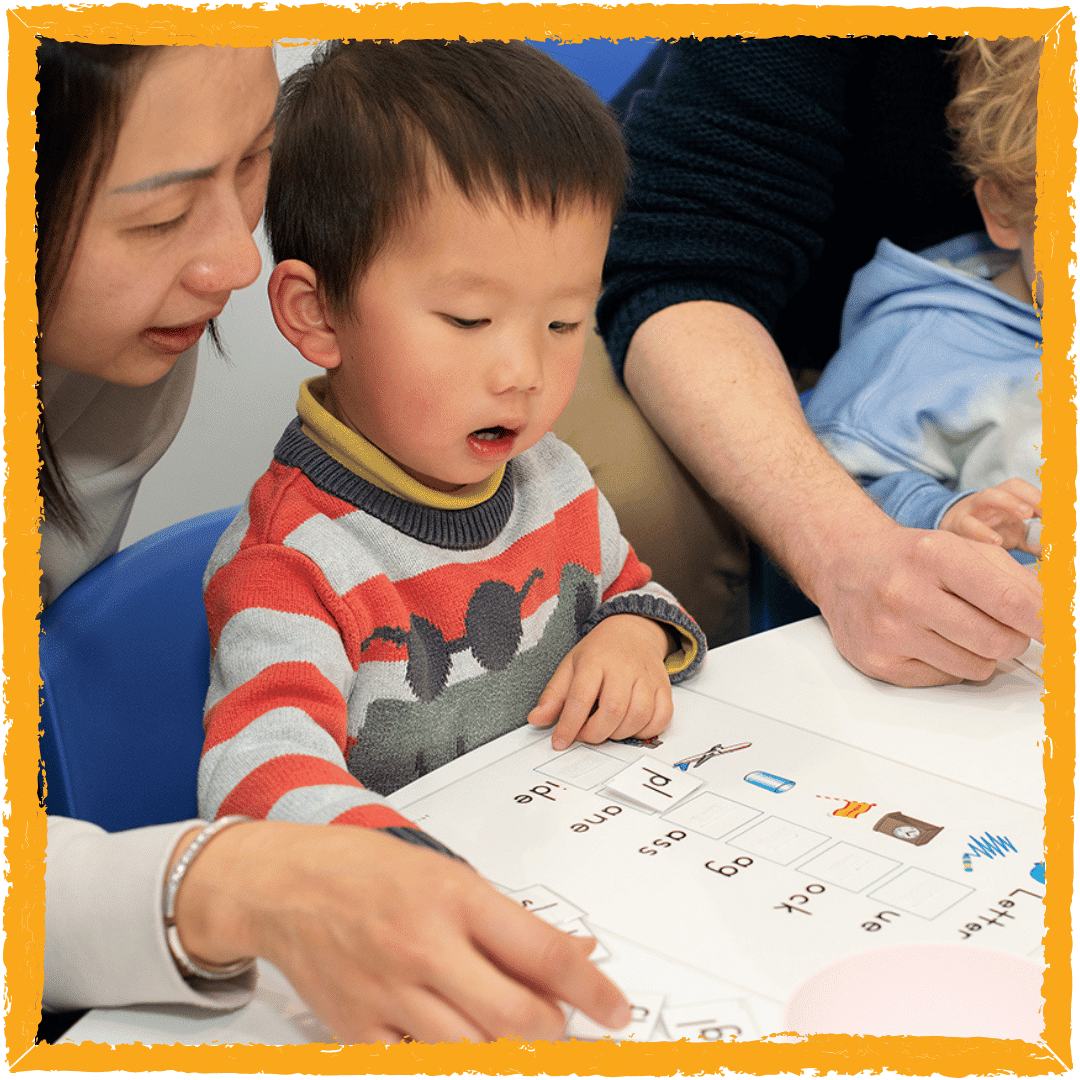
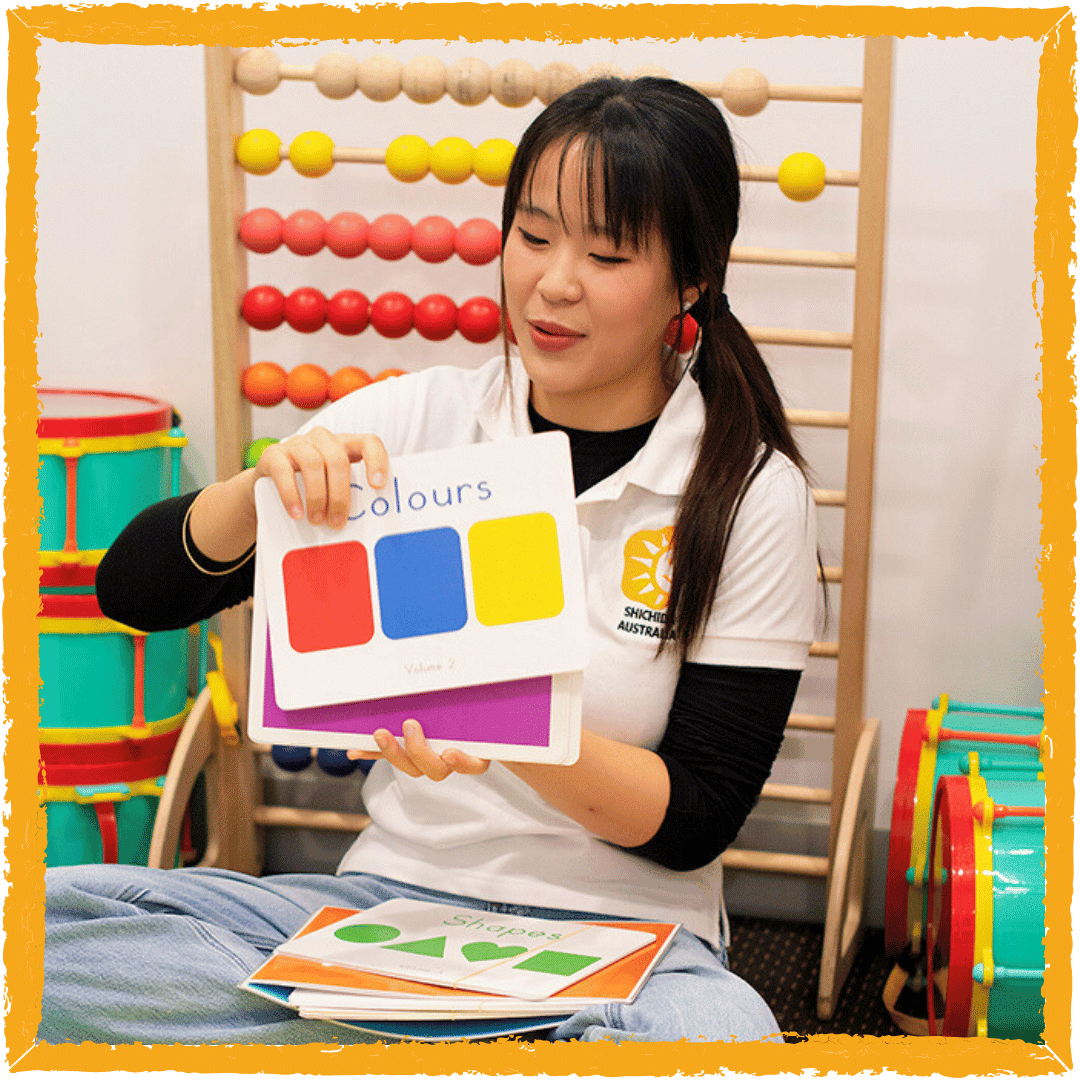
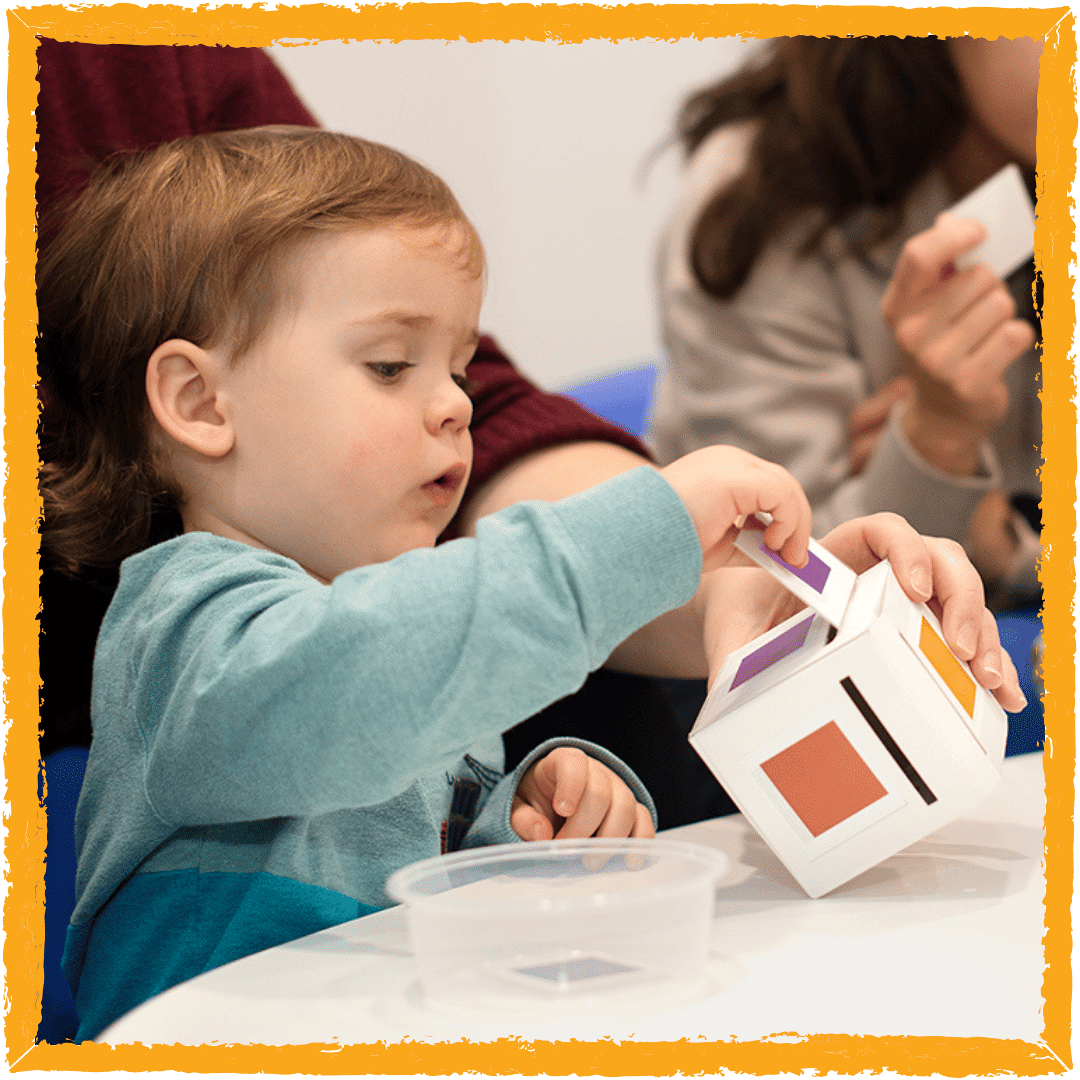
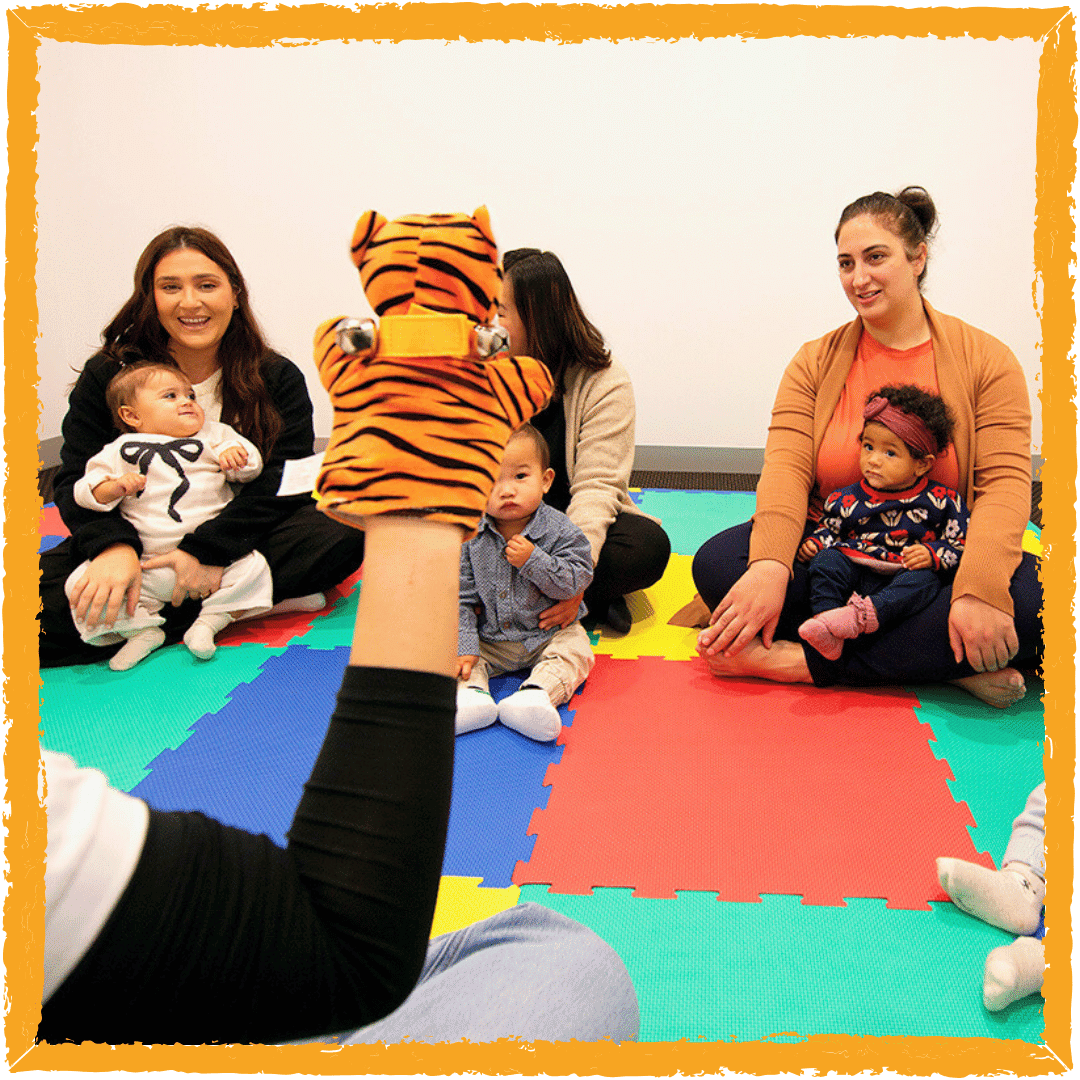
Photo by Shichida Australia: Colourful flashcards paired with educational songs help keep babies engaged – ideal for this stage when parents often wonder, ‘When do babies see colour?’
Visual Milestones: 1 to 3 Months
Between one and three months, infant vision development takes a big leap. You’ll notice your baby starting to track moving objects with their eyes and reaching for things that catch their interest.
- Primary colours: Red and green become easier for them to see.
- Tracking: They’ll begin to follow a toy or a person moving across their field of vision.
- Depth perception: Their eyes begin to work together, allowing them to start judging how far away an object is.
Plus, as their colour perception improves, they’ll become more engaged with bright primary colours. This is a great time to introduce colourful toys and books into their daily routine.
Refinement: 4 to 6 Months
By four to six months, a baby’s vision undergoes significant refinement. They can now see a full spectrum of colours and their clarity improves immensely. This is also when hand-eye coordination strengthens because they can judge distances better.
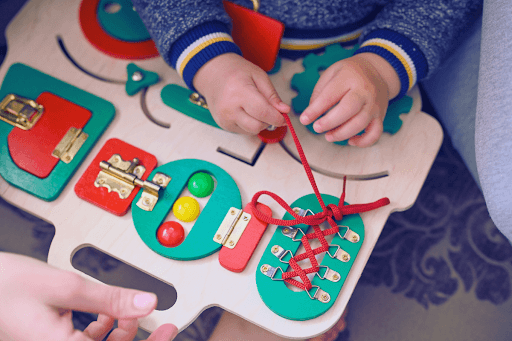
During this stage, interactive sensory activities are key. Providing colourful objects to grasp and explore helps reinforce their vision skills and builds the foundation for future motor development.
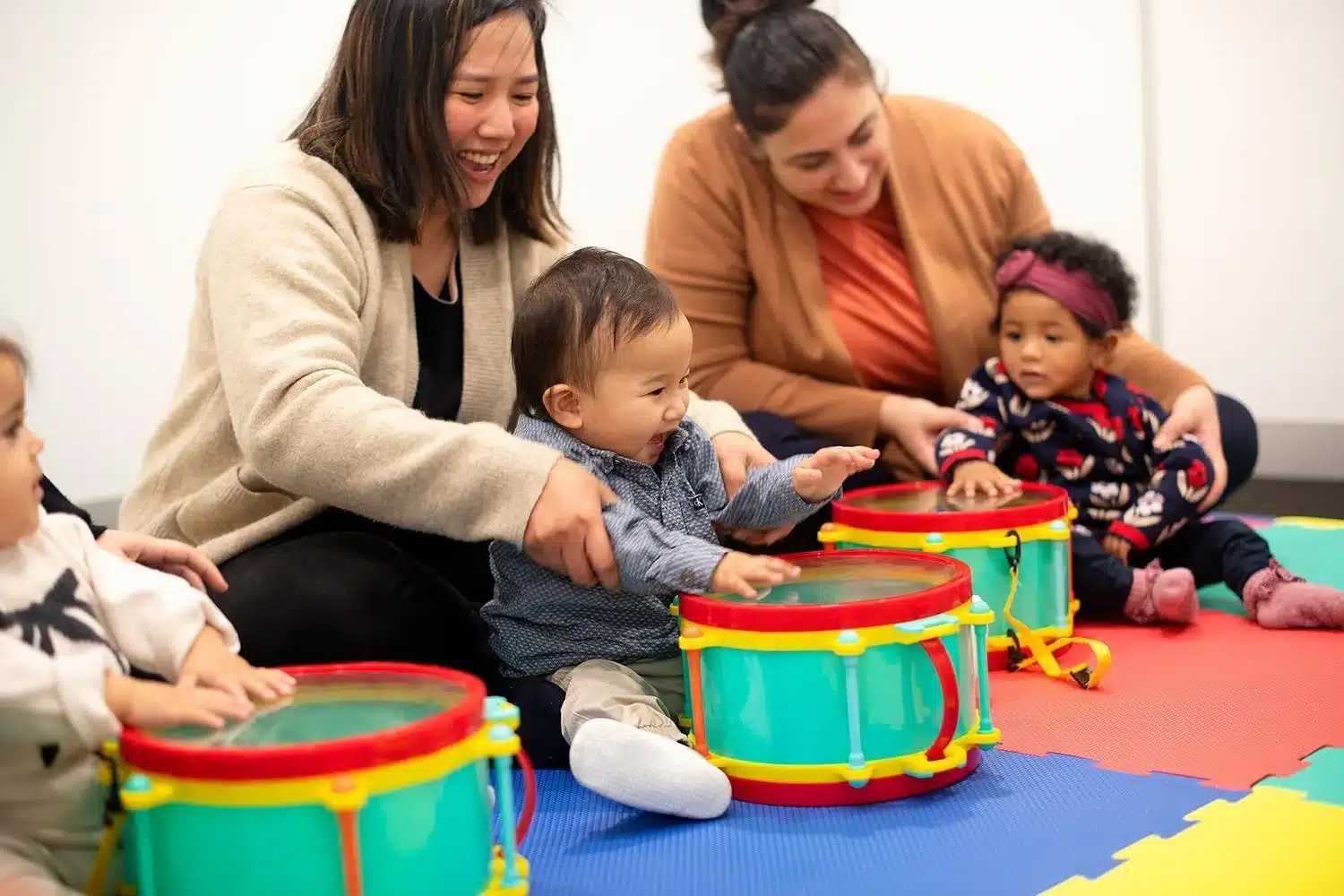
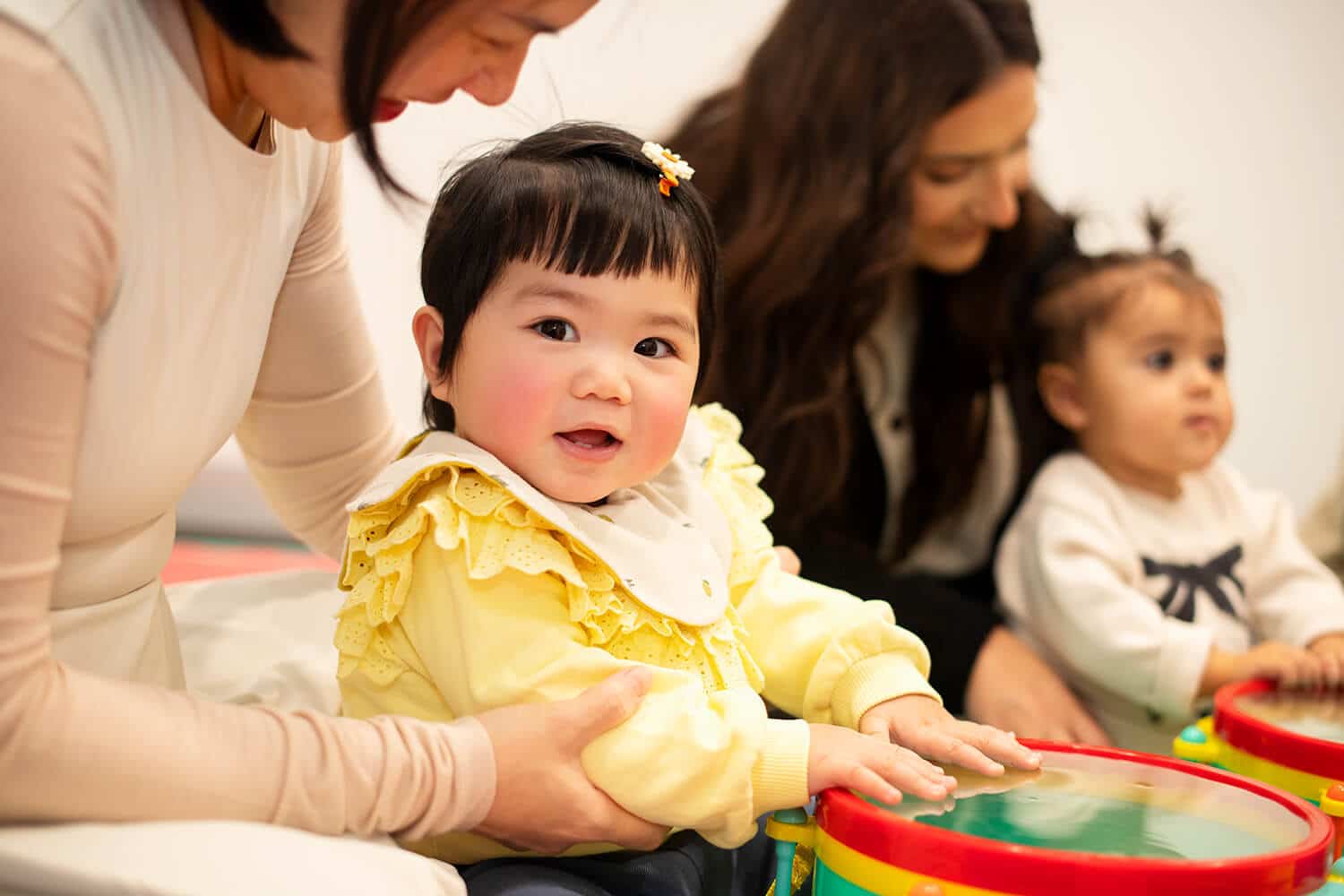
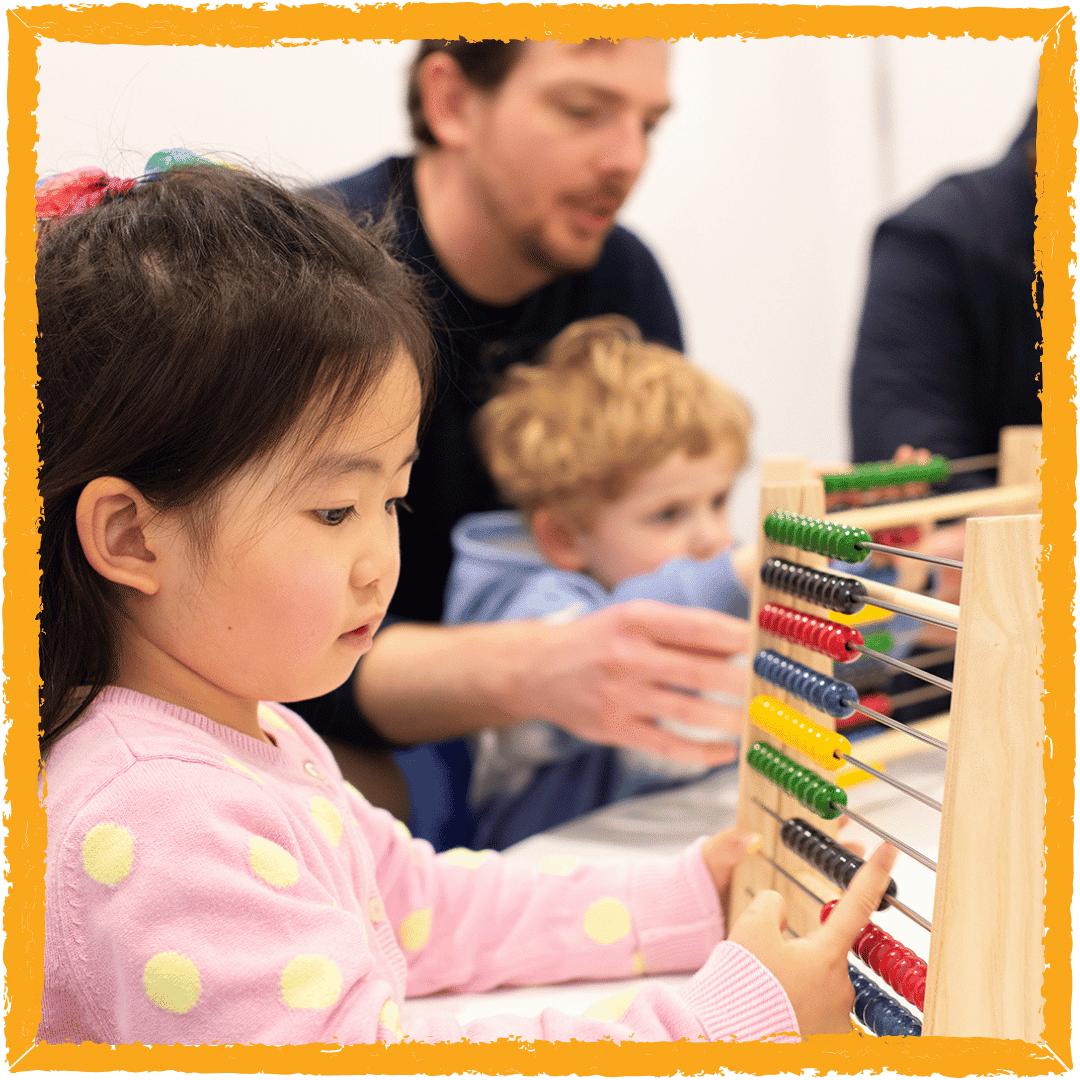
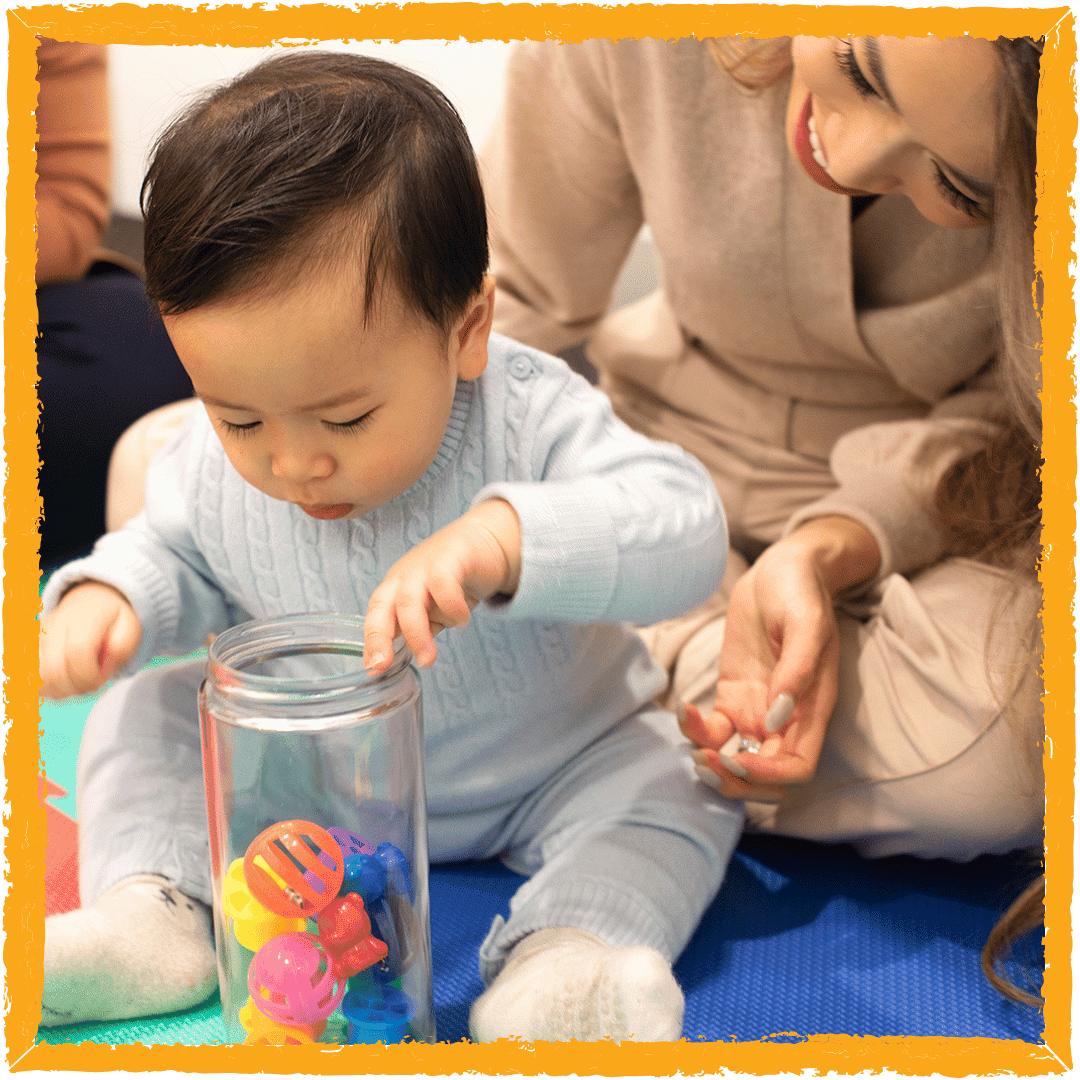
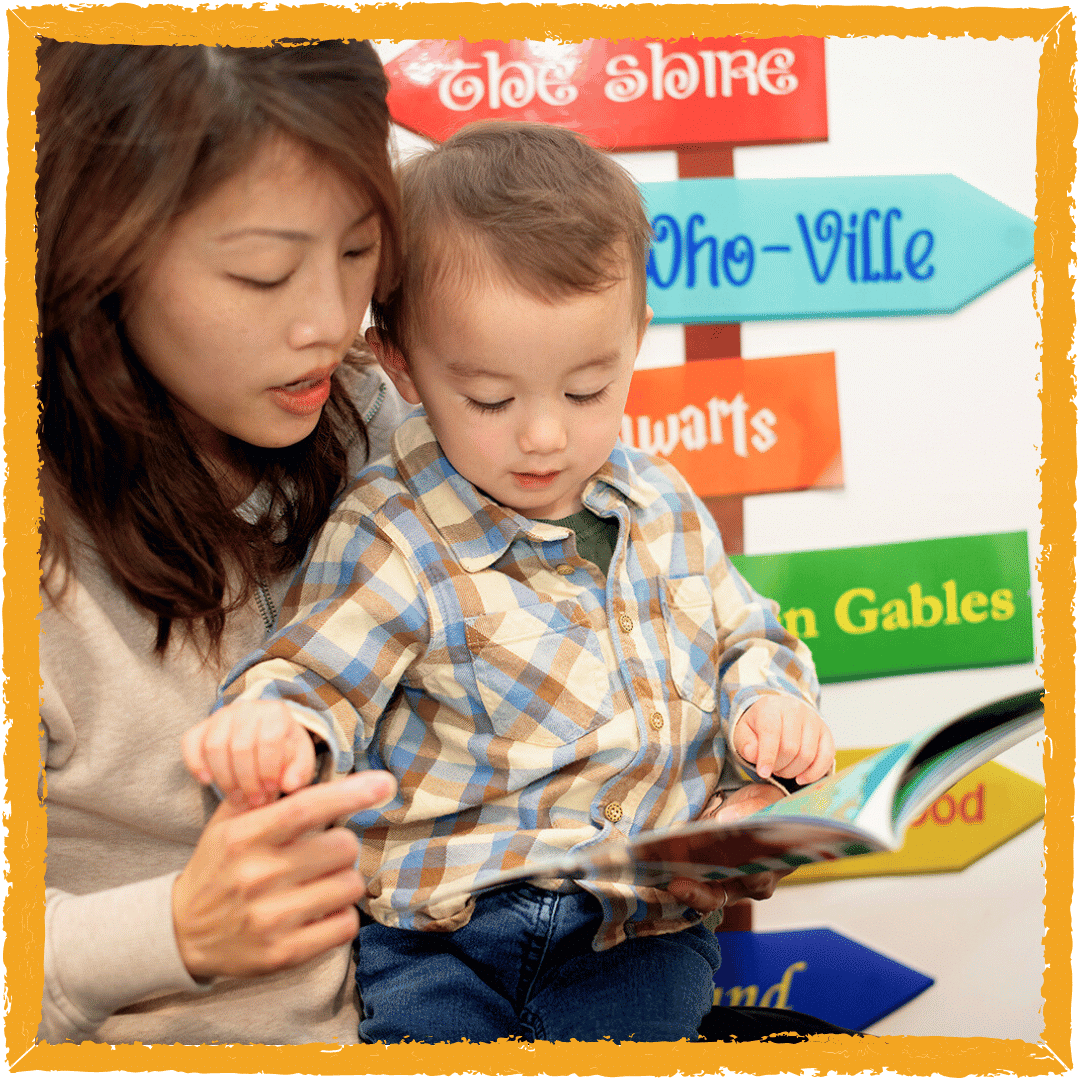
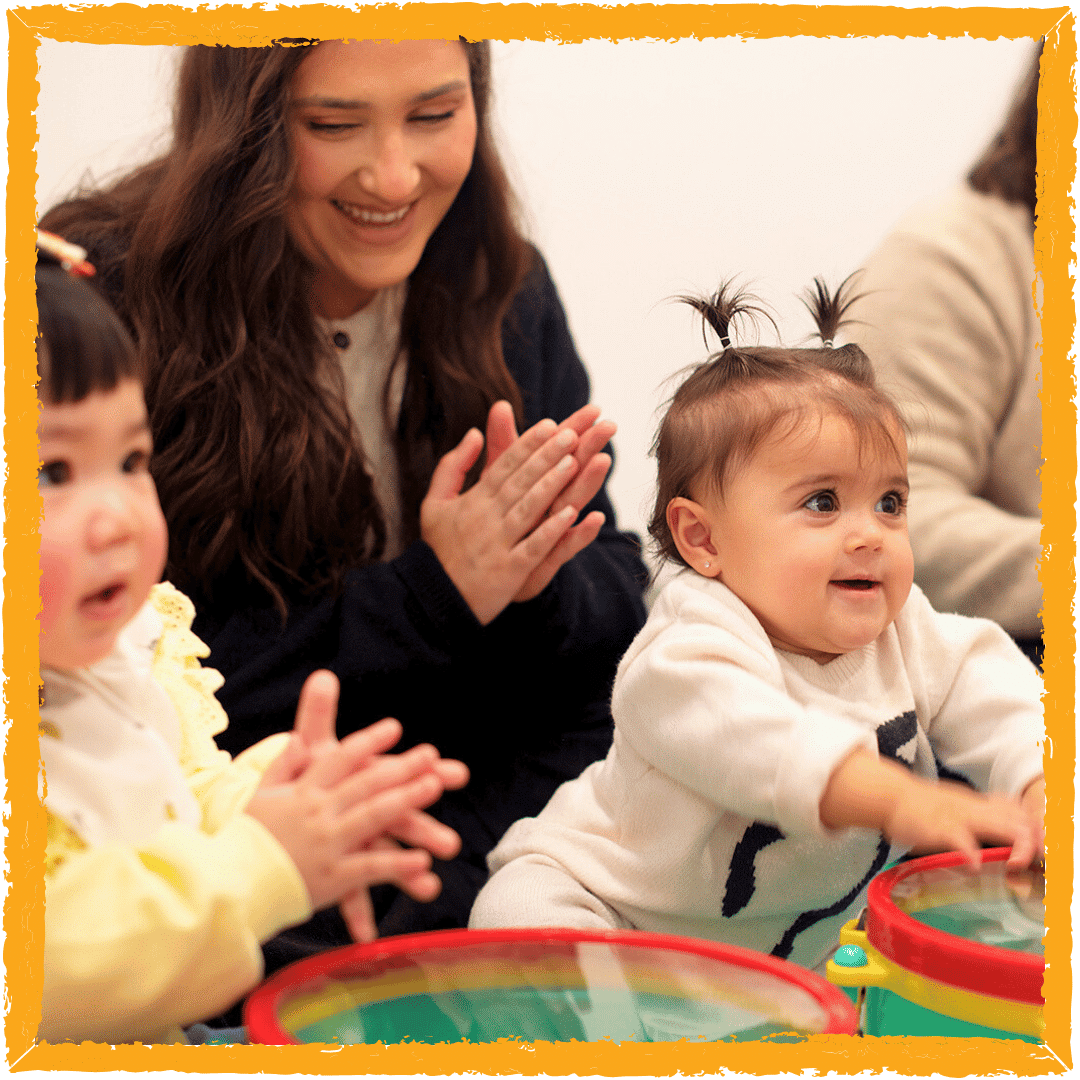
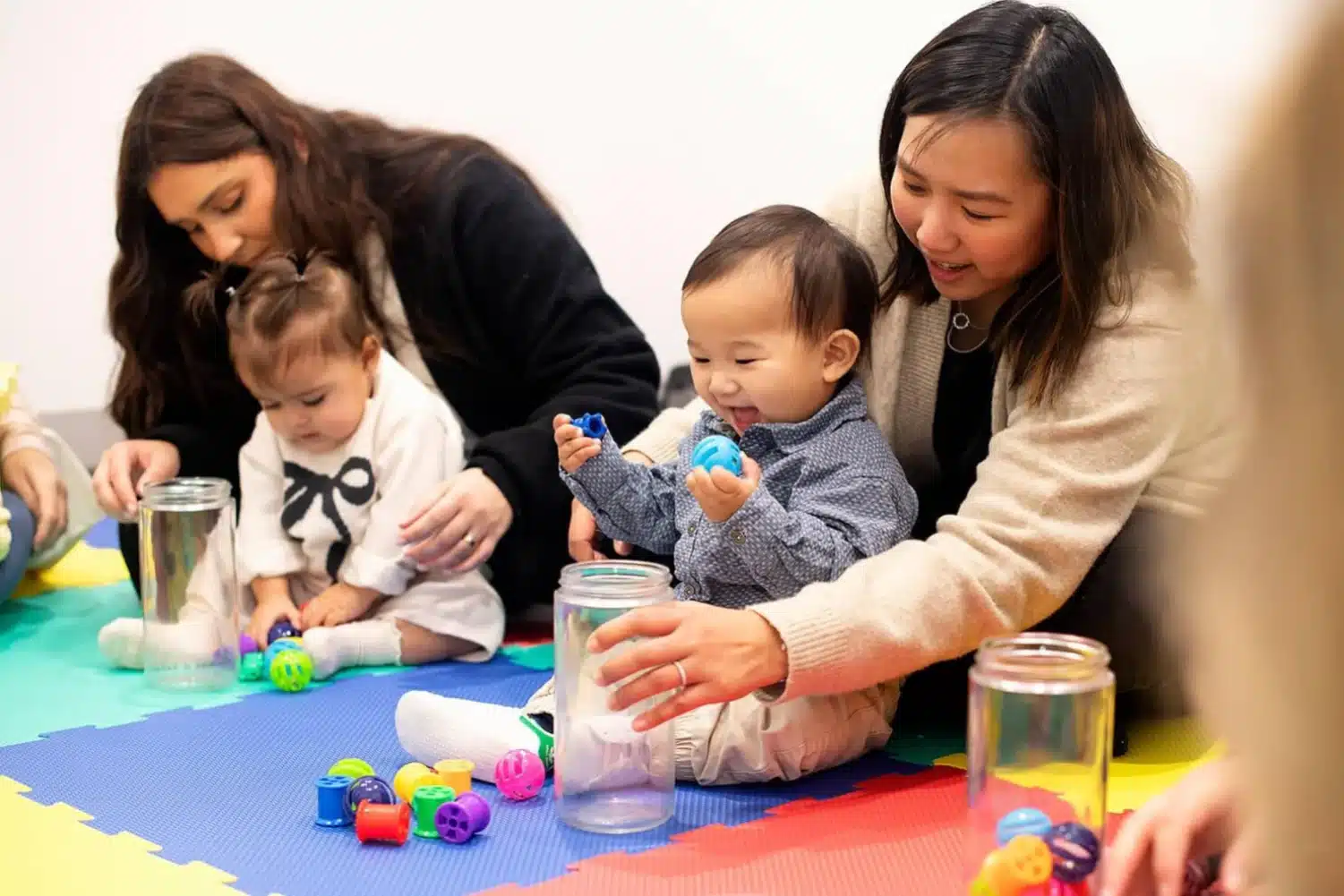
Photo by Shichida Australia: Babies engage in sensory-stimulating activities during class to support early visual development. Shichida Baby Classes start from 6 months old.
Factors That Influence Visual Growth
While every baby develops at their own pace, several factors contribute to how quickly their vision sharpens.
- Genetics: Genetic factors play a role in how the visual system matures. If there’s a family history of colour blindness, it’s something to keep in mind as they grow.
- Light Exposure: Regular exposure to natural light helps stimulate the retina and supports healthy visual development. Well-lit environments provide the input the brain needs to process colour.
- Visual Stimulation: Babies who are exposed to a variety of high-contrast and colourful objects tend to develop sharper perception earlier. Tools like flashcards and bold-patterned toys are excellent for this.
- Nutrition: Proper nutrition, including vitamins A, C, and E, is essential for eye health. These nutrients support the physical development of the eye and the visual cortex.
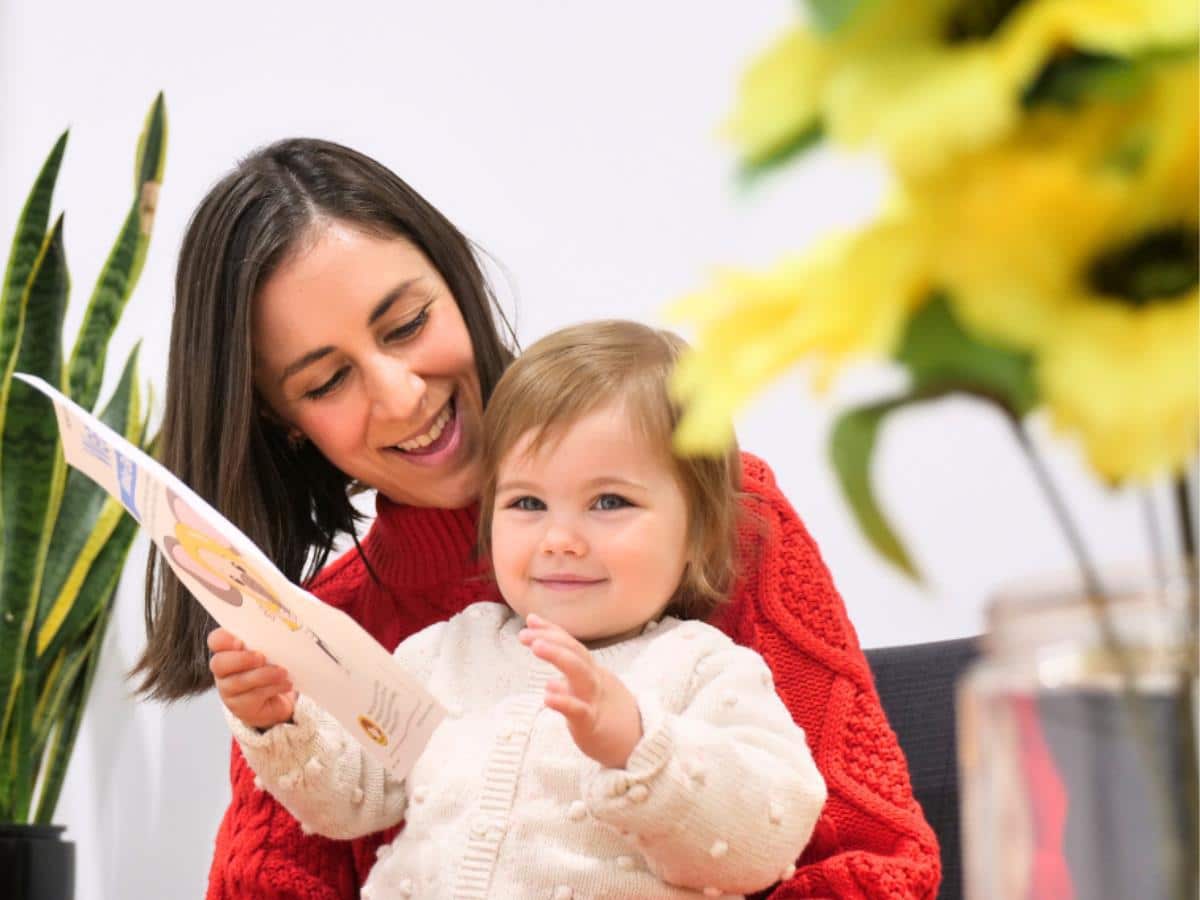
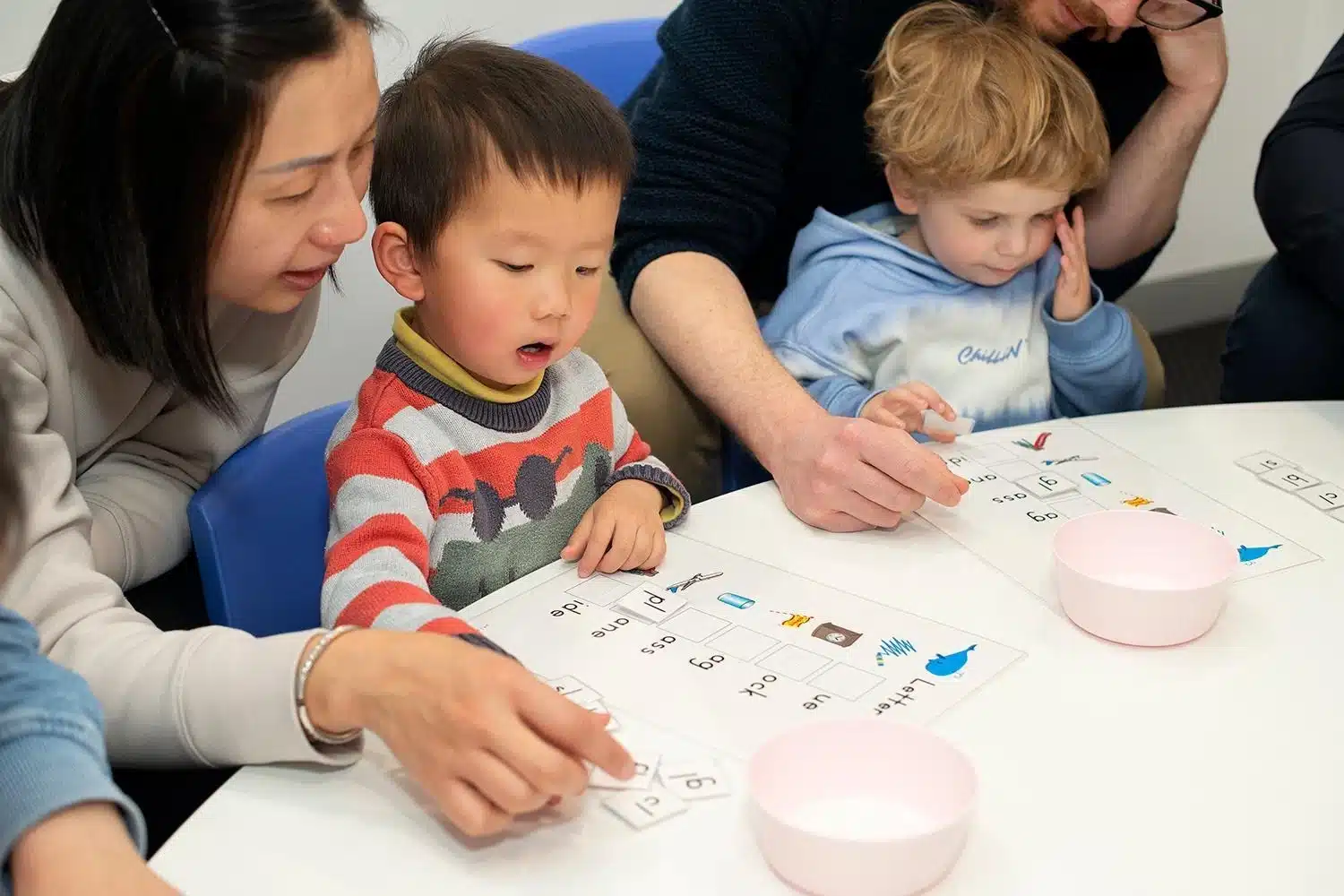
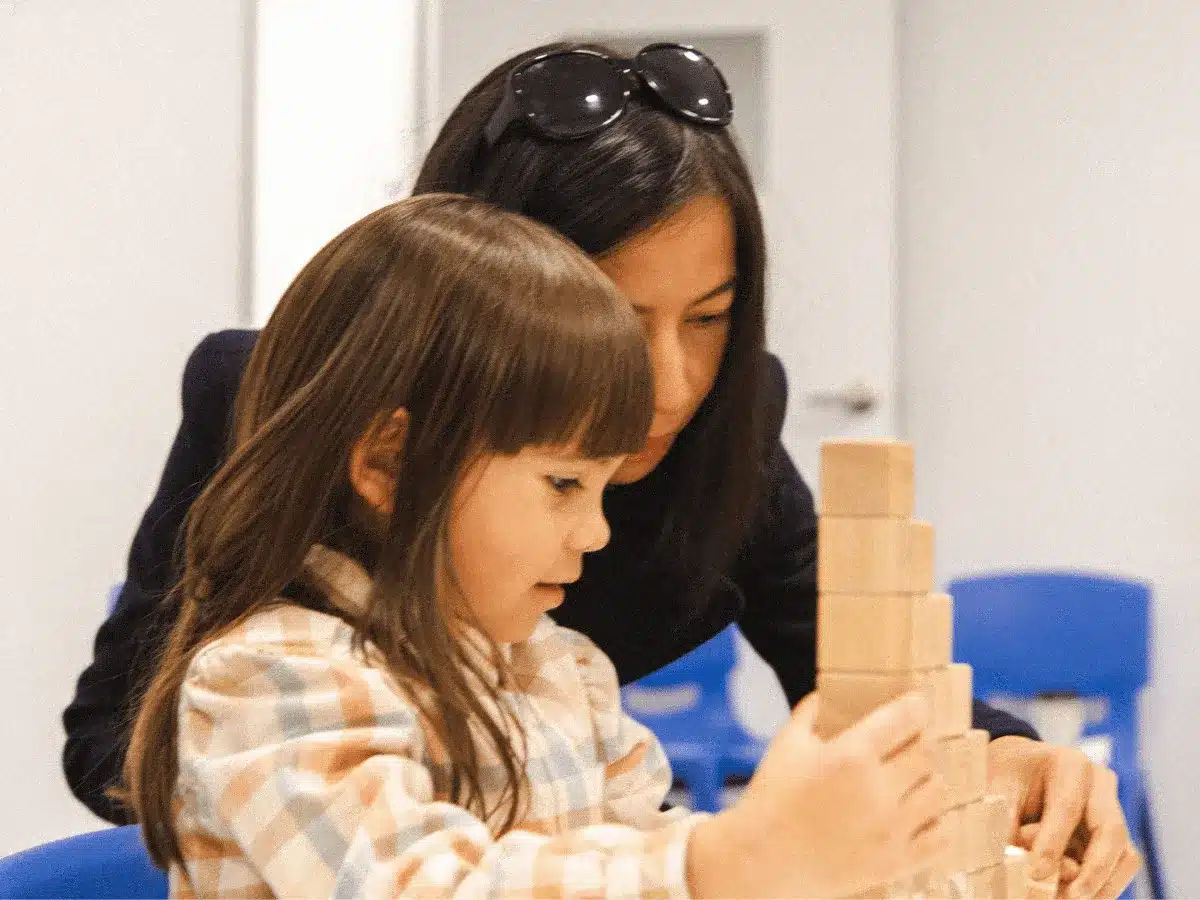
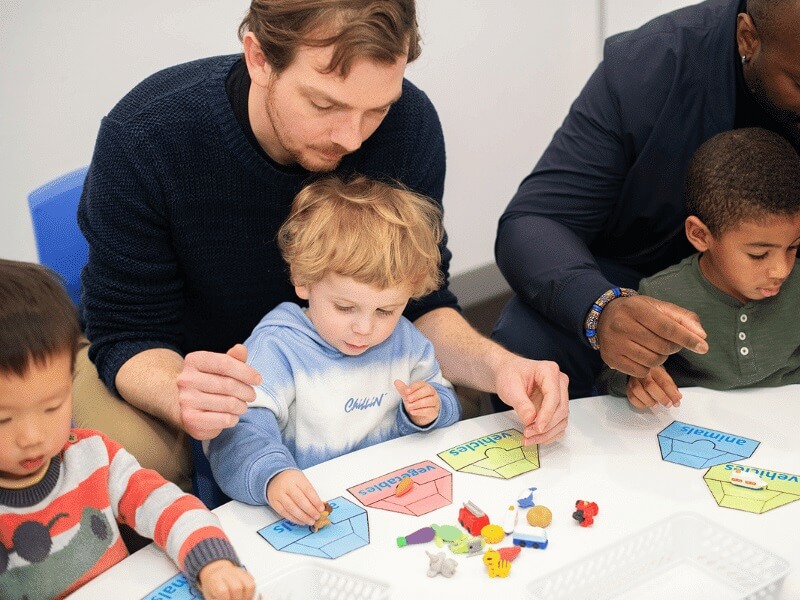
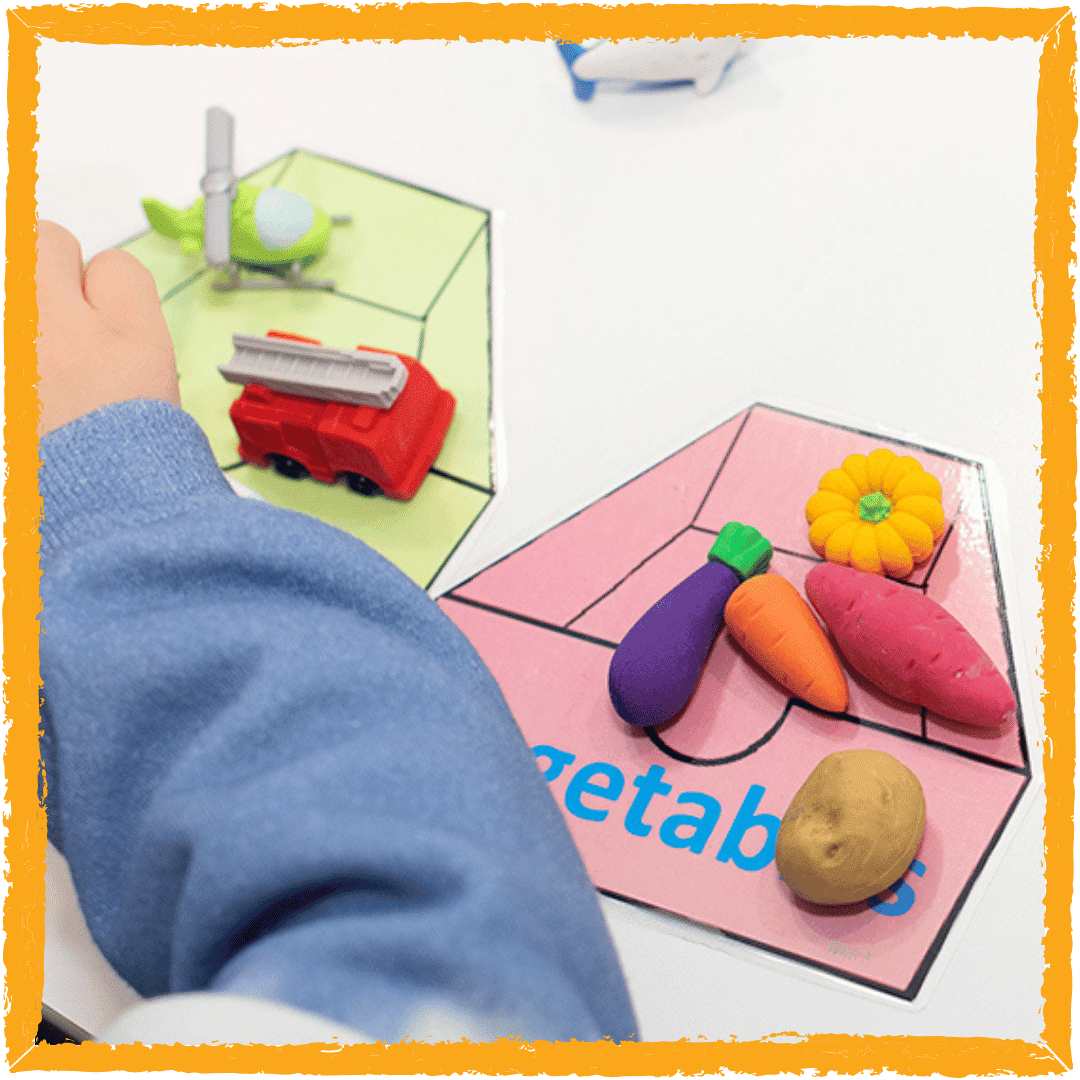
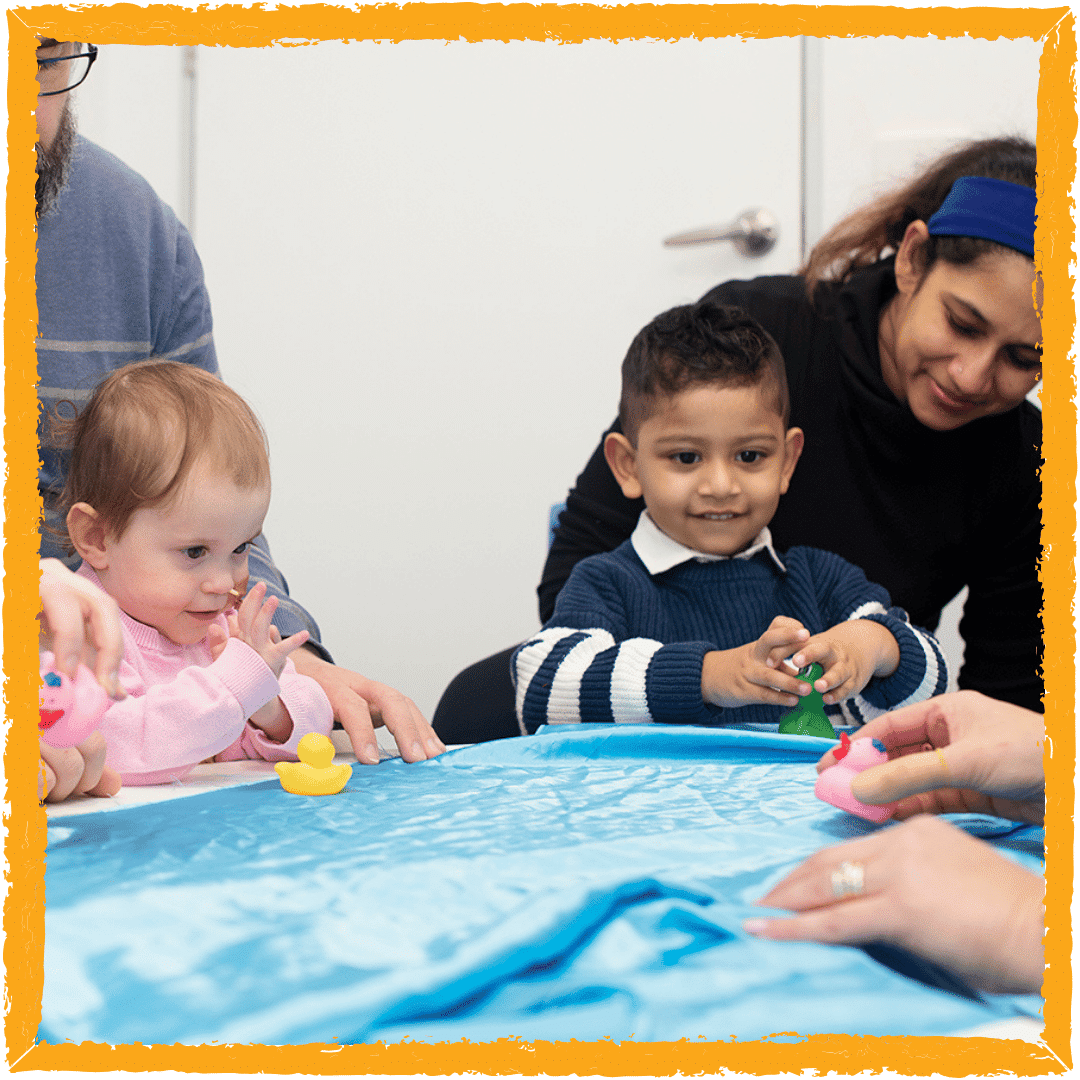
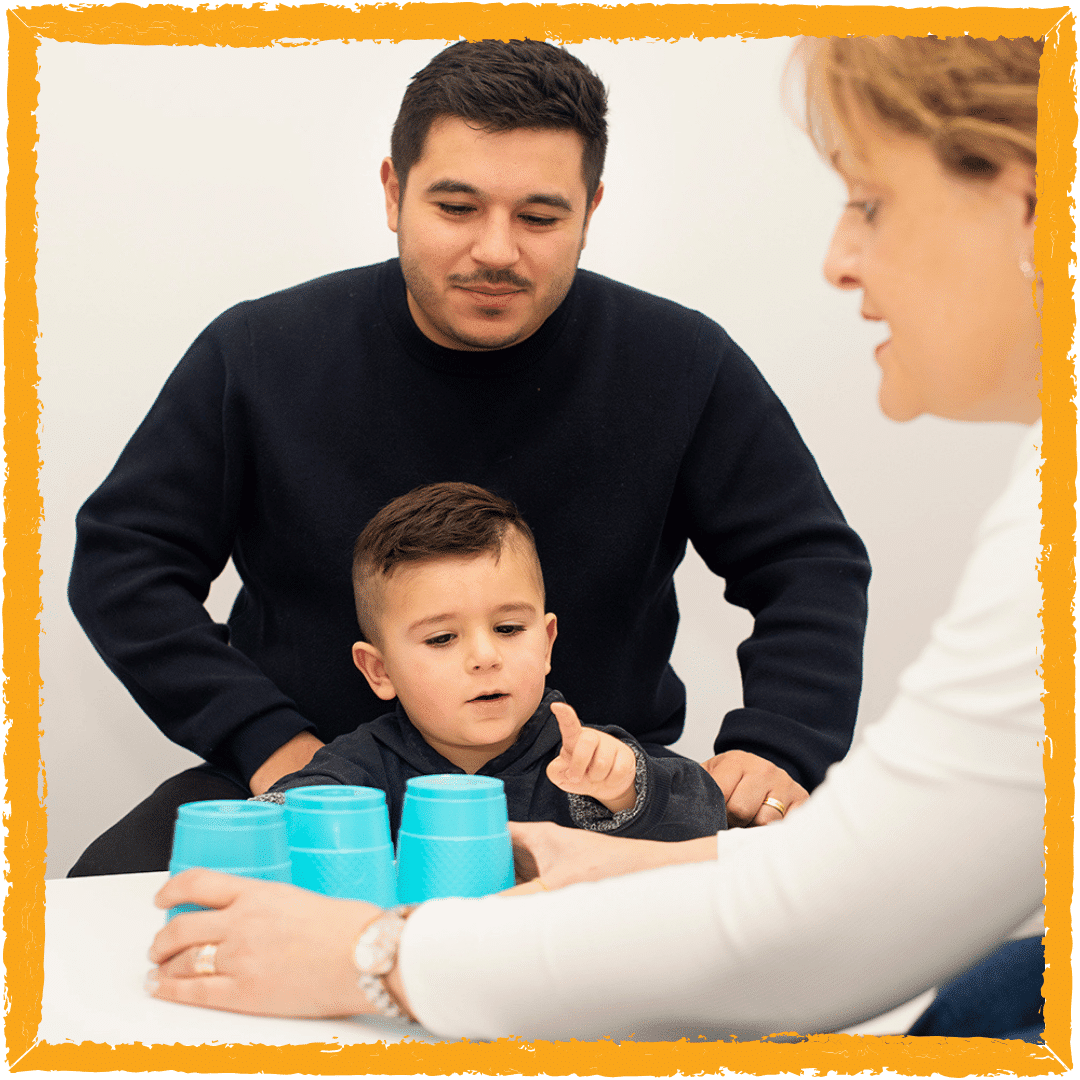
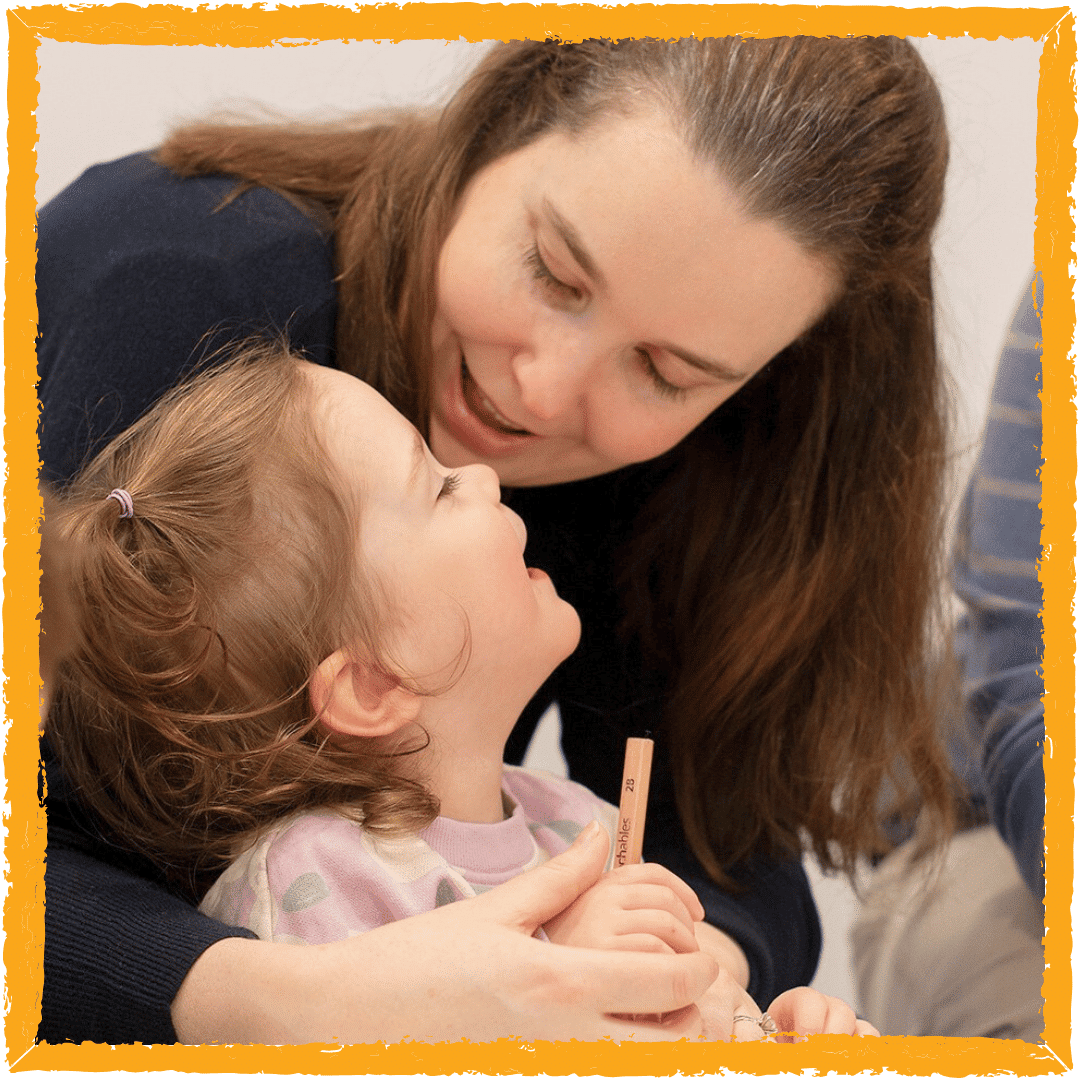
Image by Shichida Australia: Learning together through play develops language, memory, and early problem-solving skills. When a parent is involved, babies stay engaged for longer, make stronger connections, and build confidence as they learn.
Supporting Your Baby at Home
You can actively support your baby’s progress through simple, interactive play.
- Use high-contrast patterns: For newborns, stick to black-and-white images to encourage focus.
- Introduce bold colours: From two months onward, bring in primary colours like red, blue, and yellow.
- Create a stimulating space: Decorate their area with colourful wall art and mobiles that encourage them to look up and track movement.
- Read together: Use interactive books with textures and bright illustrations to engage multiple senses at once.
Give Your Baby a Strong Start with Shichida
The Shichida method uses scientifically backed techniques to support early vision development. Our infant classes integrate visual stimulation exercises that enhance a baby’s ability to recognise colours, textures, and patterns. By providing the right input at the right time, we help your child reach their full potential. Book a Shichida Trial Class today to experience the joy of learning and bonding with your baby.
Frequently Asked Questions: When do babies see colour?
Babies begin developing colour vision between one and three months, initially recognising red and green. Their eyes take time to develop the cells needed to process different wavelengths. By five months, most infants can see a full range of bright shades clearly.
Newborns see the world as quite blurry and mostly perceive high-contrast black and white patterns. They focus best on things about 20 centimetres away which is the distance to your face. This limited range helps them avoid being overwhelmed by light.
It’s a gradual process where the brain and eyes learn to work together. Your baby moves from seeing blurry shapes to tracking moving objects and eventually perceiving depth. This progress is vital for their future coordination and their natural curiosity about the world.
Most newborns and vision issues like crossed eyes are temporary as they learn to control their eye muscles. However, you should monitor their progress closely to ensure they hit their milestones. Early intervention is key if you notice any ongoing concerns.
A newborn can see colours only in very high contrast during their first few weeks. While they don’t see pastels yet, they are highly attracted to bold patterns and primary shades. Using black and white cards is the best way to stimulate them.
You can support your baby’s progress by using high-contrast toys and moving them slowly to encourage tracking. Showing them colourful books and talking about the pictures also builds their recognition. These simple activities make a big difference in their early sensory growth.