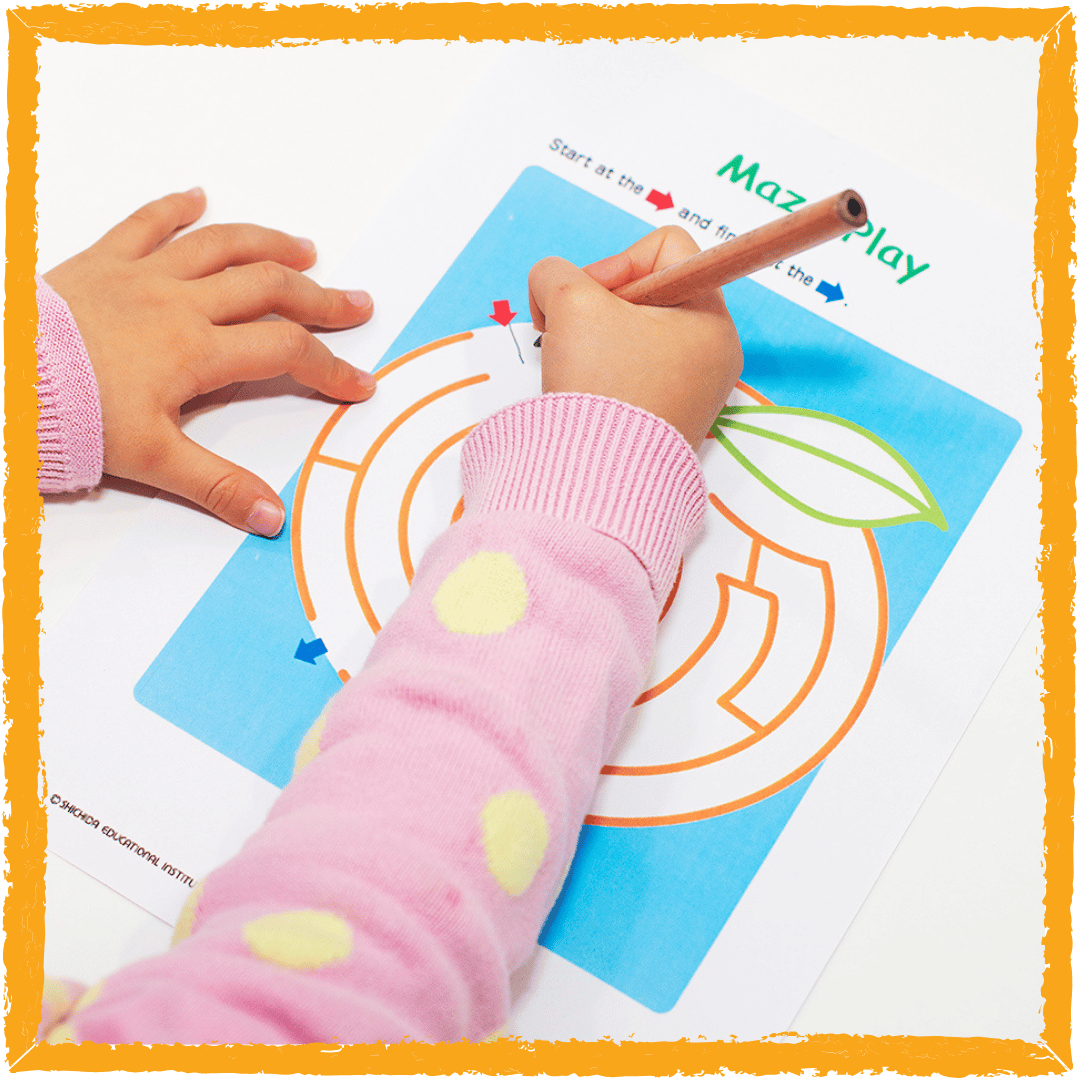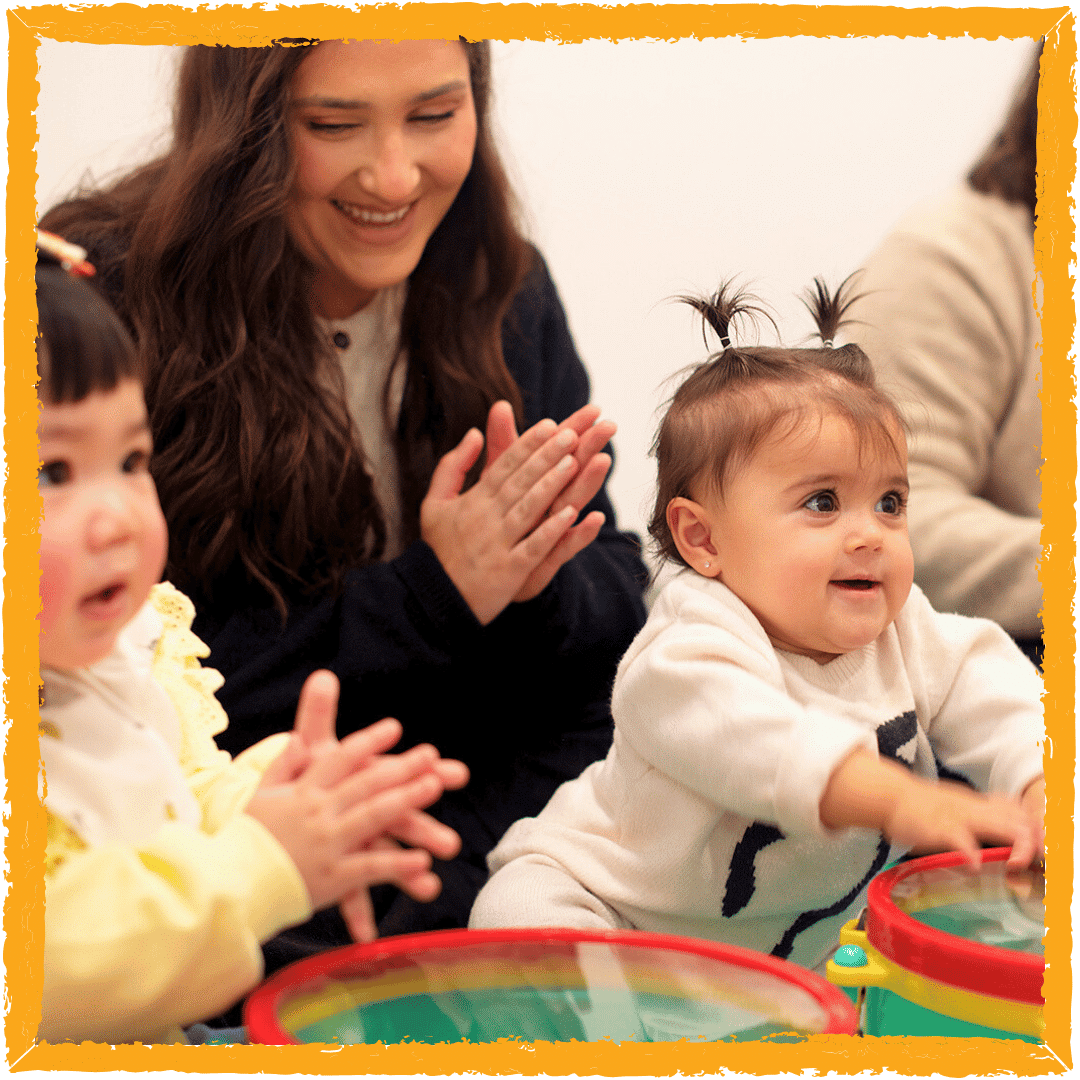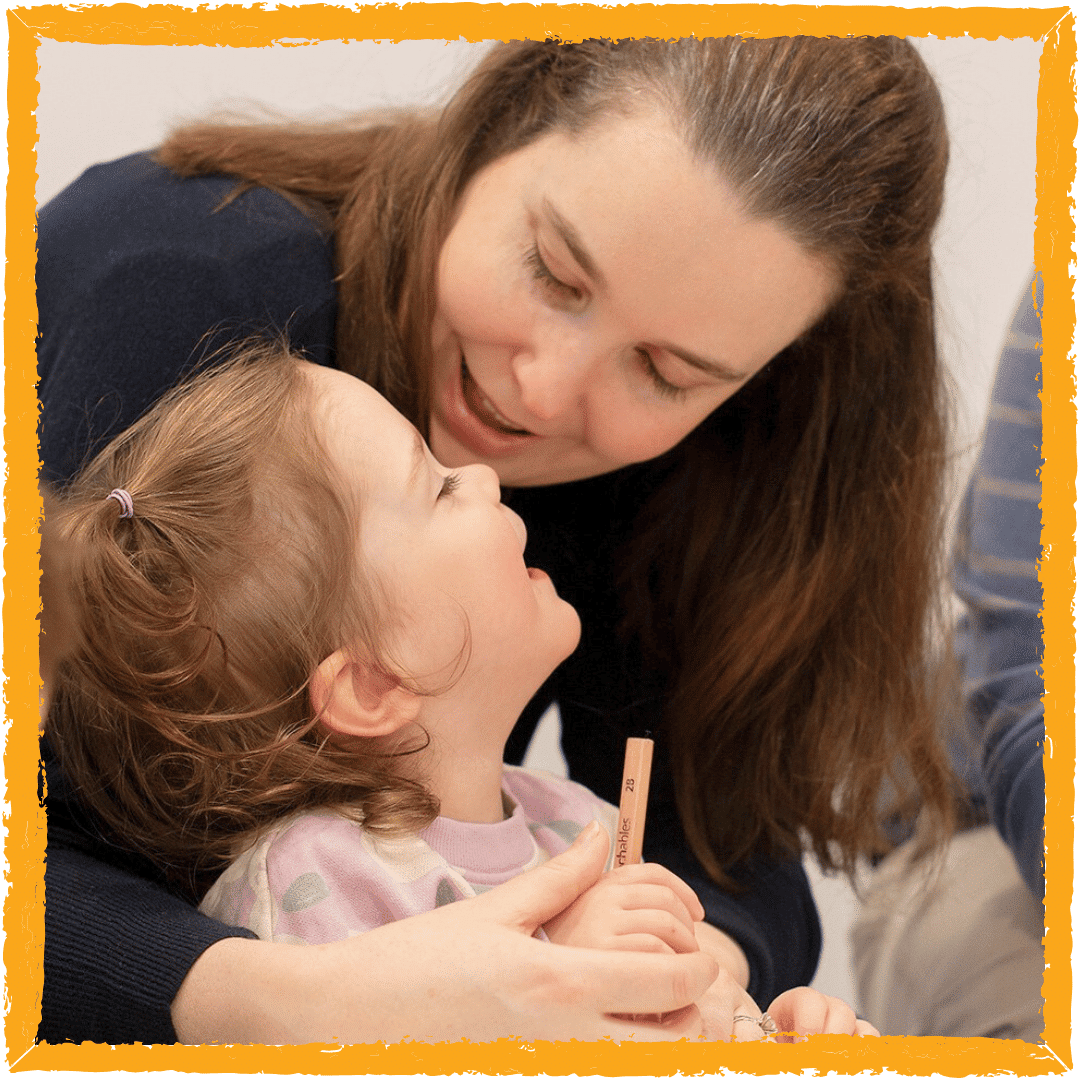
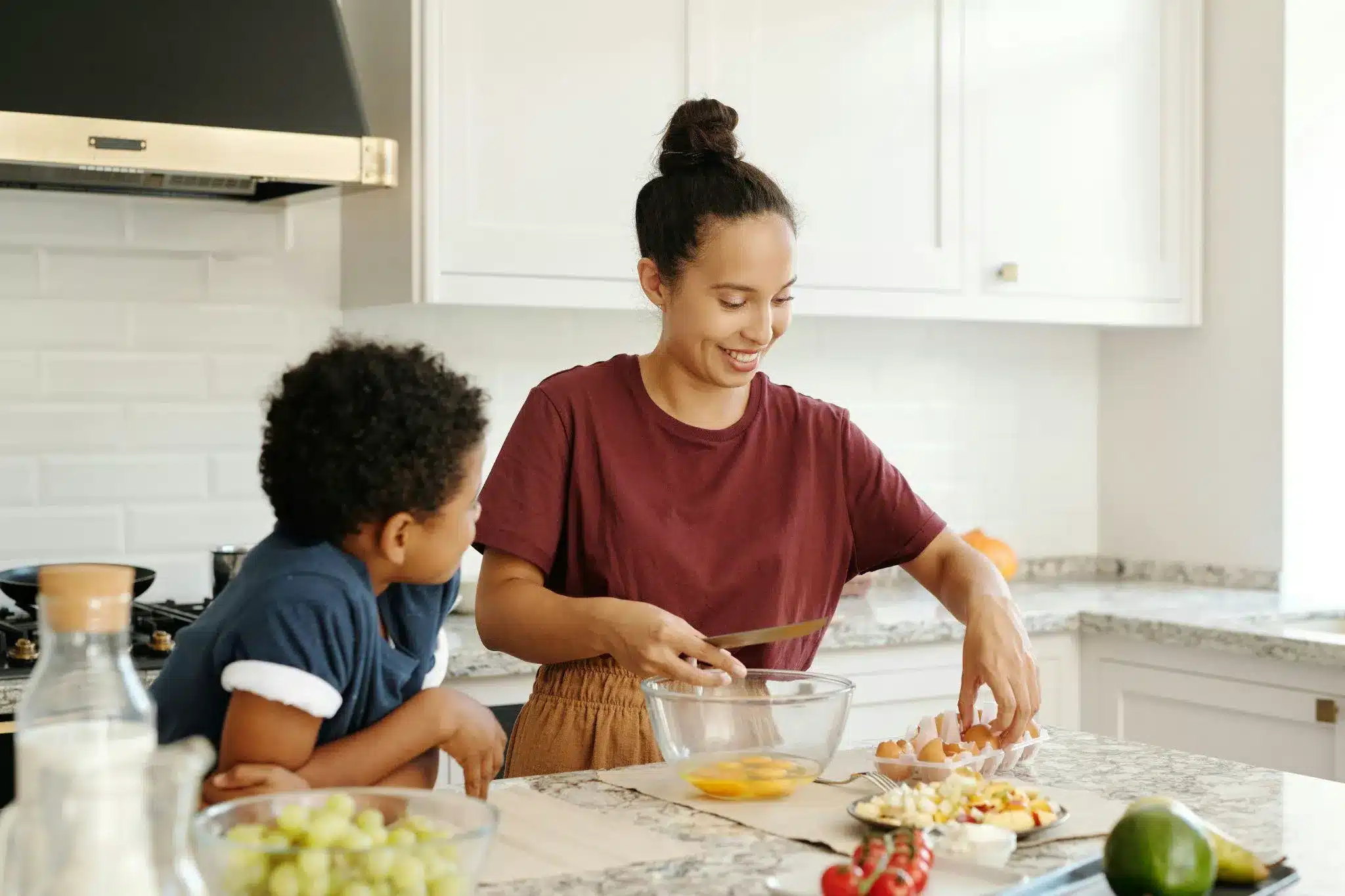
Photo from Pexels: Observational learning begins early, as young children watch their parents closely and learn from everyday moments at home.
Observational Learning: How Children Learn by Watching
Key Points: Observational Learning in Early Childhood
- Observational learning is how young children learn by watching others
In early childhood, babies and toddlers learn mainly through observing actions, listening to language, and copying behaviour. - Children learn language, behaviour, and emotions through observation
By watching parents and caregivers, children absorb how to speak, react emotionally, solve problems, and interact with others. - Attention, memory, and motivation determine what children imitate
Children copy behaviours they notice often, remember easily, and see reinforced or rewarded in their environment. - Parents and caregivers are the strongest influences on learning
Everyday adult behaviour becomes a powerful teaching tool because children naturally model what they see at home. - Intentional role modelling supports healthy early development
When adults consistently model calm communication, kindness, and problem-solving, children adopt these behaviours through observational learning.
If you are raising a baby, toddler, or preschooler, here is something reassuring to know. Your child is learning all the time, even when you are not actively teaching. Your tone of voice, routine, and reactions become part of how they understand the world.
This is observational learning in action.
Observational learning in early childhood is one of the most natural and influential ways children develop language, behaviour, emotional skills, and social understanding. Long before children can sit still for lessons or follow instructions, they learn by watching you, their siblings, and the people around them. This way of learning is not accidental. It is built into early brain development.
When you understand how learning by watching works, you can become more intentional and confident as a parent. You do not need to be perfect! You simply need to be aware that your everyday actions matter more than you may realise.
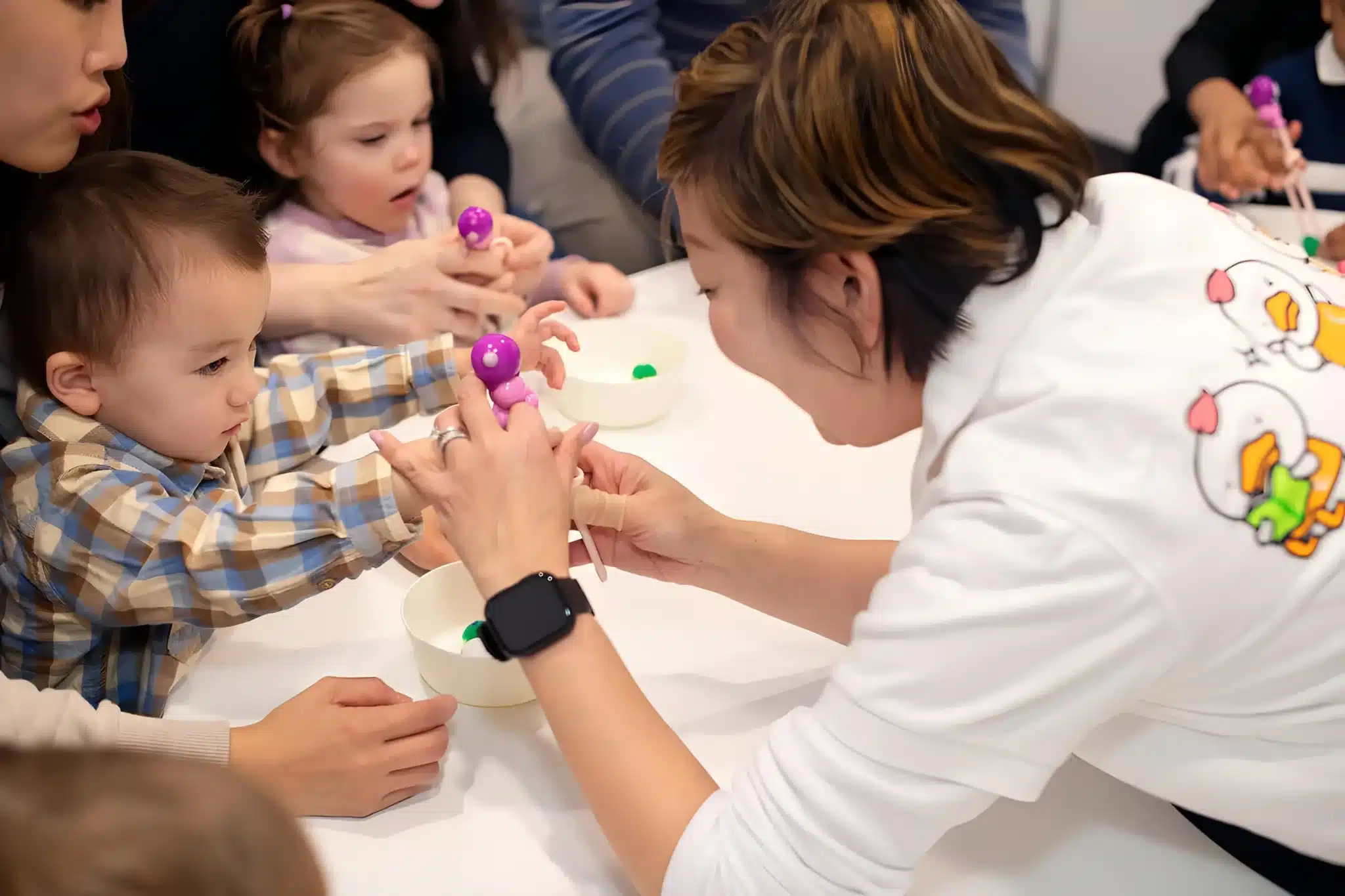
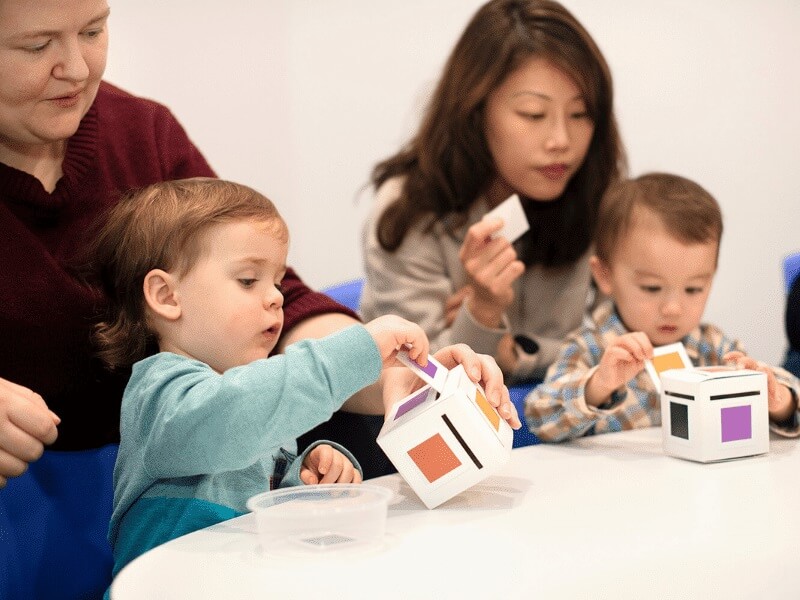
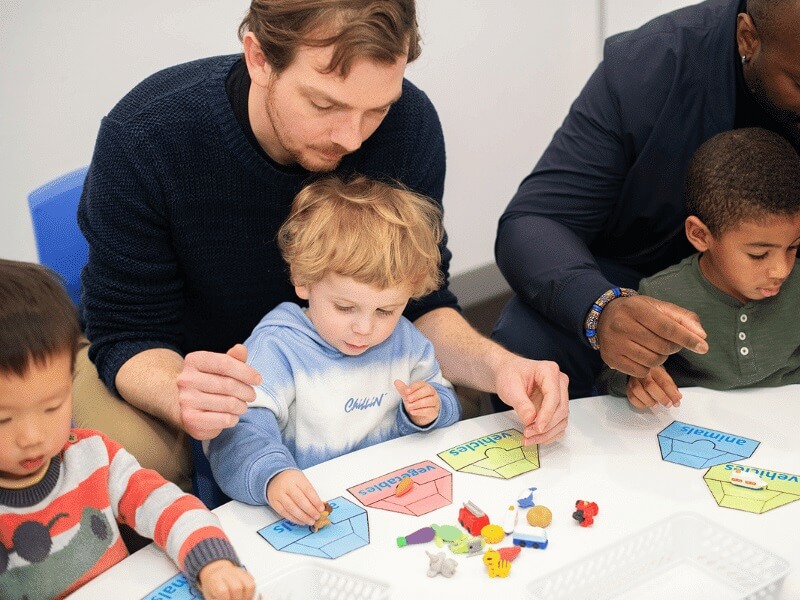
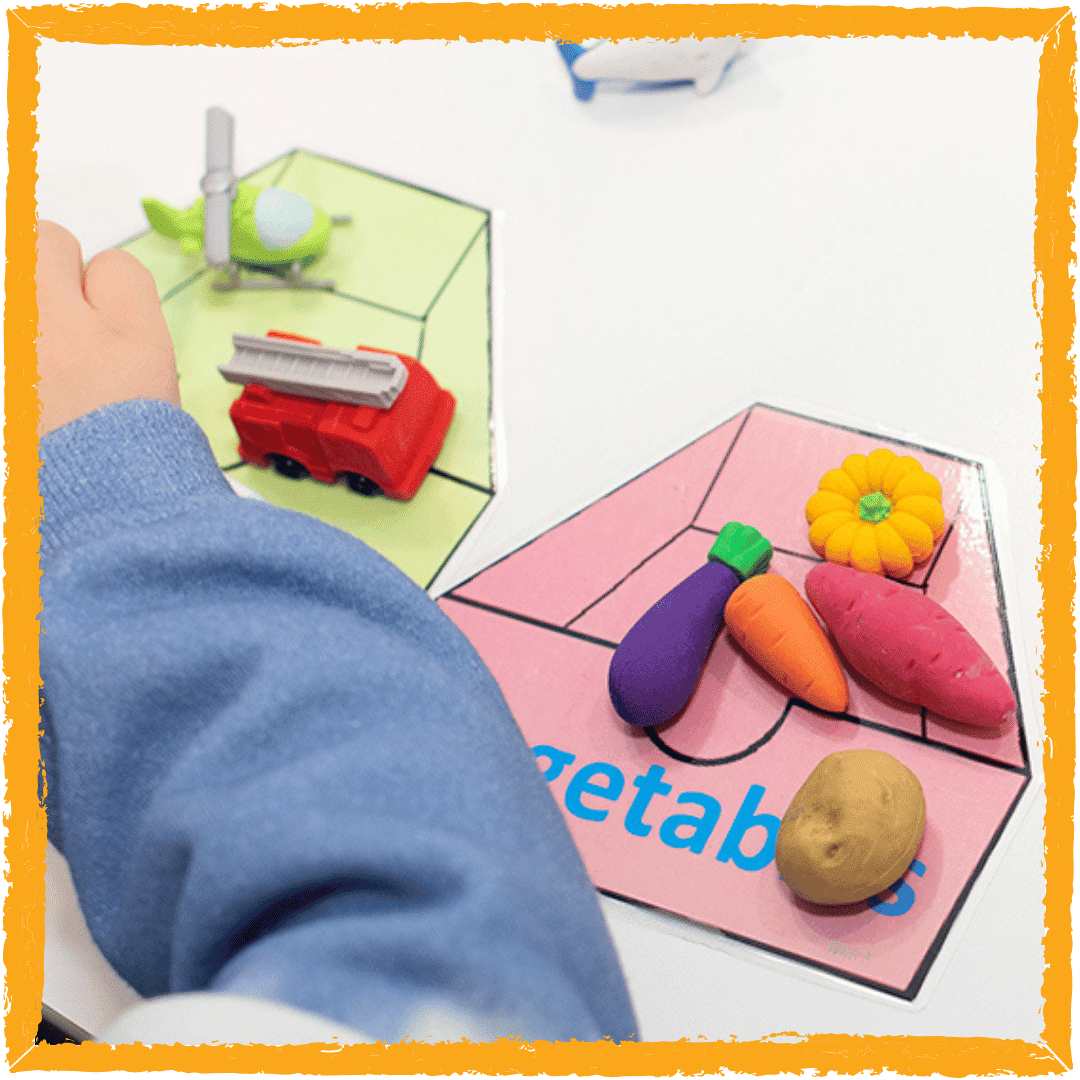
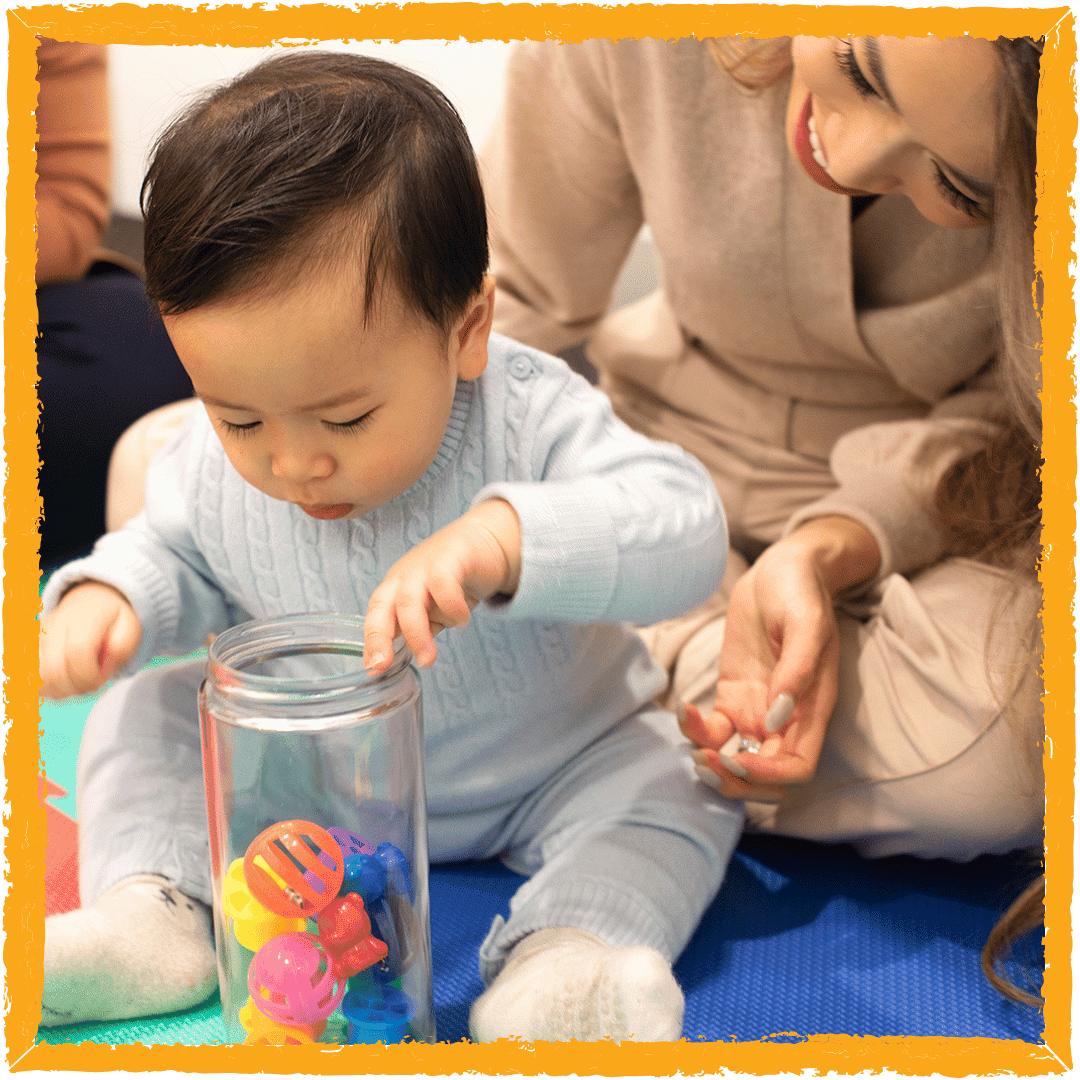
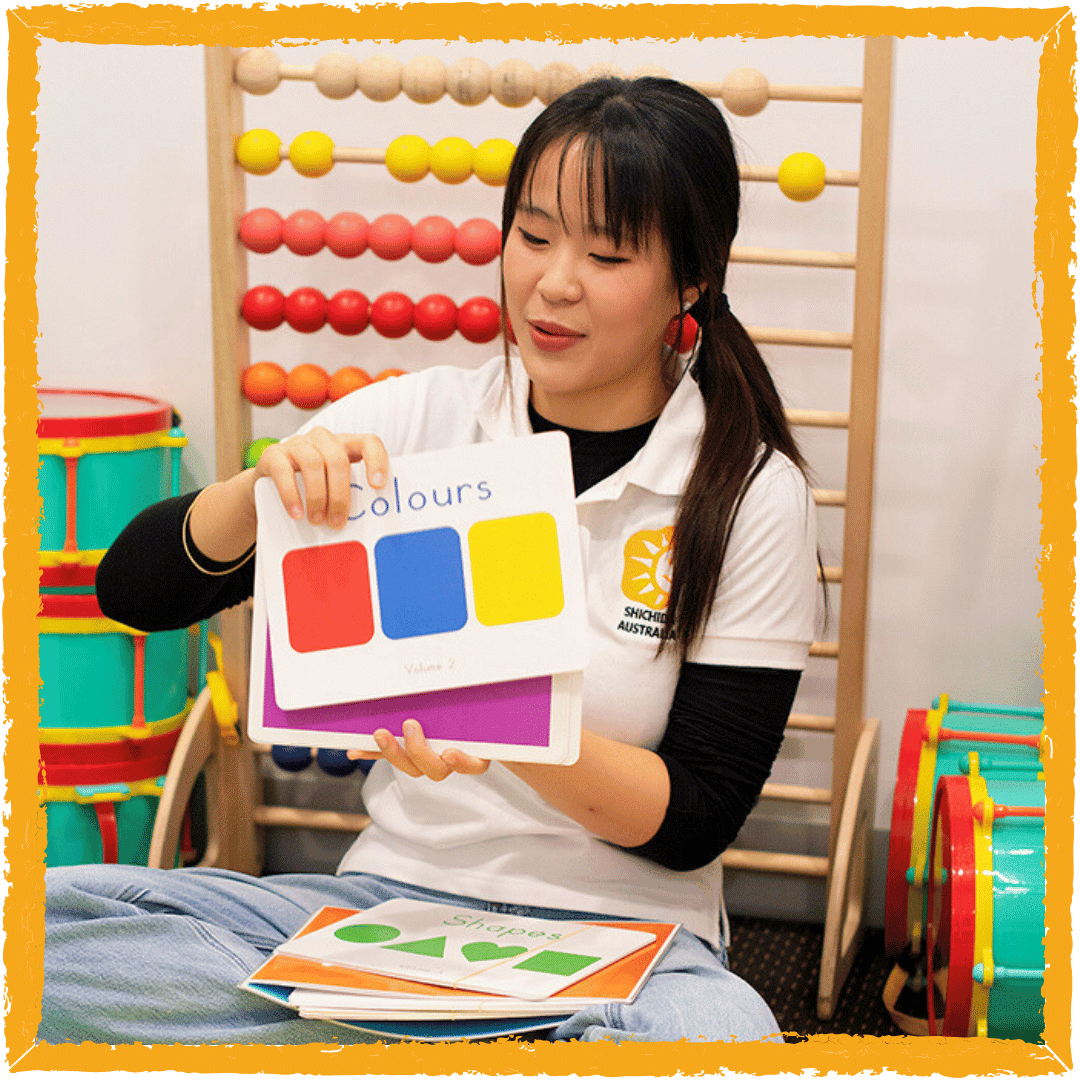
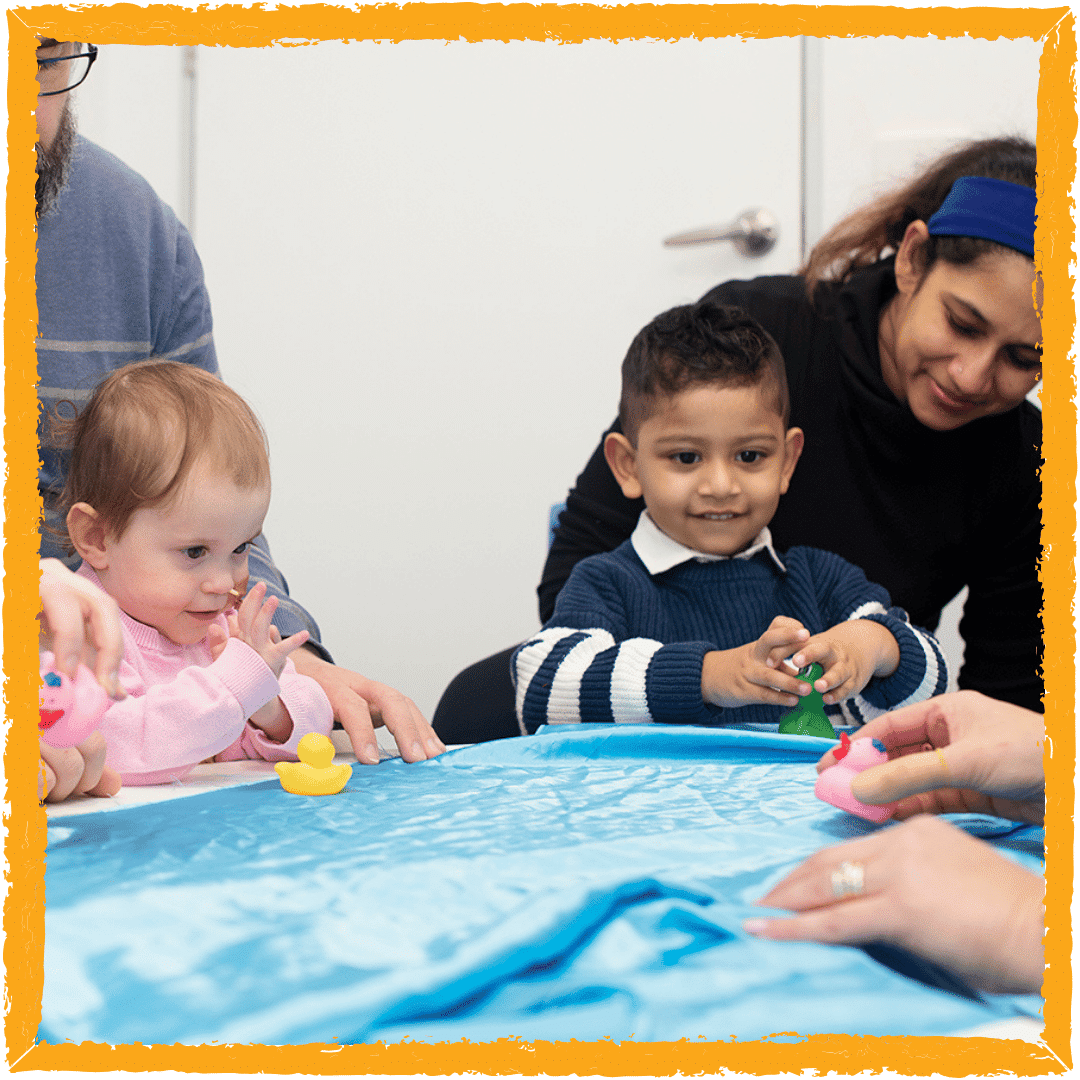
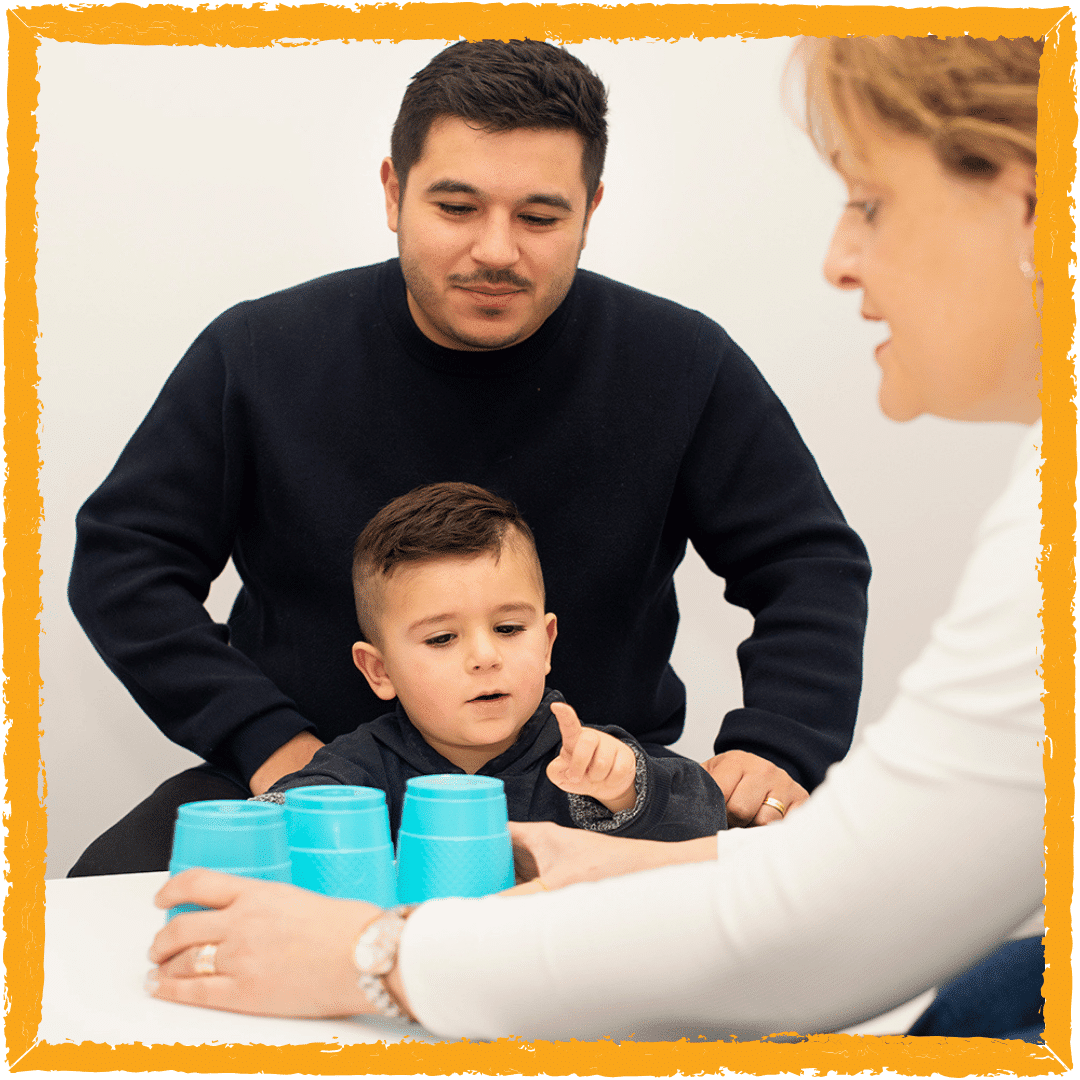
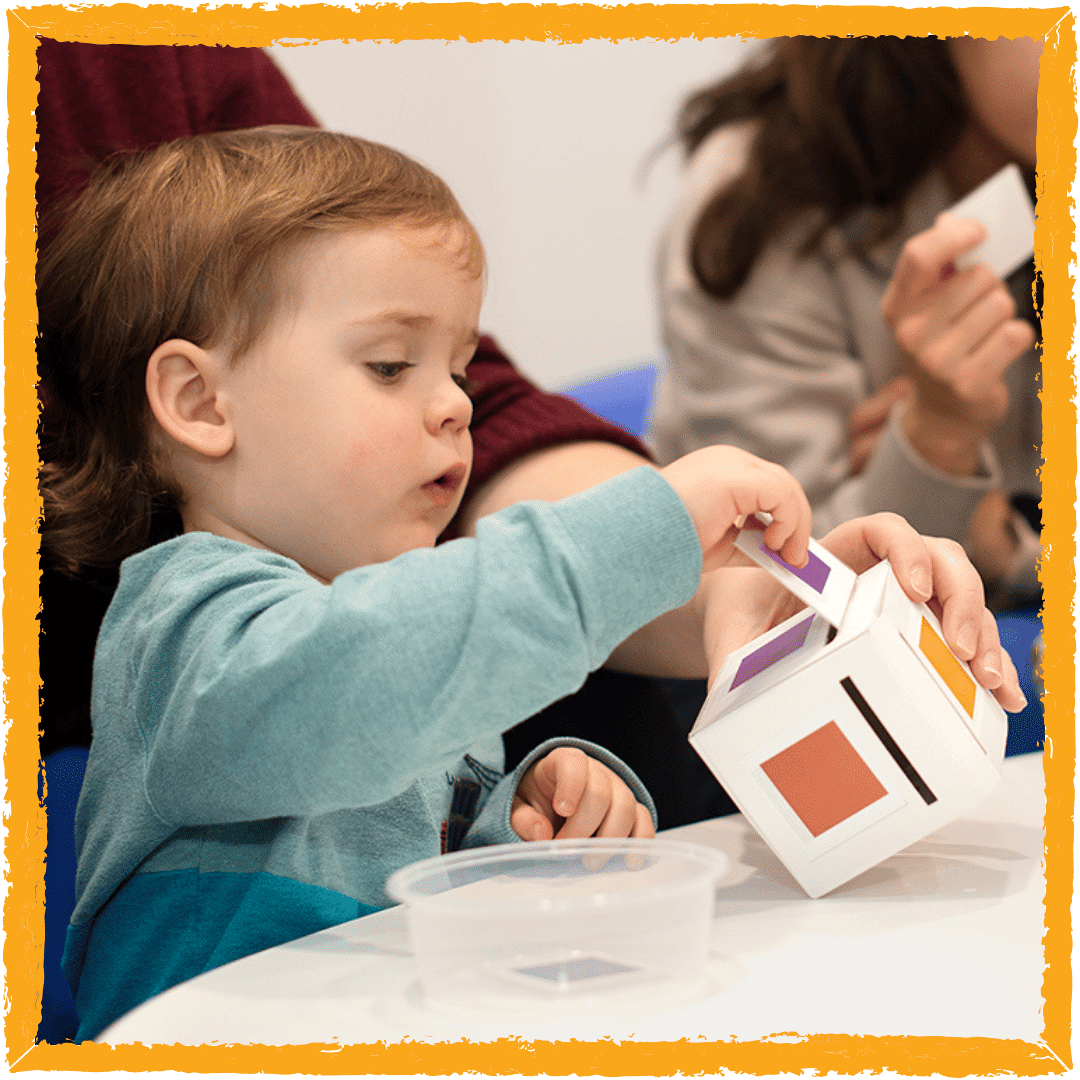
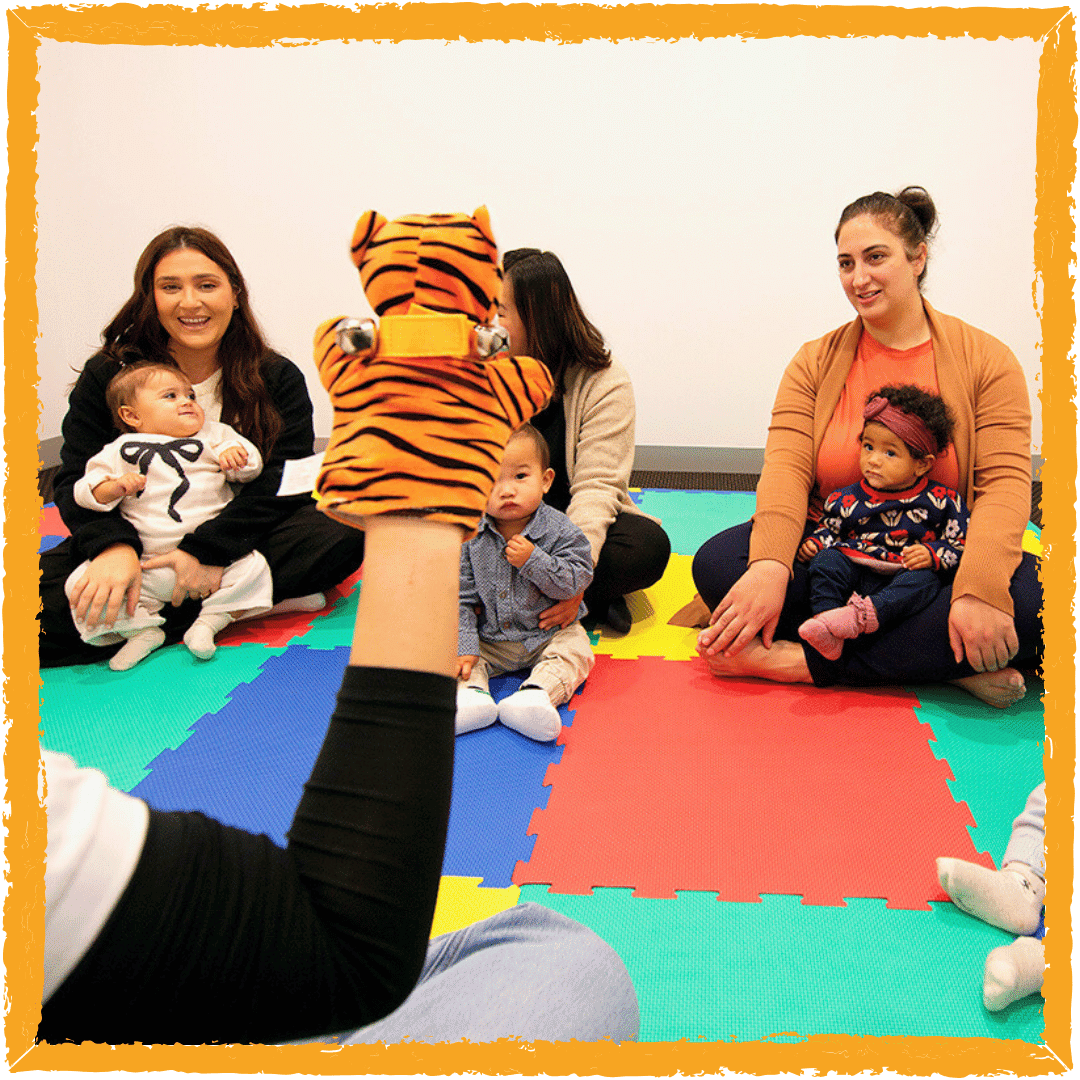
Image by Shichida Australia: Toddlers playing fine motor development games, guided by an instructor and one parent each.
What Is Observational Learning?
Observational learning is a type of learning that happens when children watch others and later copy or apply what they have seen. This includes actions, words, emotional responses, and social behaviours. In early childhood, observational learning happens constantly, often without adults noticing.
Your child learns how to speak by hearing you talk. They learn how to manage frustration by watching how you react when something goes wrong. They learn how to treat others by observing how you interact with family members, strangers, and friends.
Psychologist Albert Bandura introduced this concept through social learning theory. He showed that children learn through observation, memory, and motivation. This makes observational learning a core part of early childhood learning and child development.
Observational Learning in Simple Terms
In simple terms, observational learning means children learn by watching. When your toddler copies how you wave goodbye, says a word you often use, or pretends to cook after watching you in the kitchen, that is learning through observation. Your child is paying attention, remembering what they saw, and trying it themselves later.
Observational Learning vs Imitation
Imitation is often immediate copying. Observational learning goes deeper. It involves watching, understanding, remembering, and applying behaviour later in a new situation. A child may watch how you calm yourself when stressed and use that strategy days later during play. That is observational learning, not just imitation.
Children don’t just learn by being told what to do – they learn by watching how we interact with the world. Sensory play gives them something meaningful to watch, process, and imitate.
Download a free sensory play guide with practical ideas you can use at home – helping build focus, coordination, and early thinking skills.
Why Observational Learning Is Critical in the Early Years
Early childhood is a period of rapid brain development. During these years, children are especially sensitive to social information. Their brains are wiring connections that support language, emotional regulation, problem-solving, and behaviour. Learning by watching fits perfectly with how young children naturally develop.
Observational learning supports early language growth as children absorb vocabulary, sentence structure, and tone. It shapes social learning in children by helping them understand empathy, cooperation, and emotional expression. It also lays the foundation for school readiness by supporting attention, memory, and self-control.
Because children are not yet skilled at abstract thinking, they rely heavily on real-life examples. Watching trusted adults gives them concrete models for how the world works.
The Developing Brain and Learning by Watching
Young children’s brains are wired for social connection. Neural systems involved in attention, memory, and imitation are highly active in early childhood. This allows children to quickly absorb behaviours and patterns they see repeatedly. The brain treats familiar adults as key sources of information, which is why your actions carry such weight.
Long-Term Benefits for Learning and Behaviour
Strong observational learning in early childhood supports confidence, resilience, and emotional regulation later in life. Children who experience consistent, positive modelling behaviour are more likely to develop healthy coping strategies, positive social skills, and a love of learning that continues into school and beyond.
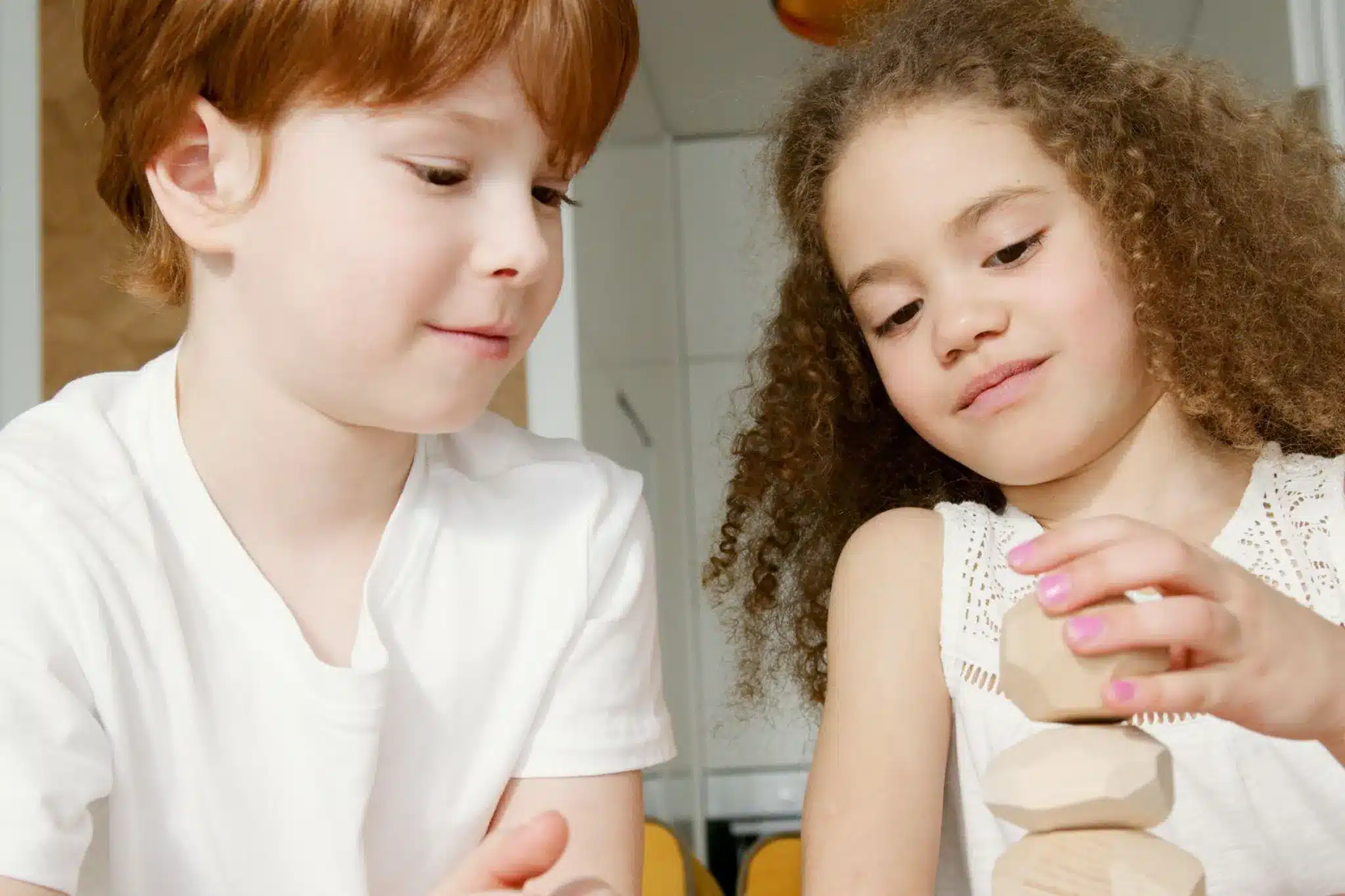
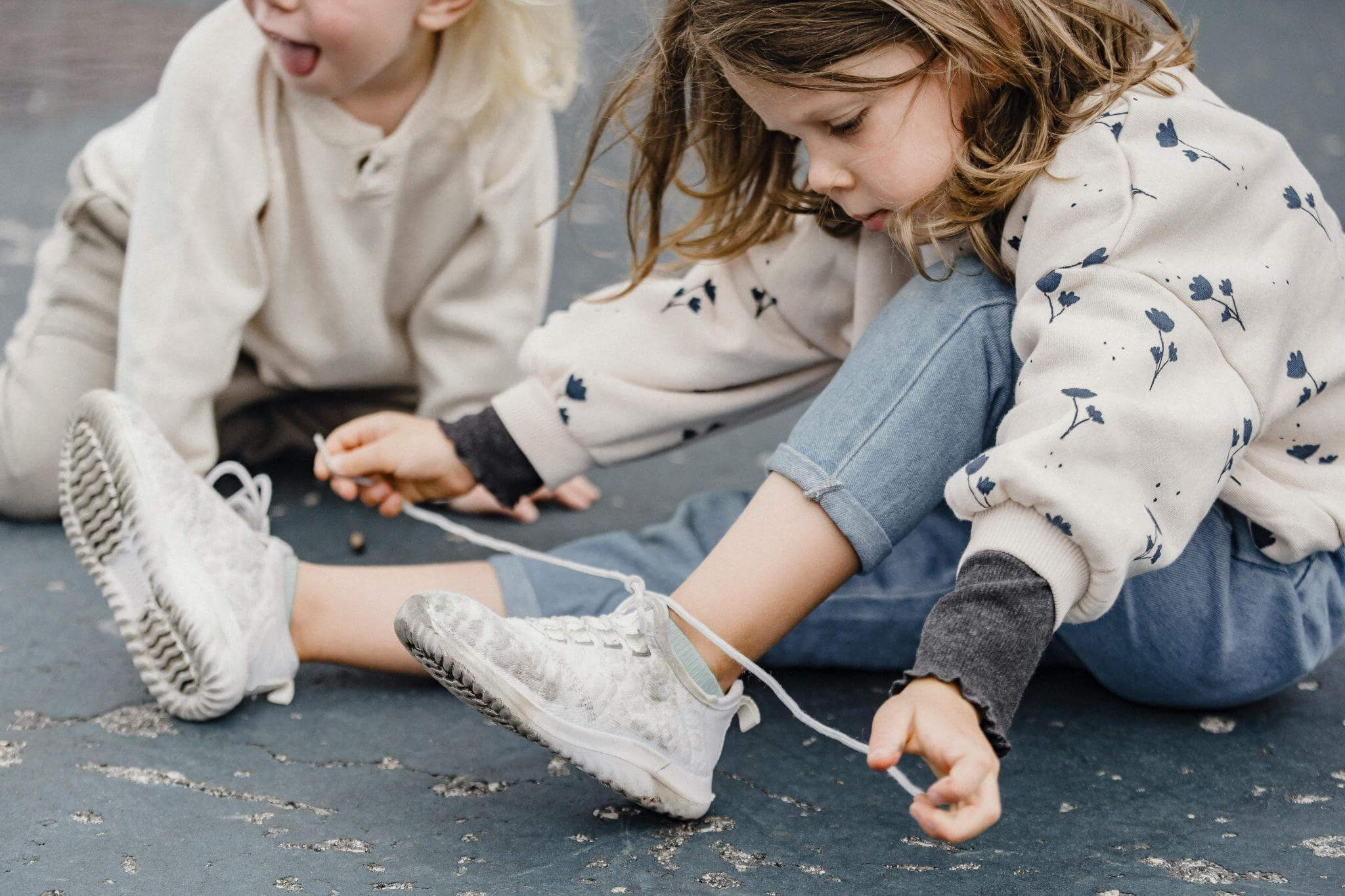
Photo from Pexels: Through observational learning, younger children naturally learn skills and routines by watching siblings at home.
Core Components of Observational Learning
Bandura’s social learning theory identifies four main components of observational learning. These apply beautifully to early childhood learning when viewed through a parent lens.
Attention – What Young Children Notice
Children pay attention to people they feel connected to. Parents, caregivers, siblings, and familiar peers naturally capture a child’s focus. Tone of voice, facial expression, emotion, and repetition all increase attention. If you are calm, engaged, and present, your child is far more likely to notice and learn from you.
Retention – Remembering What They Observe
Young children store what they observe in memory, even if they do not act on it straight away. They often replay these memories through pretend play, routines, or later conversations. When your child suddenly repeats a phrase you said days ago, that is retention at work.
Reproduction – Trying New Skills
Reproduction is when children attempt to copy or adapt what they have seen. This might look messy or imperfect at first. That is normal. Through repetition and experimentation, children refine these skills, whether it is tying shoes, using polite language, or expressing emotions.
Motivation – Why Some Behaviours Are Copied
Children are more likely to repeat behaviours that lead to positive outcomes. Praise, attention, emotional connection, and seeing others succeed all increase motivation. This is known as vicarious reinforcement. When a child sees someone else rewarded for a behaviour, they are more likely to try it themselves.
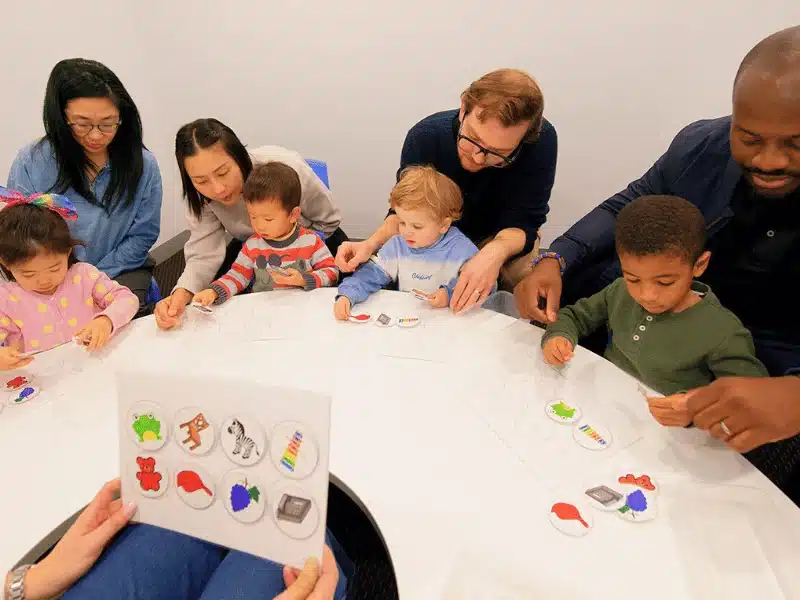
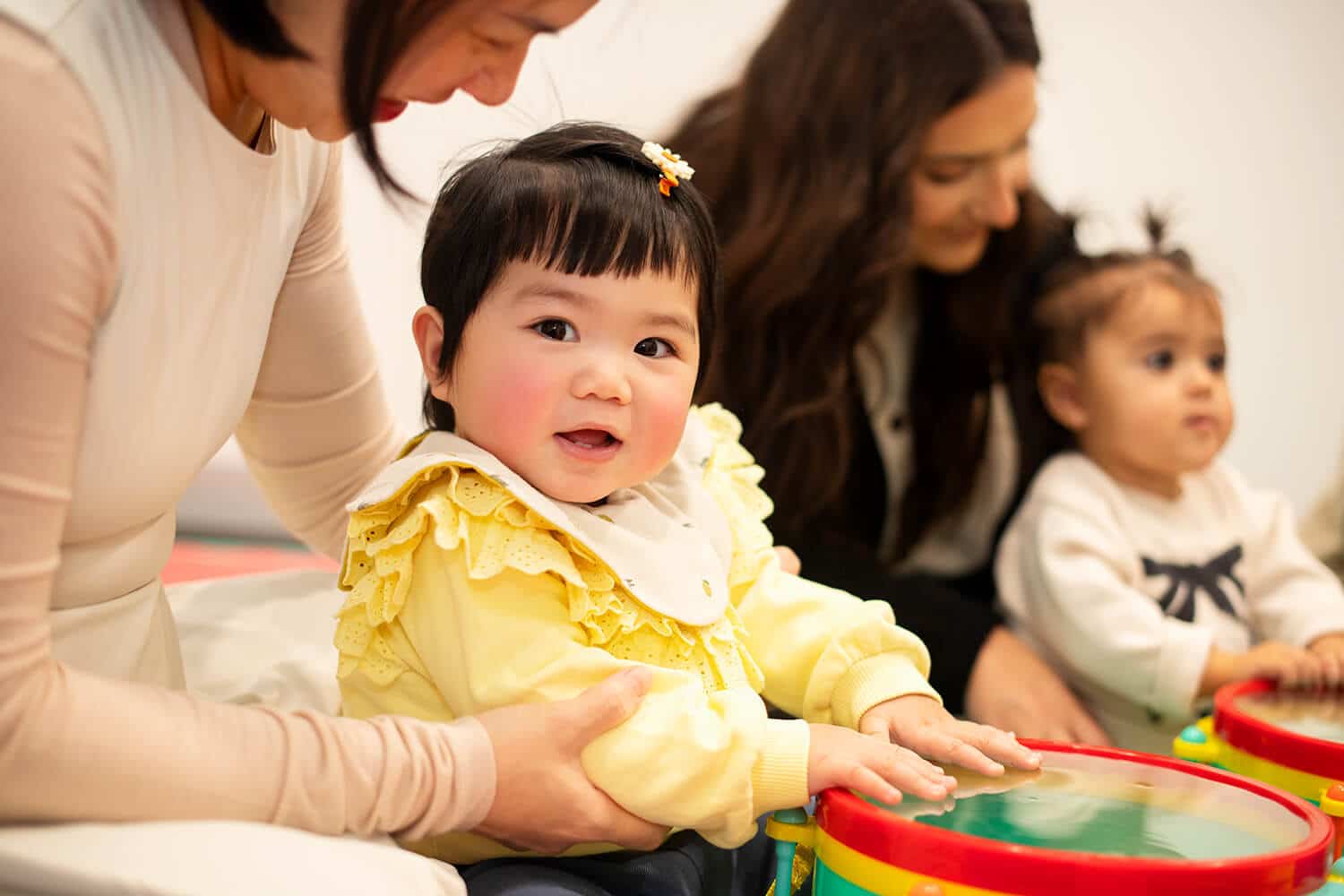
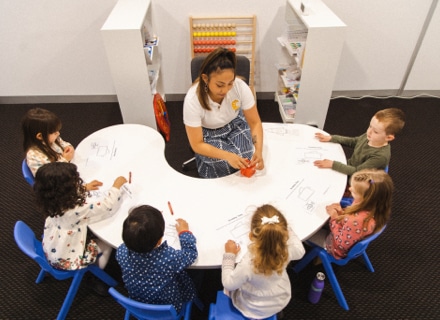
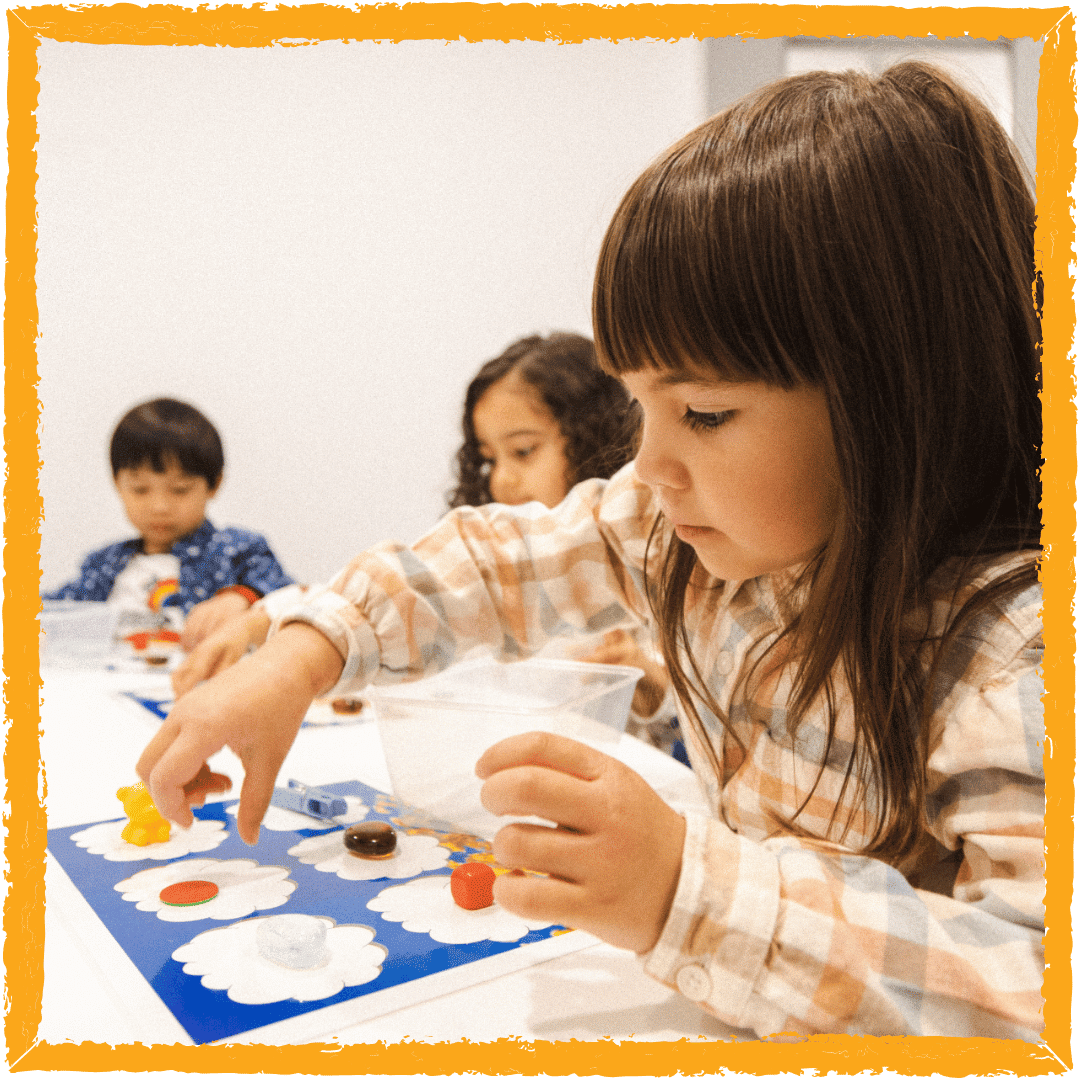
Image by Shichida Australia: Preschoolers playing memory development games alongside their parents in a Shichida class.
Observational Learning in Young Children
Observational learning looks different depending on age, but it is present from birth. Babies, toddlers, and preschoolers all learn through observation, even before they can explain what they know.
Language and Communication Development
Children learn language by listening and watching. They pick up vocabulary, pronunciation, rhythm, gestures, and conversation patterns through daily interaction. When you talk through what you are doing, respond to your child’s attempts to communicate, and model respectful conversation, you are supporting language development through observation.
Social and Emotional Learning
Social learning in children relies heavily on watching others. Children observe how emotions are expressed, how conflicts are handled, and how empathy is shown. When they see adults label feelings, apologise, or comfort others, they learn how to do the same.
Behaviour and Daily Life Skills
From brushing teeth to tidying up toys, children learn daily routines by watching. Independence grows when children see tasks modelled calmly and consistently. Manners, self-care, and responsibility all develop through repeated observation and practice.
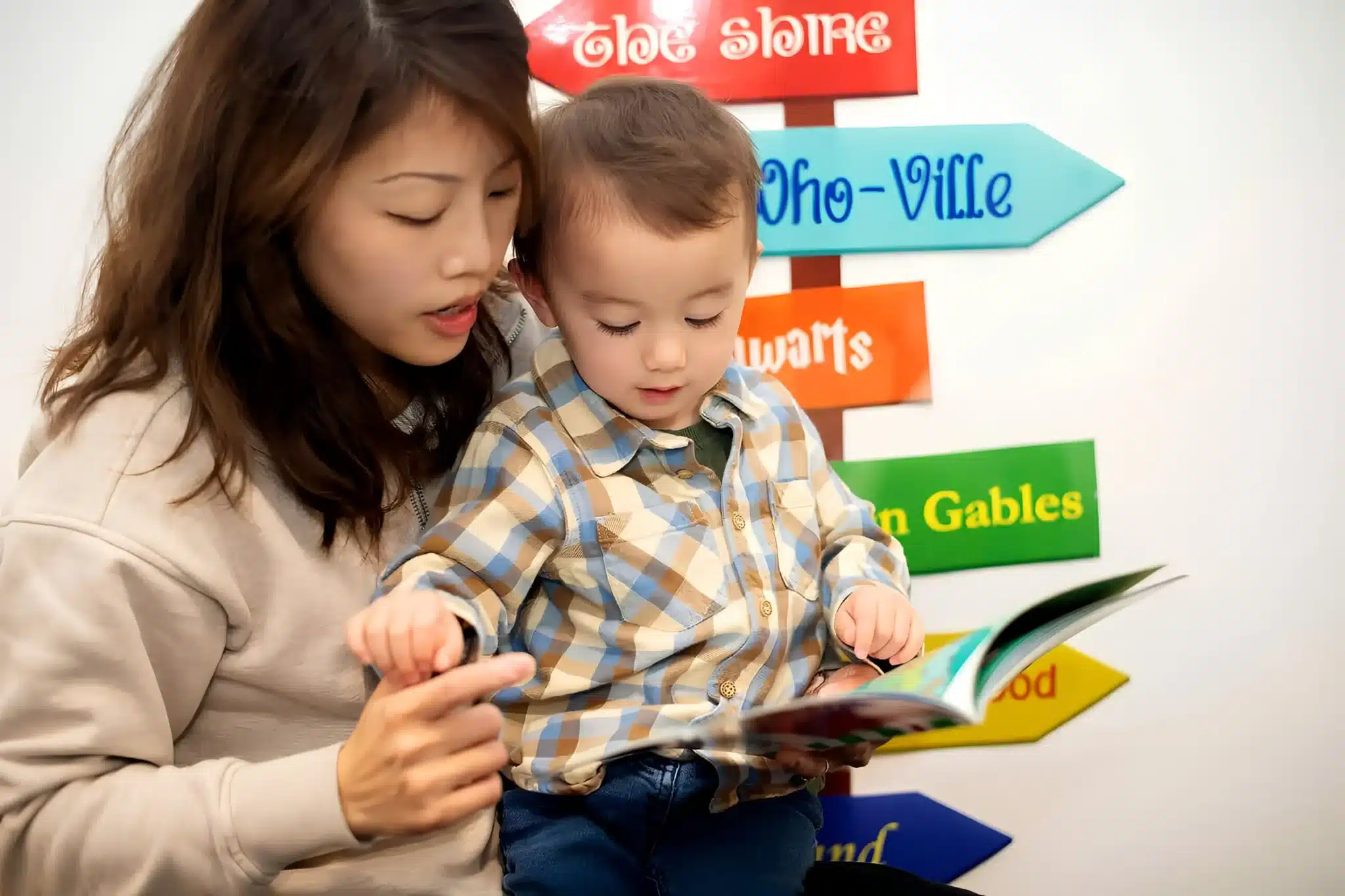
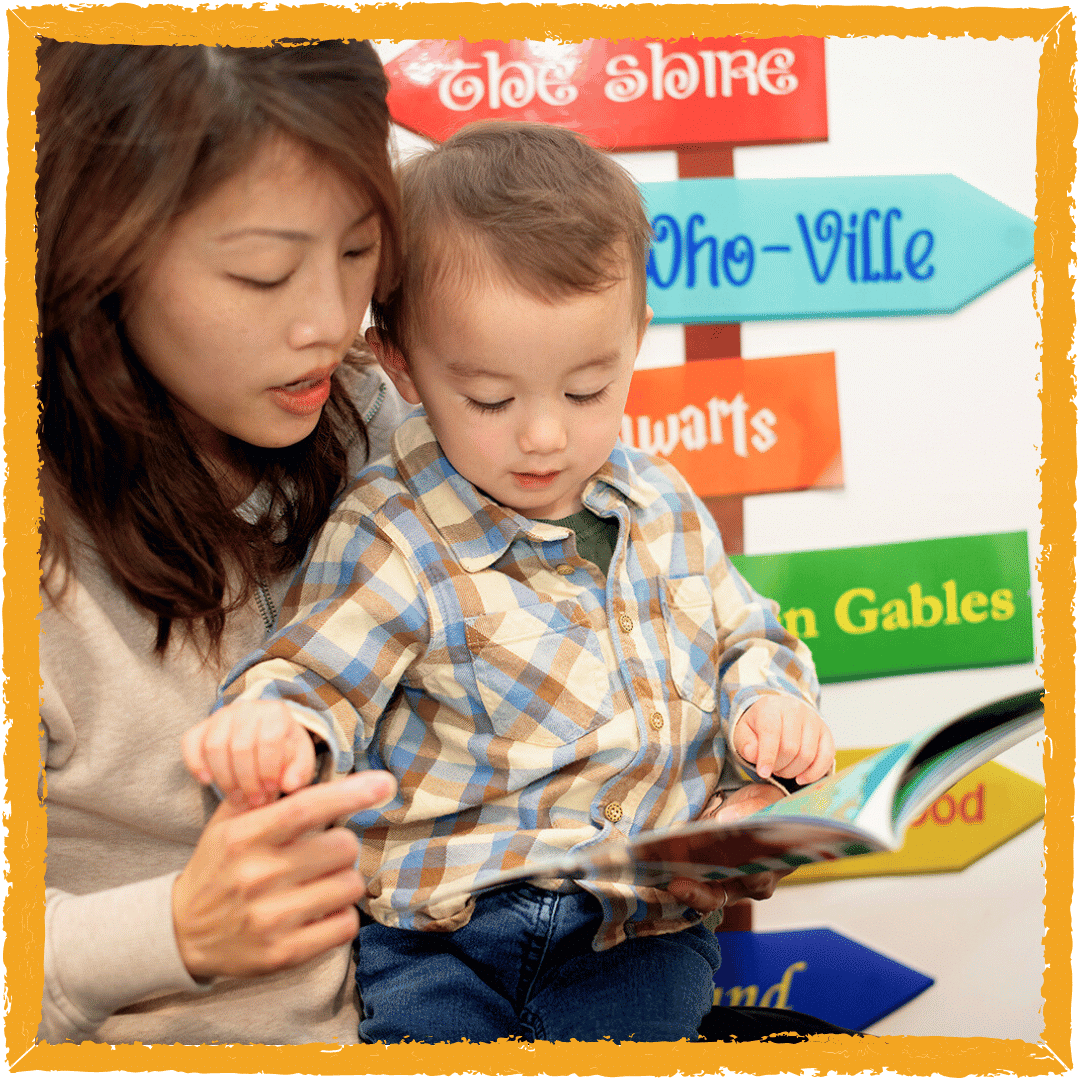
Image by Shichida Australia: A mum and her toddler reading together, while waiting for their Shichida class to start.
Observational Learning at Home and in Early Learning Settings
Observational learning happens everywhere. Home environments, childcare centres, and preschools all provide rich opportunities for learning through observation. Adults and peers serve as constant role models.
Parents and Caregivers as Role Models
As a parent, you are your child’s most influential teacher. Your language, habits, emotional responses, and attitudes are absorbed daily. This does not mean you must be flawless. It means being mindful and reflective. Showing how you handle mistakes, manage stress, and treat others teaches powerful lessons.
Learning from Peers and Siblings
Children learn a great deal from watching other children. Siblings and peers model play skills, communication, and social problem-solving. Group settings offer valuable opportunities for children to observe cooperation, negotiation, and emotional regulation in action.
Observational Learning and Screen Exposure
Screens are now part of many children’s lives, so it is important to understand how they influence observational learning.
Positive Modelling Through Media
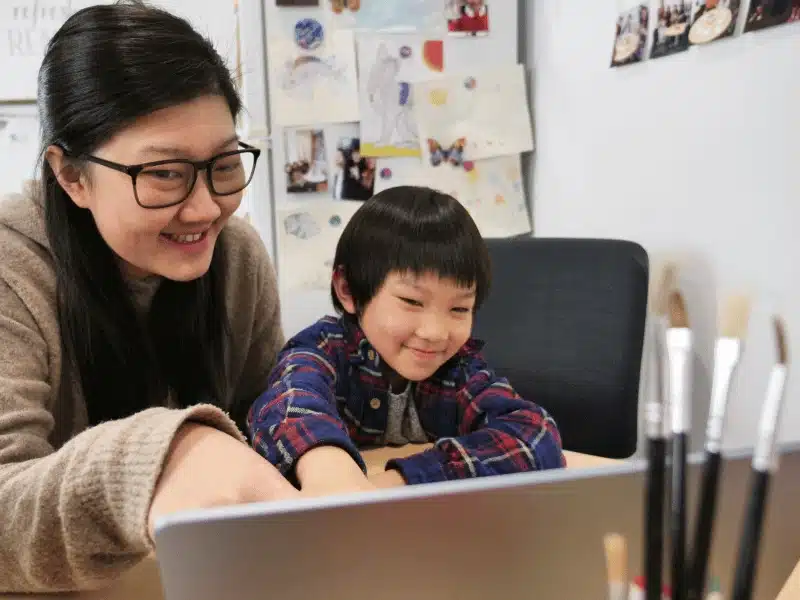
High-quality, age-appropriate content can support learning when used thoughtfully. Programmes that show positive social interactions, emotional expression, and problem-solving can reinforce learning, especially when parents watch and discuss content with their child.
Risks of Passive or Inappropriate Viewing
Children can also learn negative behaviours through observation on screens. Fast-paced or aggressive content may overwhelm young brains. Passive viewing without interaction limits learning. Co-viewing, setting boundaries, and choosing appropriate content help protect healthy development.
How Parents Can Encourage Healthy Observational Learning
Supporting observational learning does not require special tools or constant instruction. It is about being intentional and present.
Modelling Everyday Behaviours and Emotions
Model calm problem-solving, empathy, curiosity, patience, and resilience. Talk through your thinking when appropriate. Let your child see how you manage challenges and recover from mistakes.
Talking About What Children Observe
Simple conversations help children process what they see. Ask gentle questions, reflect feelings, and name behaviours. This deepens understanding and supports emotional and cognitive development.
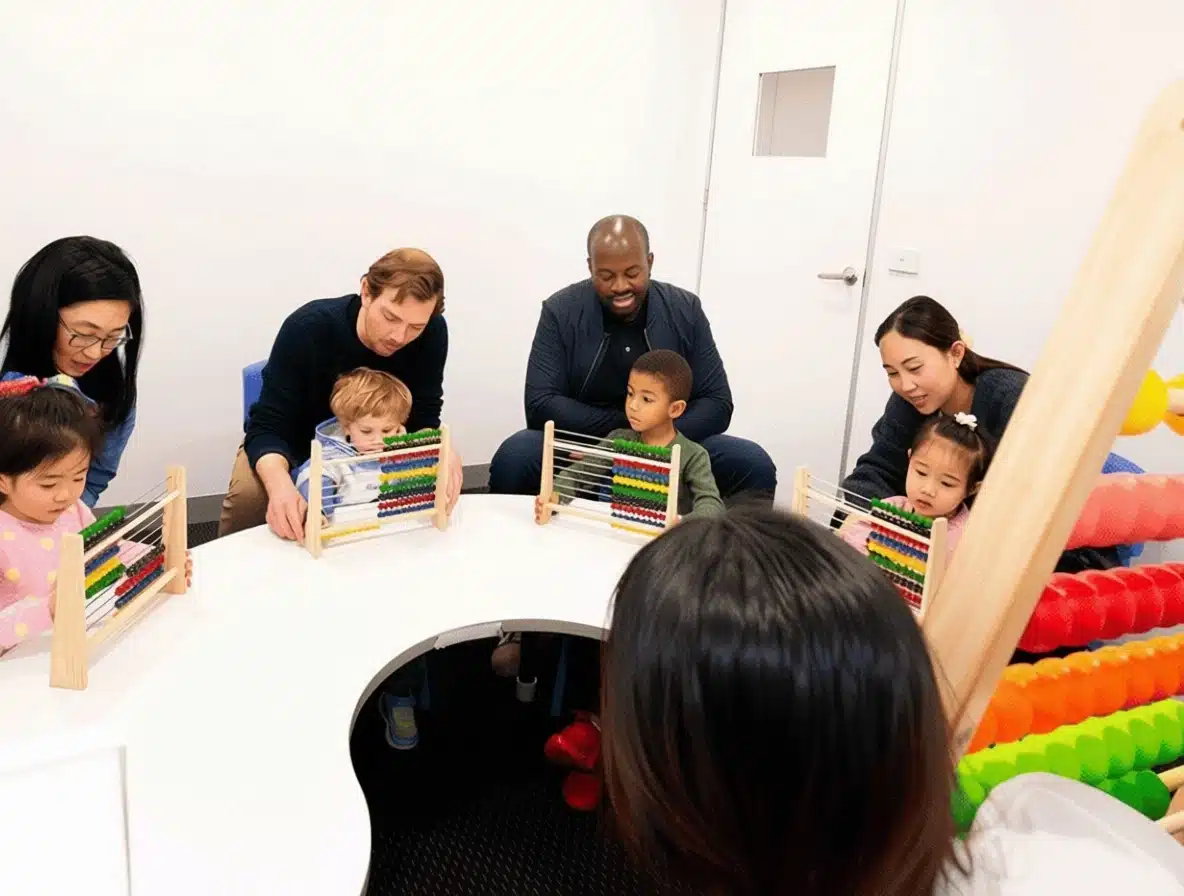
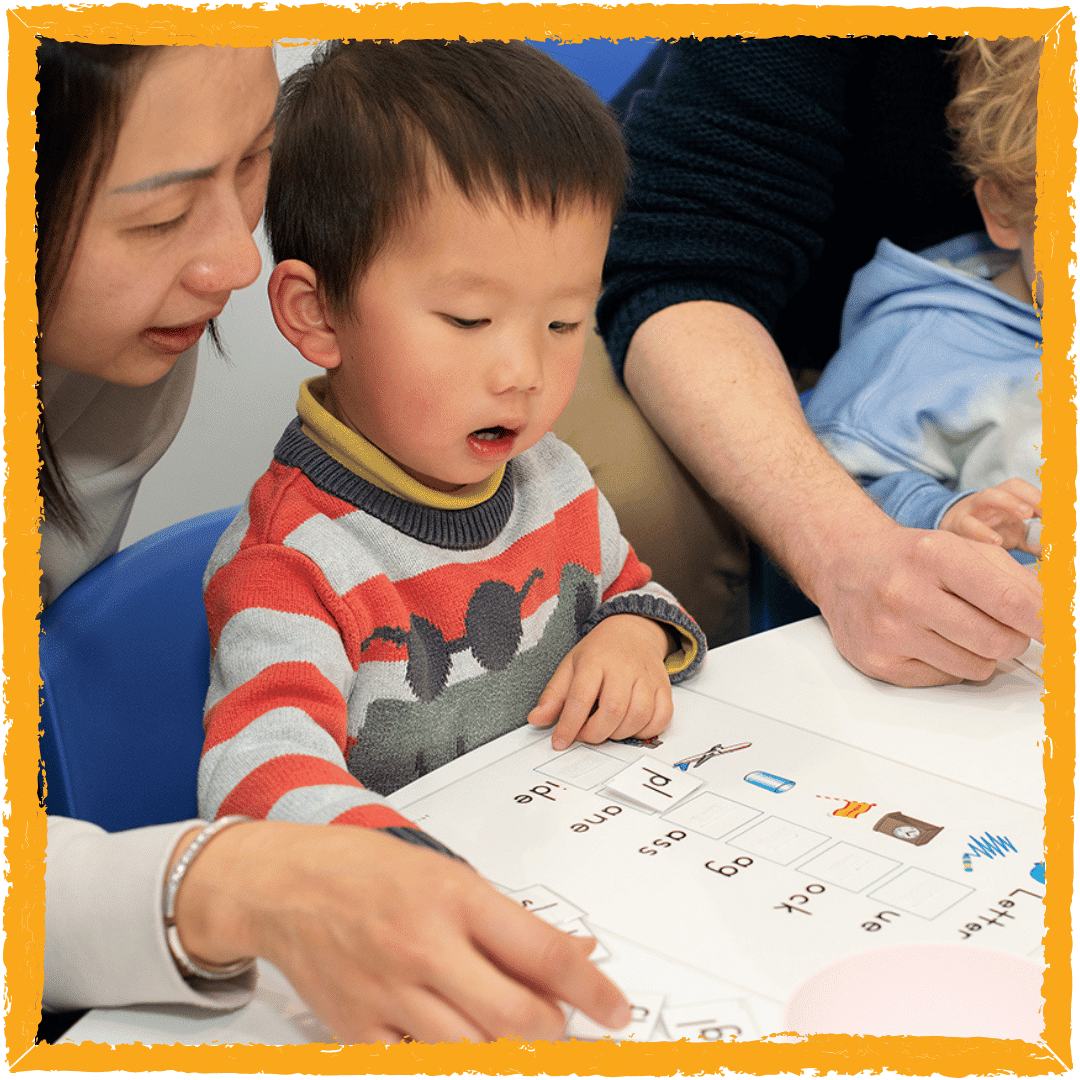
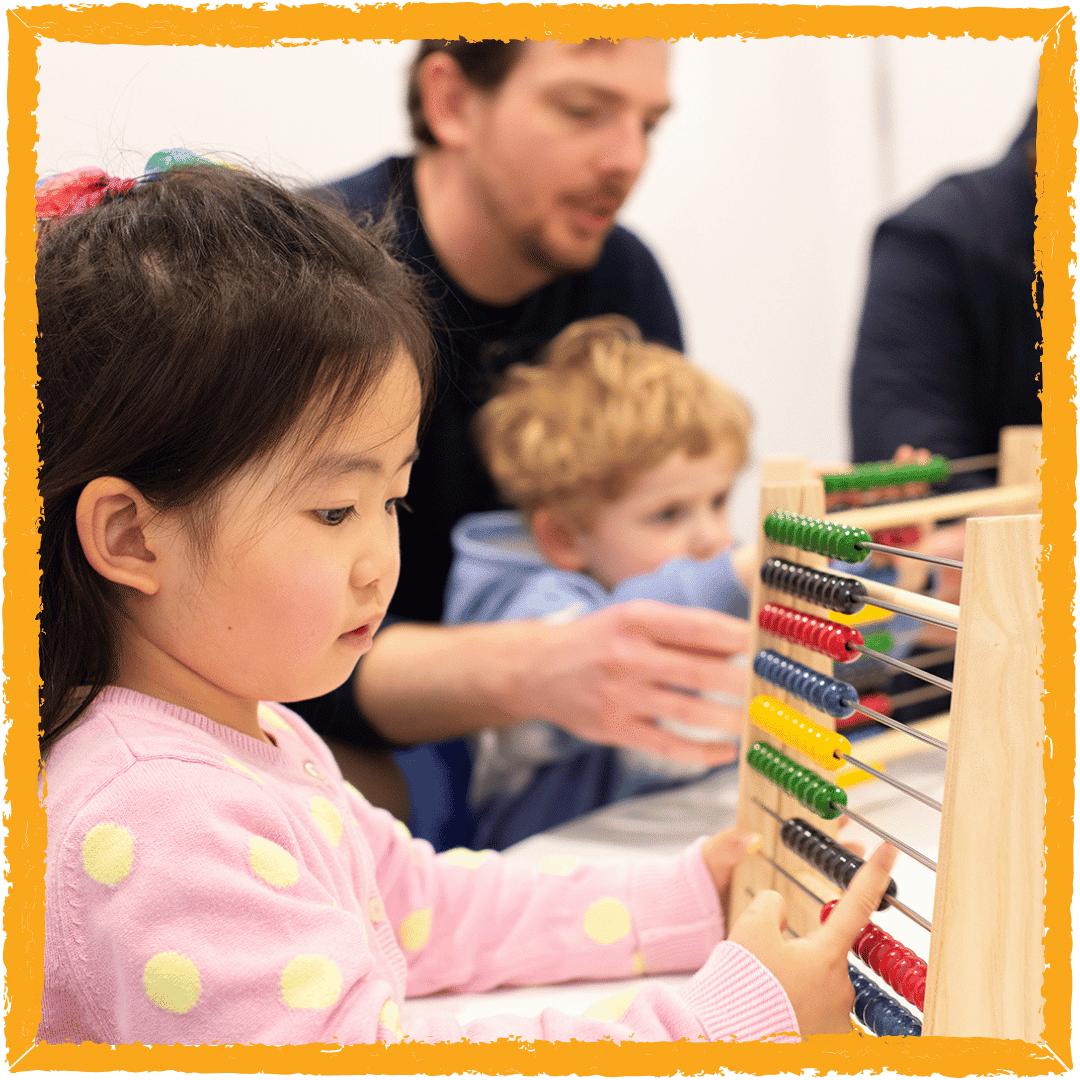
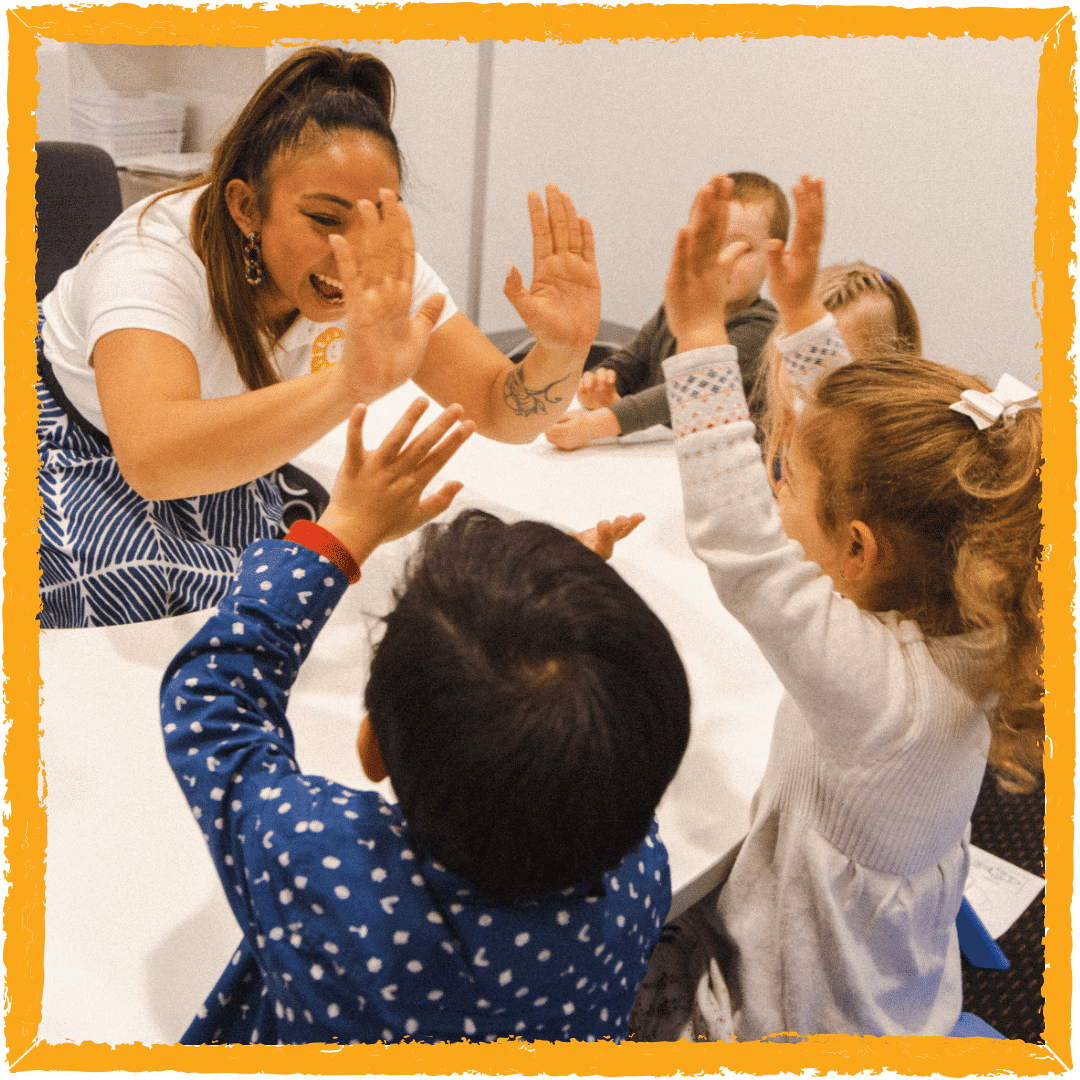
Image by Shichida Australia: Preschoolers practise skip counting, by watching a demonstration and then copying. Parents partake, making this an engaging and rewarding experience for young children!
How Shichida Classes Support Learning Through Observation
Observational learning does not stop at home. In Shichida classes, children learn by watching caring teachers, engaged parents, and other children model focus, curiosity, and calm problem-solving.
Through structured, age-appropriate activities, children observe positive learning behaviours and naturally begin to mirror them. Parents are actively involved in every class, gaining practical ways to model learning, communication, and emotional balance at home.
If you want to support your child’s development through intentional modelling and meaningful early learning experiences, book a trial class with Shichida Australia and see how learning by watching comes to life in a fun and nurturing classroom environment.
FAQs: Observational Learning in Early Childhood
Observational learning in early childhood is when children learn skills, behaviours, and emotions by watching others and later applying what they observed.
They pay attention to familiar people, store what they see in memory, and practise behaviours when motivated by connection or positive outcomes.
Early childhood programs that involve parent participation, consistent modelling, and age-appropriate activities best support observational learning. Shichida Australia is designed around learning by watching, where children observe teachers, parents, and peers model focus, communication, problem-solving, and positive learning behaviours in every class.
No. Imitation is immediate copying, while observational learning involves understanding, memory, and later use.
Adults are trusted models. Children see adult behaviour as important information about how the world works.
Yes. Children can copy negative language or actions, which is why mindful modelling and guidance matter.
Be consistent, calm, and reflective. Focus on progress rather than perfection.
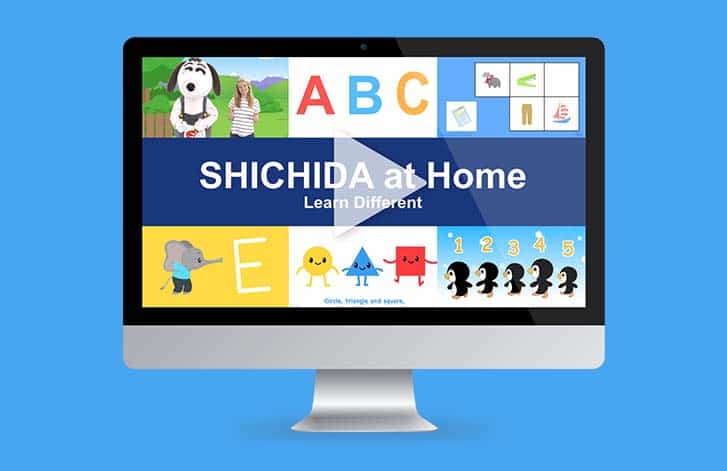
Screens influence learning depending on content, context, and adult involvement. Co-viewing supports healthier learning. SHICHIDA at Home offers safe content, perfect for developmental stages.
It supports language, emotional regulation, social skills, behaviour, and long-term learning habits.