How to Teach Problem Solving to Kids
Key Points: How to Teach Problem Solving to Kids
- Problem-solving skills begin developing from infancy and grow through everyday experiences.
- Children learn best when parents model thinking, not just provide quick answers.
- Age-appropriate strategies help children build confidence and independence.
- Daily routines offer powerful opportunities for teaching problem-solving.
- Learning how to teach problem solving to kids starts with giving them age-appropriate challenges and guiding them to think through solutions rather than giving answers.
- Structured enrichment programs like the Shichida Method can strengthen and extend problem-solving skills over time.
Why Teaching Problem Solving Matters
If you are raising a child under the age of 9, you are already helping them solve problems every day, whether you realise it or not. Each time your child works out how to reach a toy, manage frustration, or make a decision, their brain is practising important thinking processes.
Problem solving skills in early childhood play a major role in both learning and emotional development. Children who can work through challenges tend to be more resilient, adaptable, and confident. These abilities support friendships, classroom learning, and everyday independence.
This article will show you practical ways of how to help children solve problems using everyday moments, age-appropriate strategies, and gentle guidance that supports long-term cognitive skill development.
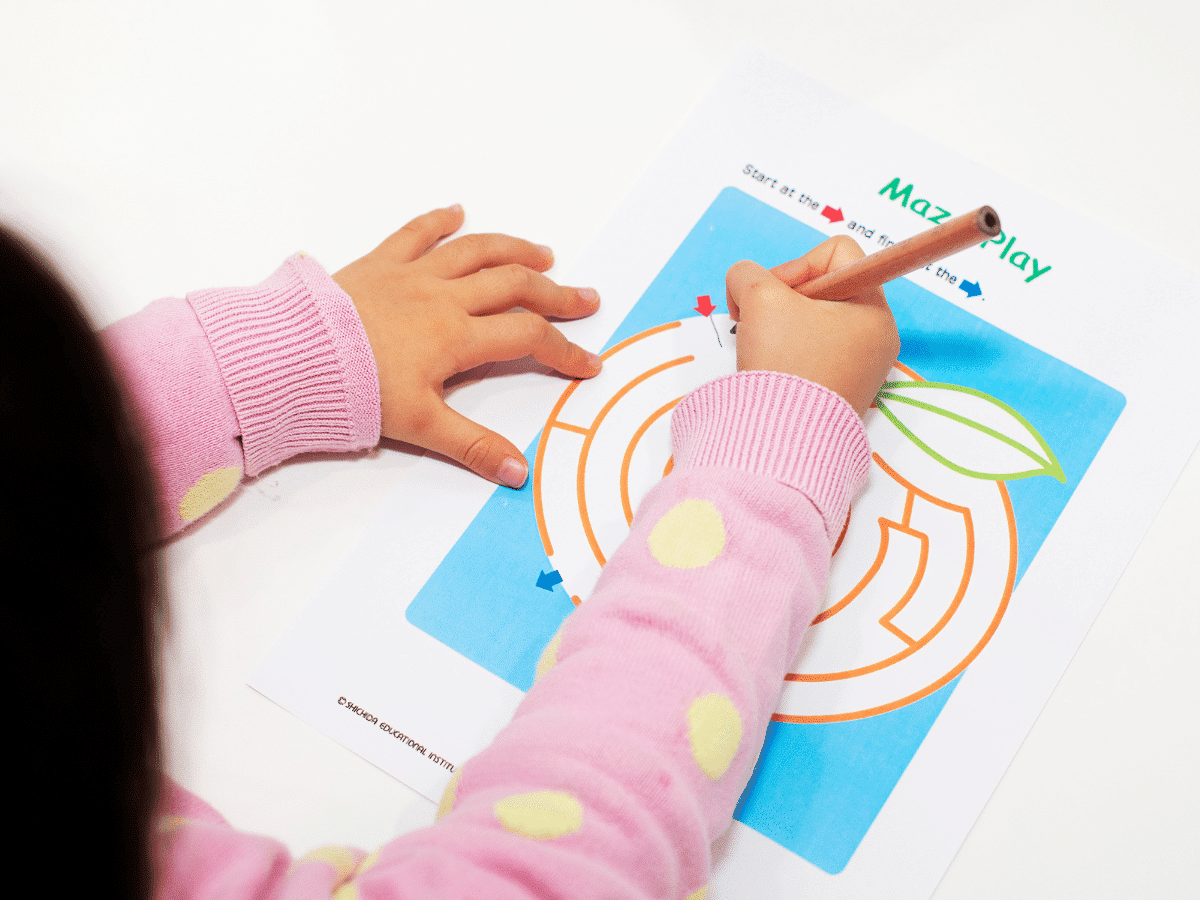
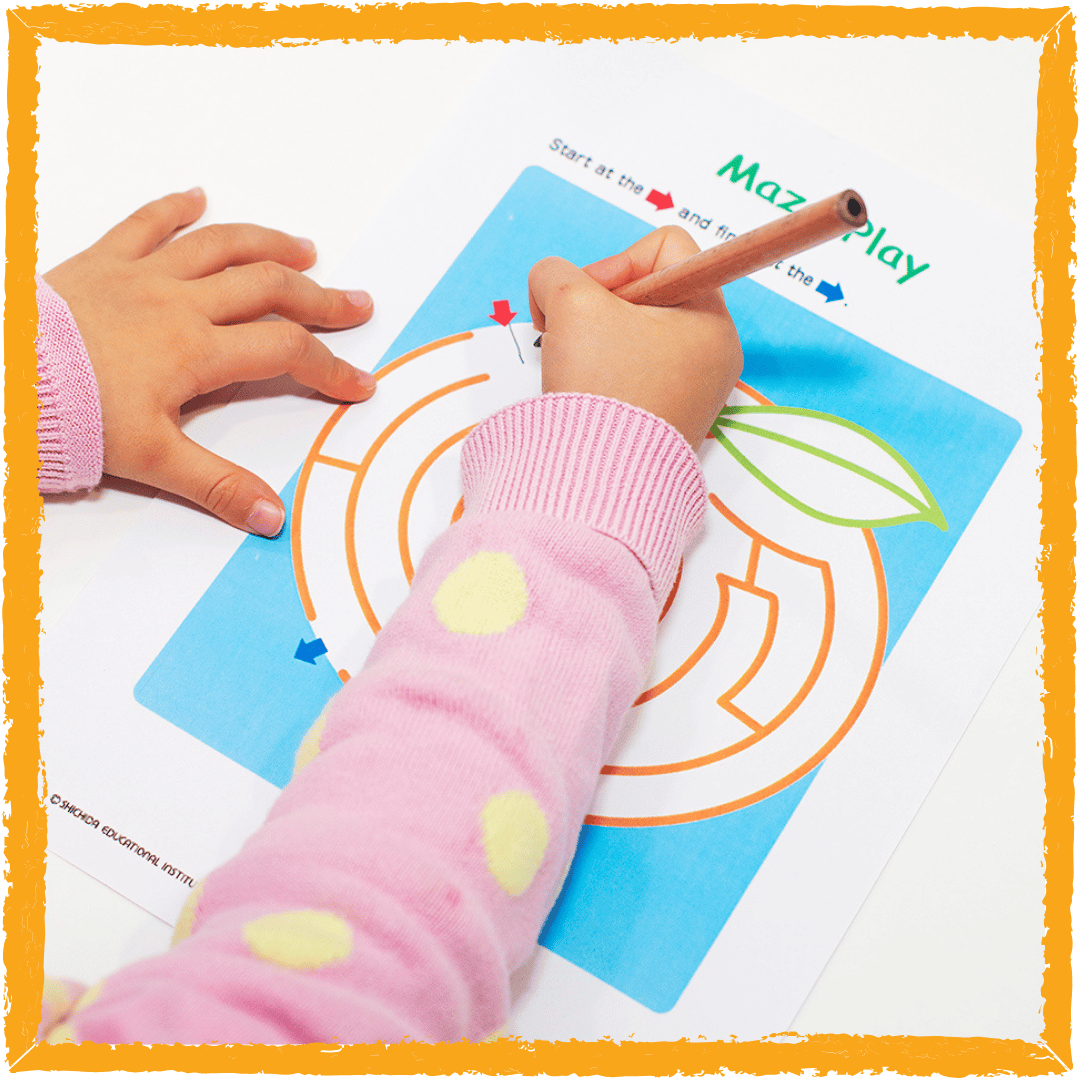
Photo from Shichida Australia: A preschooler completing a fun maze during a Shichida class. Mazes are great for developing critical thinking and problem solving skills, spatial awareness and fine motor skills.
What is Problem Solving for Kids?
For children, problem-solving means noticing a challenge, thinking about possible solutions, trying one out, and adjusting if it does not work. It brings together reasoning, creativity, persistence, and emotional regulation.
These abilities appear differently as children grow. A toddler experiments with stacking blocks. A preschooler negotiates roles during pretend play. An early primary child plans steps to complete a task. These are all real-life examples of problem solving for kids.
When supporting children, the goal is not quick answers. It is helping them trust their intuition and ability to think things through.
Download a free sensory play guide with practical ideas you can use at home – helping build focus, coordination, and early thinking skills.
When Do Children Learn Problem-Solving Skills?
Children begin learning how to solve problems from infancy through play, observation, and everyday interaction. The early years are especially important for brain development, making this a key stage for teaching thinking skills to kids in natural ways.
Babies (0-1) – Sensory Exploration, Early Cause and Effect
In the first year, babies learn problem-solving through sensory experiences and repetition. Actions such as shaking a rattle to hear a sound, kicking to move a mobile, or dropping an object and watching it fall help babies understand cause and effect.
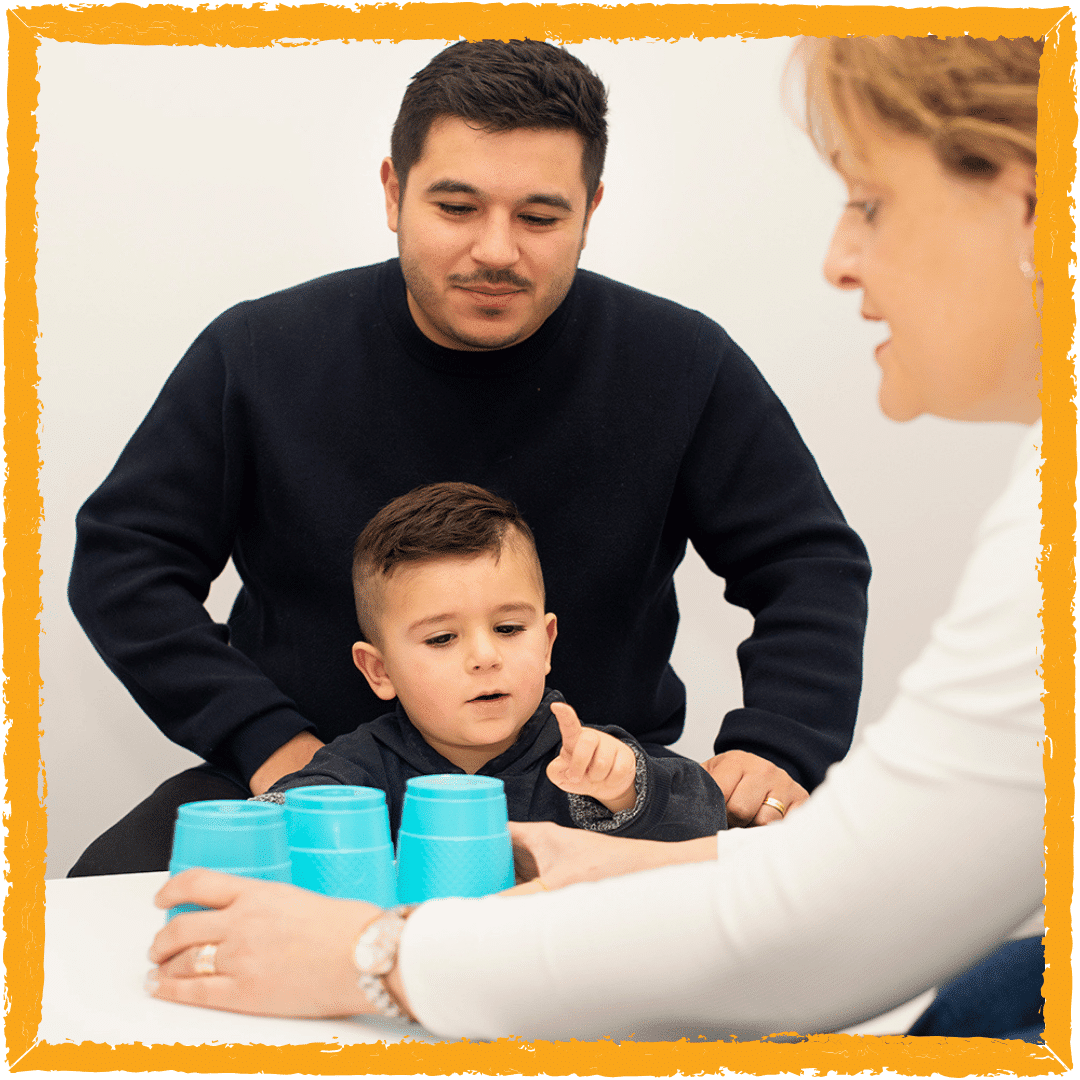
Babies also start recognising patterns in routines and repeated sounds. Activities like peekaboo, stacking and knocking over cups, posting objects into containers, and reaching for slightly out-of-reach toys support early thinking by building curiosity, focus, and experimentation.
Toddlers (1-2) – Cause and Effect, Trial and Error
Toddlers solve problems through trial and error. They test different actions to see what works, such as fitting shapes into a sorter, stacking blocks, opening containers, or moving objects to reach a goal.
Everyday play and daily routines give toddlers opportunities to practise persistence and flexible thinking. Providing time, space, and minimal interruption allows learning to happen naturally.
Preschoolers (3-5) – Choice-Making, Pretend Play, Reasoning
Preschoolers develop problem-solving through imaginative play, simple planning, and decision-making. Pretend play, puzzles, construction toys, and simple games encourage children to think ahead and adapt when plans change.
Asking open-ended questions like “What could you try next?” helps children practise reasoning and express their ideas.
Early Primary (6-9) – Planning, Logic, Strategy, Reflection
At this stage, children can plan, use logic, and reflect on outcomes. Problem-solving becomes more structured and goal-oriented.
Board games, strategy games, multi-step puzzles, maths challenges, and group tasks help children practise sequencing, evaluating what worked, and adjusting their approach.
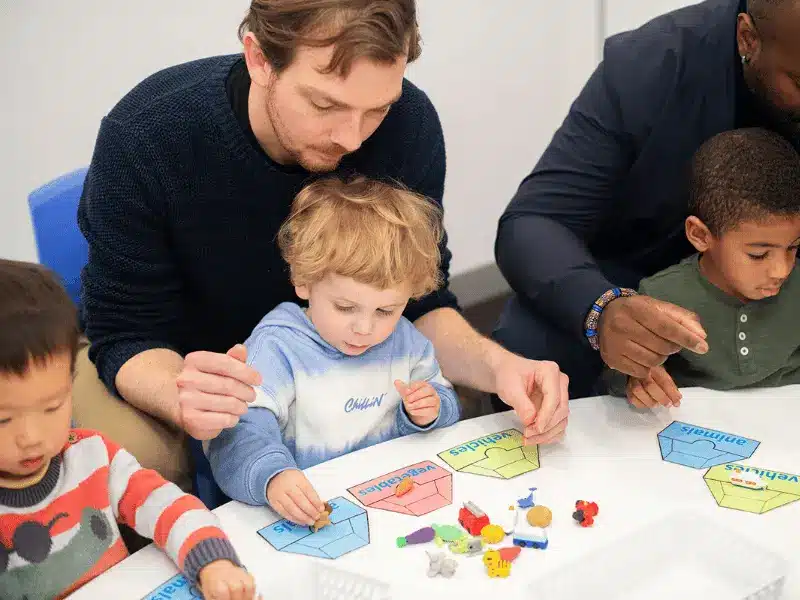
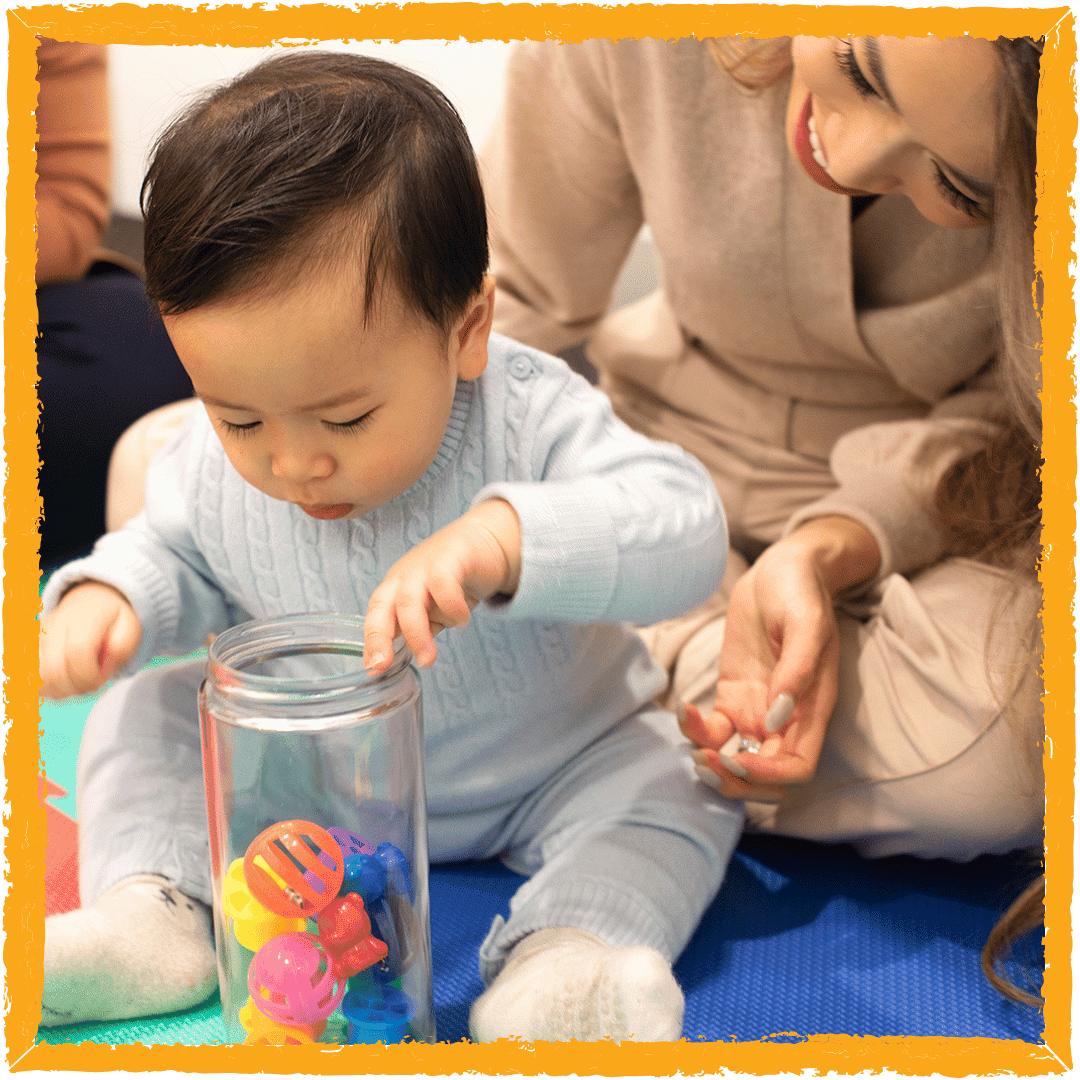
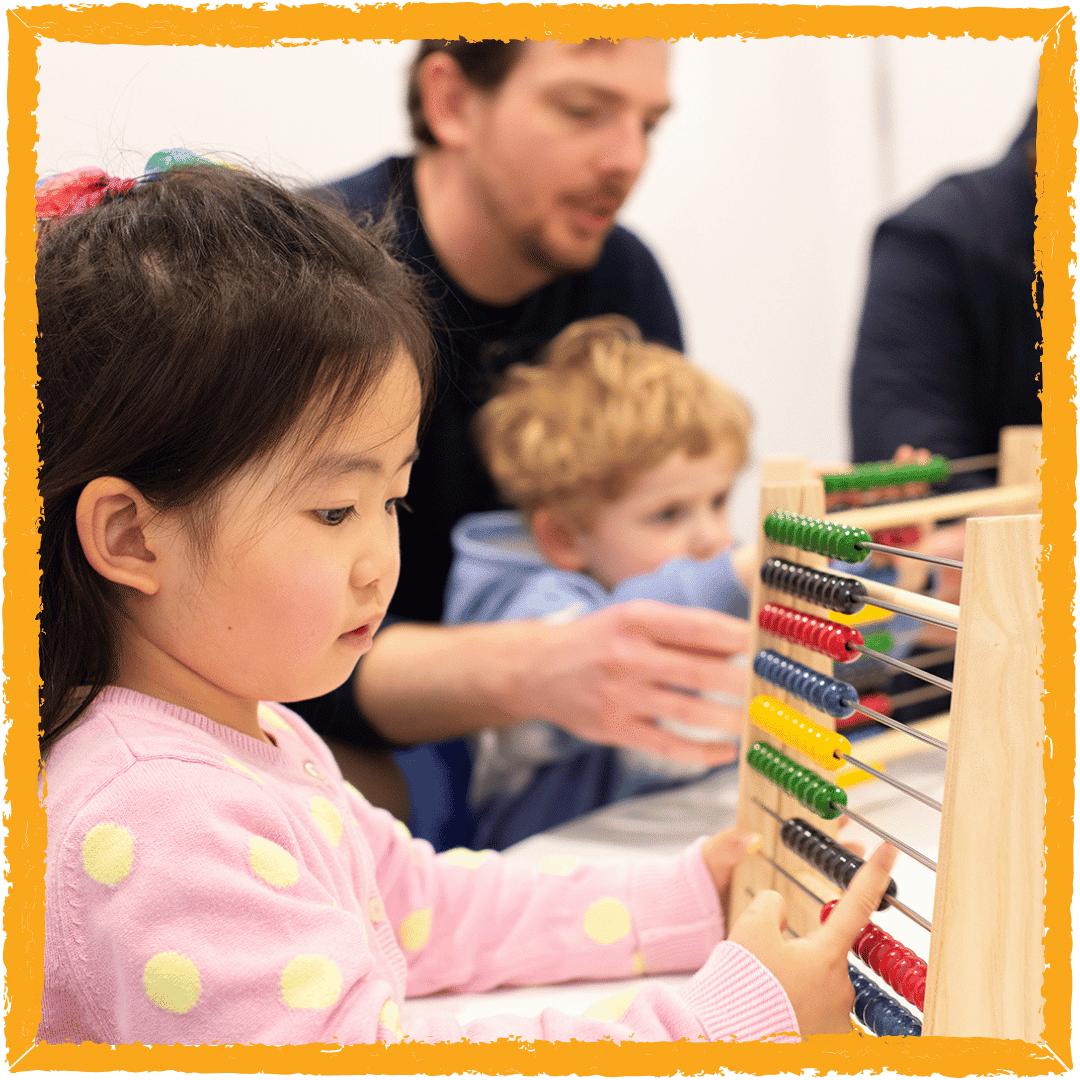
Photo from Shichida Australia: Play-based learning is one of the most effective ways for parents to practise how to teach problem solving to kids through collaboration, decision-making, and reflection.
How to Teach Problem Solving to Kids – Step-by-Step
1. Model the Thinking Process
Children learn how to think by watching you. When you talk through your own thinking, you show them that problem-solving takes time.
Try saying things like, “This hasn’t worked yet. I need to think of another idea.” This normalises struggle and persistence.
2. Ask Open-Ended Questions
Open-ended questions encourage deeper thinking. Questions such as “What could we try next?” or “What do you think will happen if we do this?” create a safe space for exploration without fear of being wrong.
3. Break Problems into Steps
Big problems can feel overwhelming. Teaching problem-solving to kids often means helping them break challenges into smaller steps. Visual supports like drawings or simple lists can be especially helpful.
4. Allow Productive Struggle
Resist the urge to solve problems for your child. Productive struggle helps children build resilience and confidence. Praise effort and thinking rather than outcomes.
5. Reflect After the Task
After a task, talk about what worked, what did not, and what could be done differently next time. Reflection helps children apply learning to future situations.
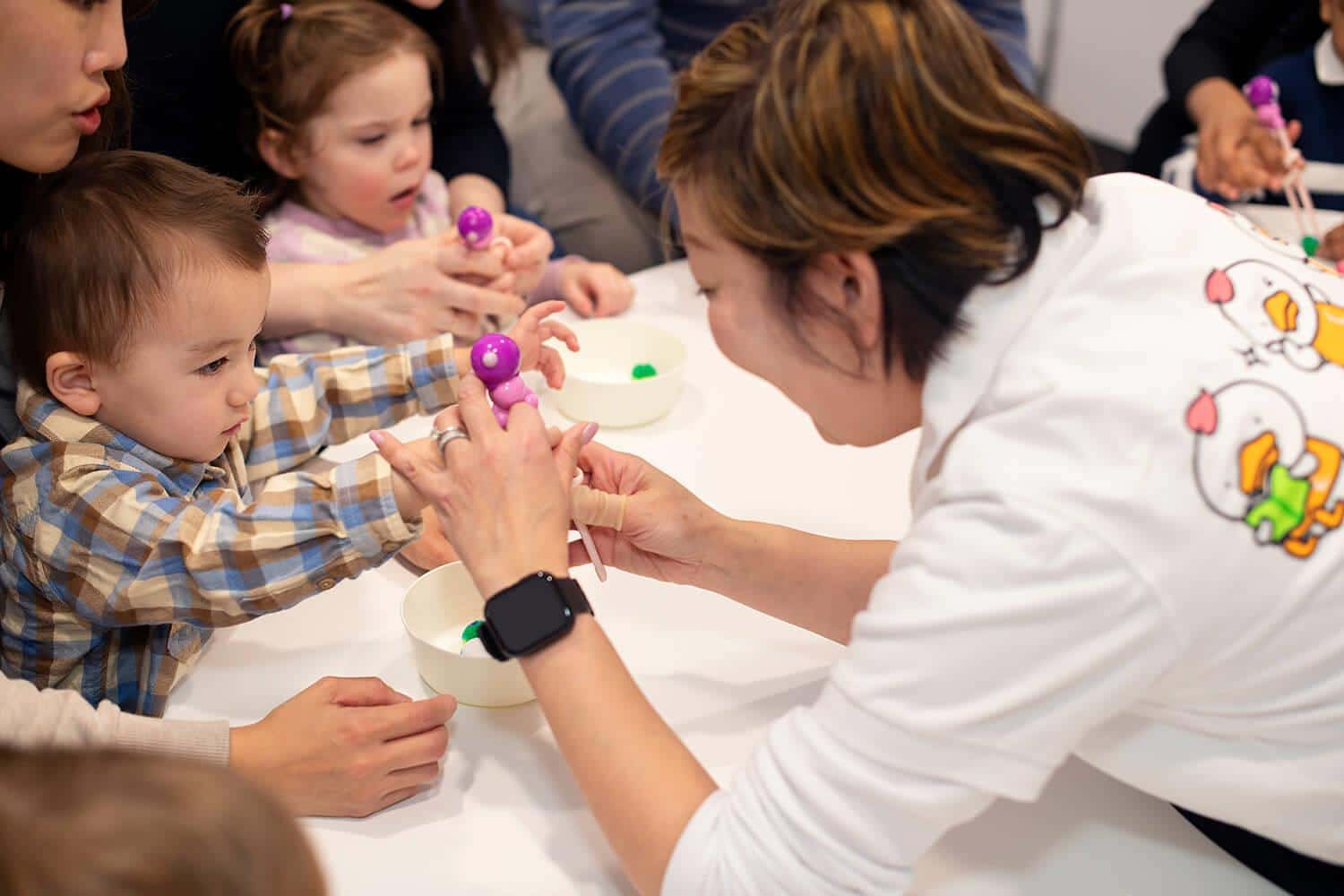
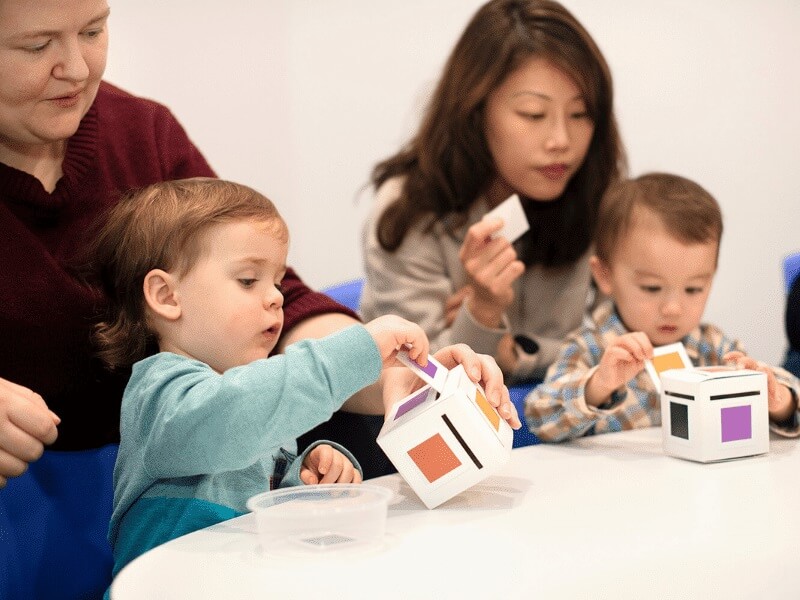
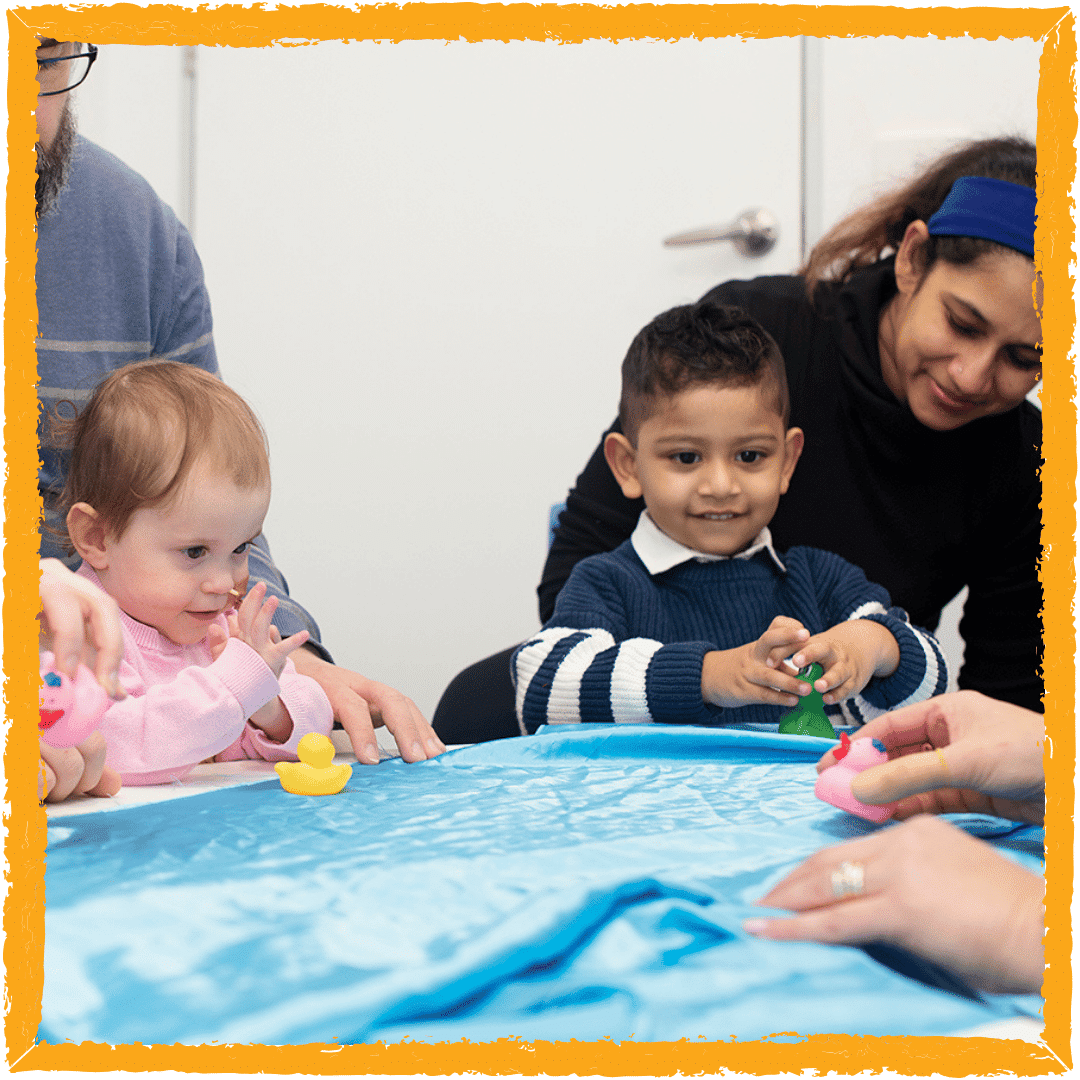
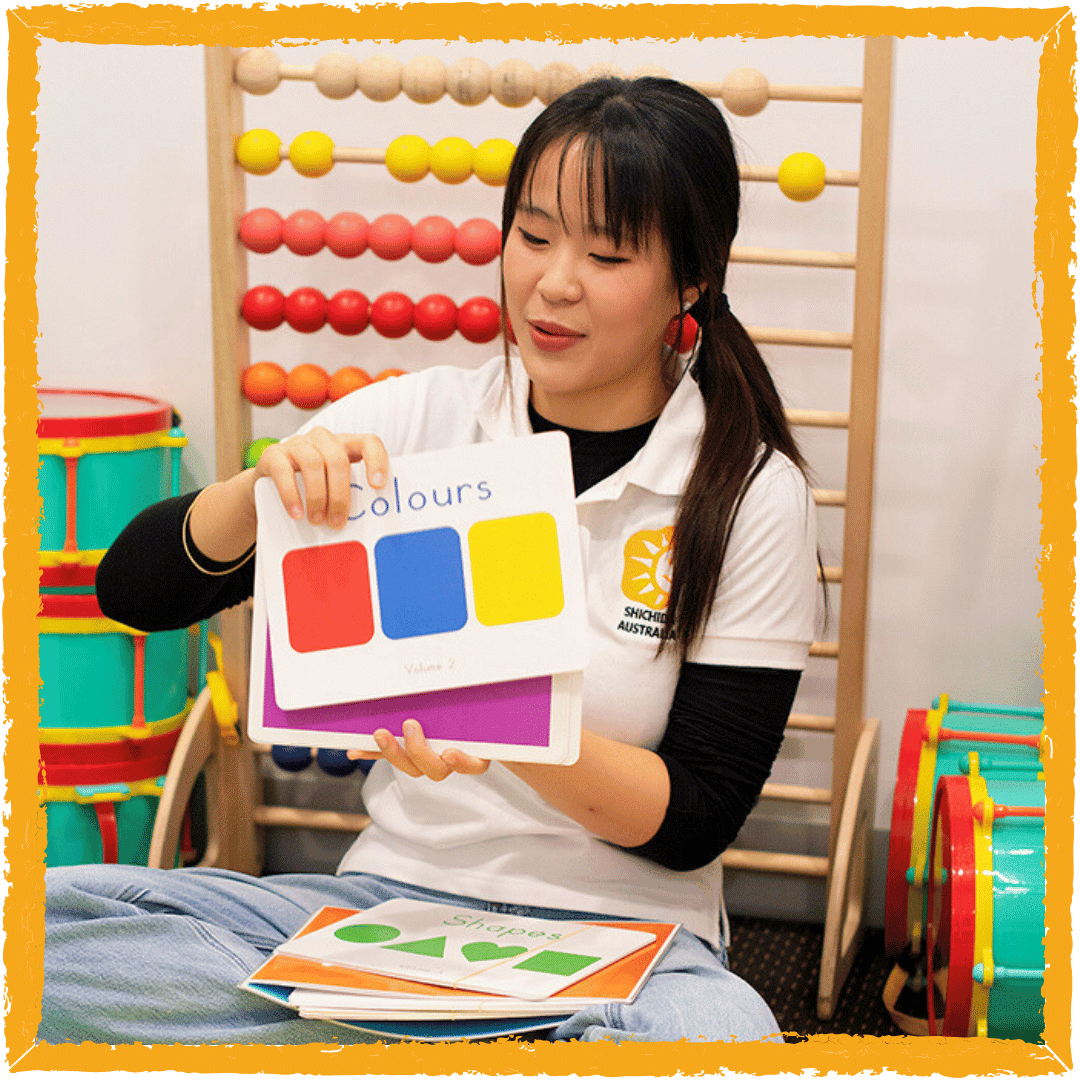
Photo from Shichida Australia: Parents and kids playing a challenging, yet fun game together during a Shichida class.
Everyday Moments to Practise Problem Solving
Problem-solving does not require special lessons. Everyday routines are full of opportunities.
Choosing clothes to wear based on the weather, resolving sibling disagreements, or figuring out how to tidy toys that do not fit in a box all involve problem-solving. These moments teach children that thinking skills matter in real life.
Structured enrichment programs like Shichida build on these everyday strategies by guiding children through progressively more complex problem-solving challenges.
Games and Activities that Reinforce Problem-Solving
Play-based learning supports critical thinking in a natural way. Puzzles, logic games, storytelling challenges, and role play encourage children to experiment, adapt, and reflect.
You can explore more ideas through problem solving games for kids that are designed to stretch thinking while keeping learning enjoyable.
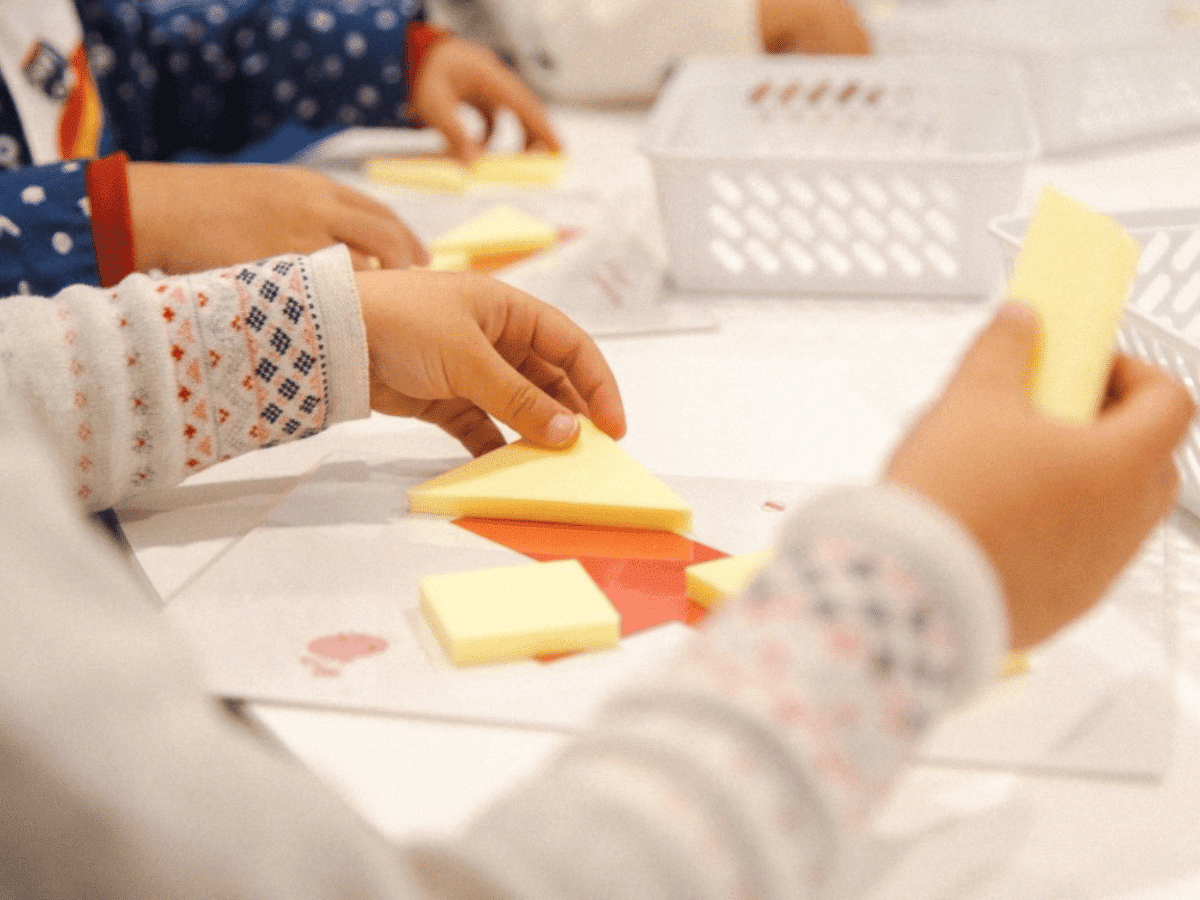
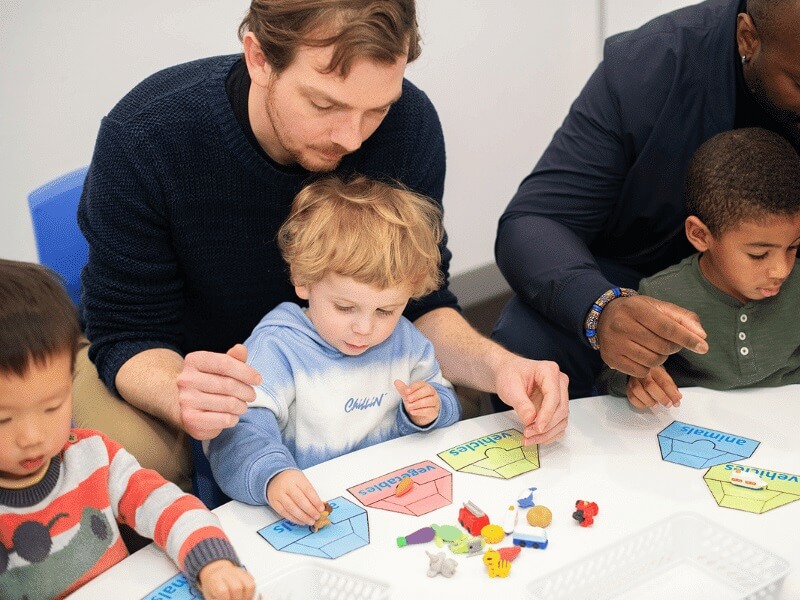
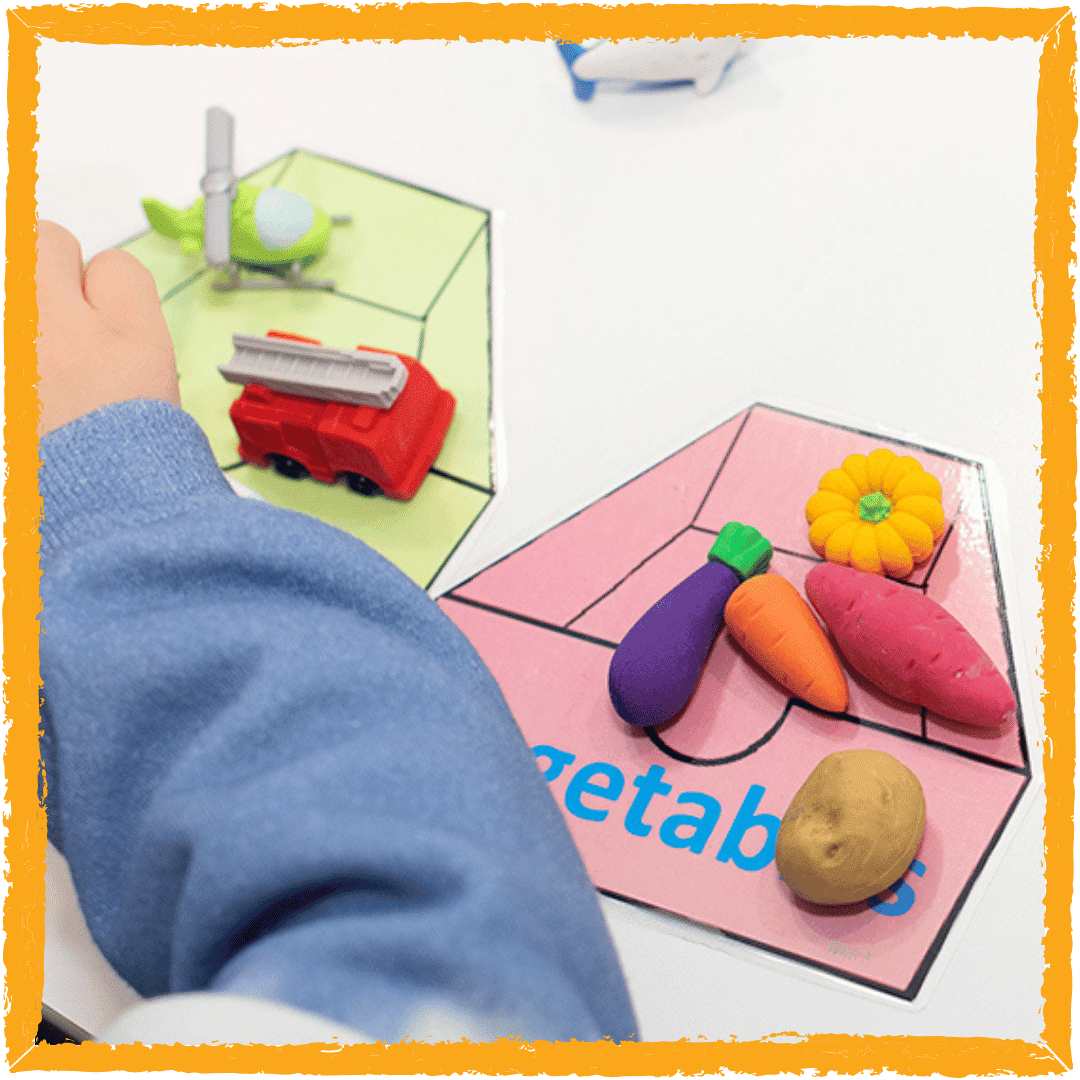
Photo from Shichida Australia: Young children solving a tangram-based puzzle challenge during a Shichida class.
Teaching Strategies for Different Ages
In infancy, learning is driven by sensory experiences and responsive interaction. Use gentle touch, movement, songs, and visual stimulation while talking through everyday routines to build attention, memory, and early understanding.
During the toddler years, focus on cause-and-effect play and hands-on exploration. Narrate what is happening and allow time for experimentation, repetition, and trial-and-error learning.
As children enter the preschool stage, decision-making can be built through pretend play and simple challenges. Invite them to explain their ideas, make choices, and think through possible outcomes.
In the early primary years, logic games, planning tasks, and reflection become increasingly important. Support children in thinking about strategies, reviewing outcomes, and adjusting their approach for next time.
Common Mistakes When Teaching Problem Solving (and What to Do Instead)
One common mistake is giving answers too quickly. Instead, pause and guide with questions.
Another is overcorrecting mistakes. Mistakes help children learn what does and does not work.
Focusing only on results rather than thinking can also limit growth. Shift attention to effort, strategies, and persistence.
Supporting a Growth Mindset in Problem Solving
Children who believe they can improve are more willing to try. Use language that encourages curiosity and effort, such as “You’re still learning” or “Let’s try another way.”
Allow time for discovery and avoid rescuing too quickly. This helps children trust their own thinking.
How Shichida Teaches Problem Solving
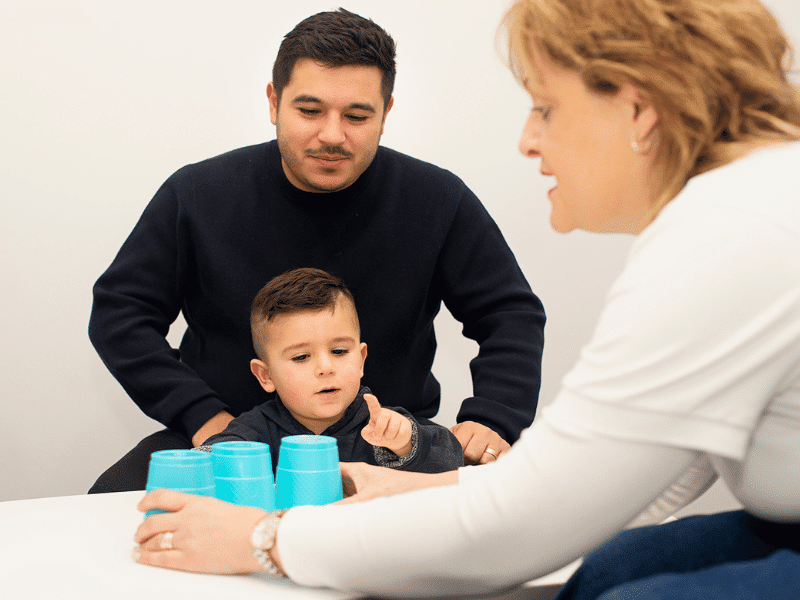
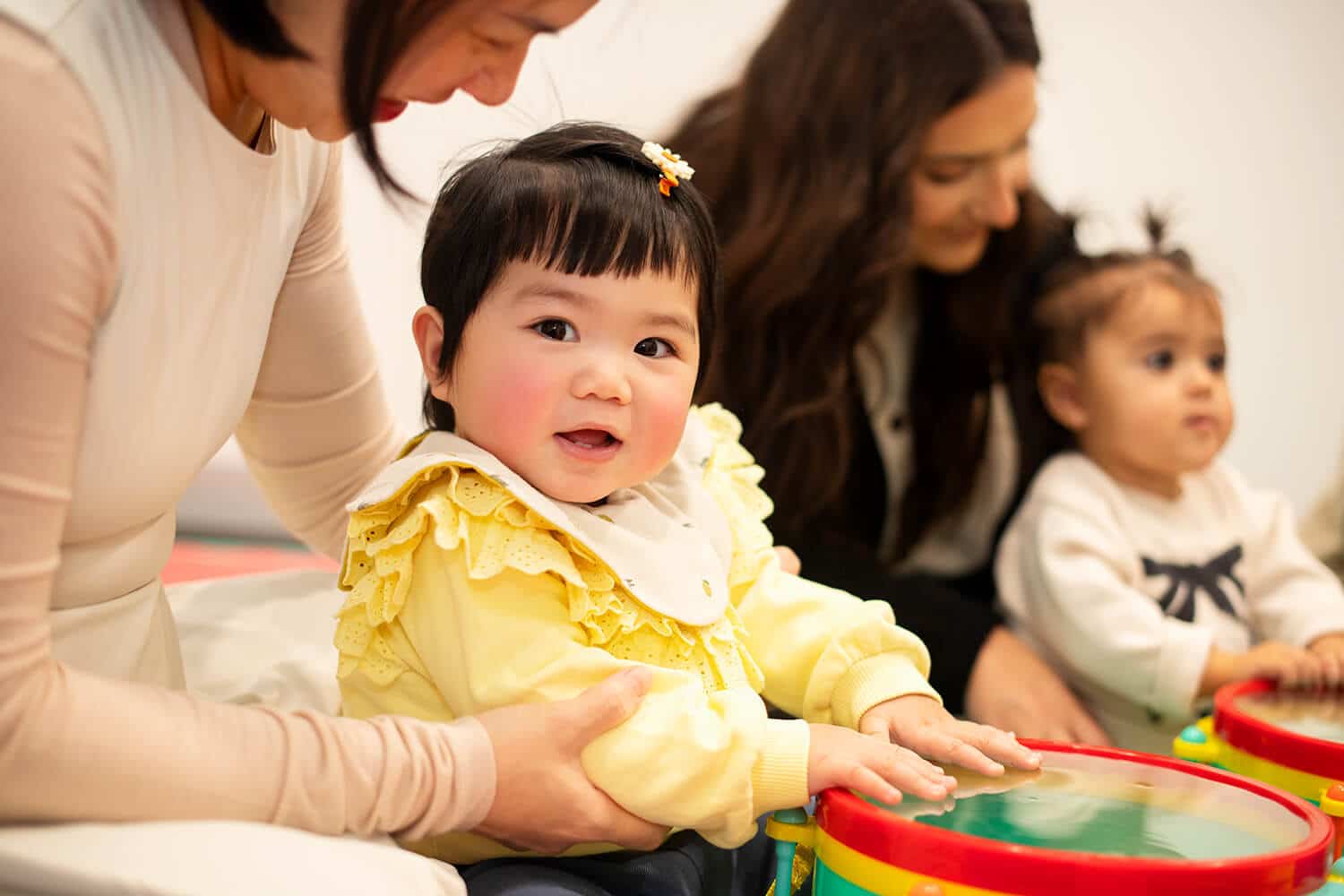
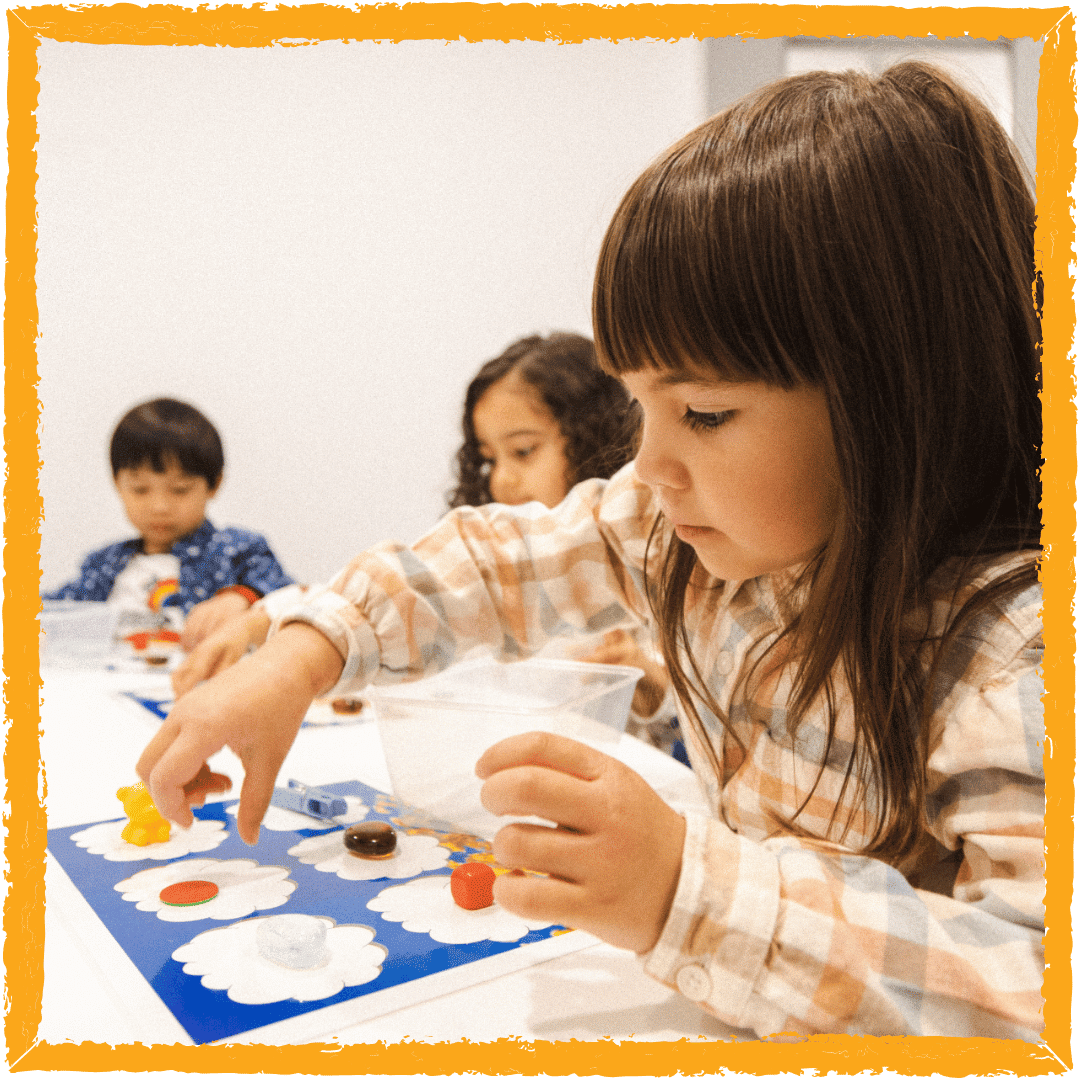
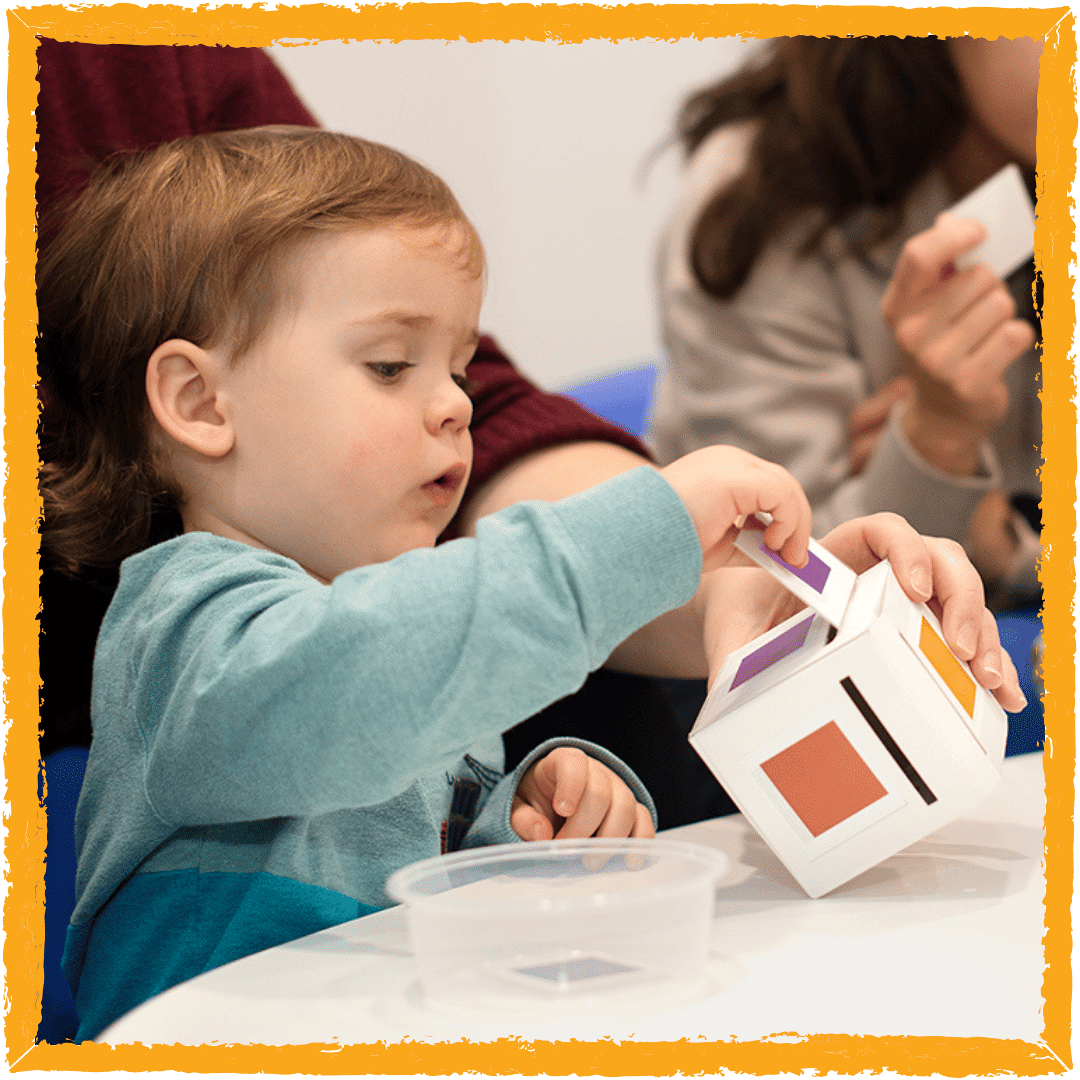
Photo from Shichida Australia: A young child playing an intuition game – this helps develop self-confidence, resilience and a strong foundation to solve problems creatively.
The Shichida Method combines whole-brain learning with developmentally appropriate practice. Shichida classes provide a structured framework that builds problem-solving skills progressively from infancy to early primary years.
Children engage in guided repetition, reflection, and age-specific hands-on challenges that strengthen logical reasoning, intuition and confidence. This structured support complements everyday learning and helps skills develop consistently over time.
See what children learn in every Shichida class!
Conclusion
Teaching problem-solving from an early age helps children become confident, capable thinkers. The most powerful learning often happens through small, meaningful interactions woven into daily life.
With patience, thoughtful guidance, and the right support, you can help your child build problem-solving skills that last a lifetime.
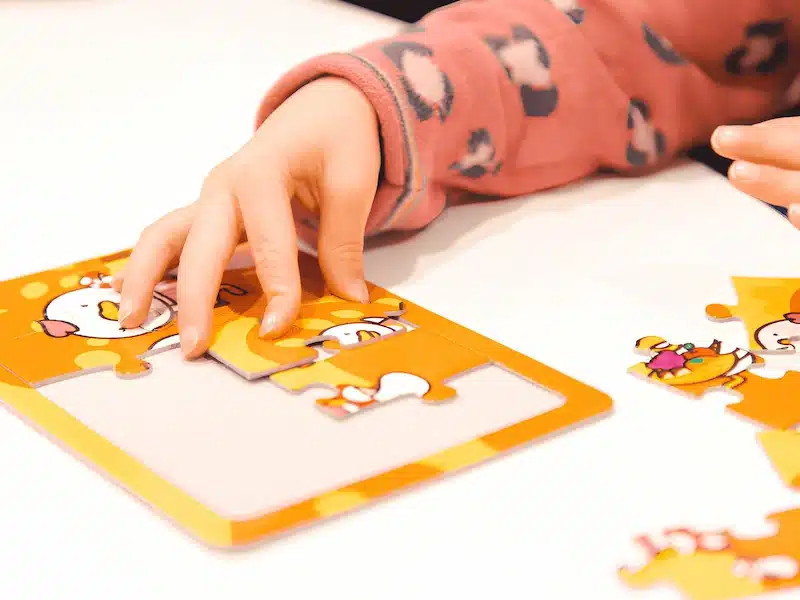
Problem-solving is a skill that supports lifelong learning. With Shichida’s problem solving for kids activities, built in very fun class, children develop logical reasoning, resilience, and confidence through structured, age-appropriate methods.
Trial classes are available for ages 6 months to 5 years old, with kids continuing classes to age 9 once enrolled before age 5. Find out more and start supporting your child’s thinking skills, book a trial class today!
FAQ’s: How to teach problem solving to kids
Problem-solving skills in early childhood are the abilities children use to recognise challenges, think through options, try solutions, and adjust when something does not work. These skills include reasoning, persistence, decision-making, and emotional regulation.
Children begin learning problem-solving skills from infancy. Babies develop early problem-solving through sensory play and cause-and-effect experiences, while toddlers and older children build on these skills through play, exploration, and everyday routines.
Parents can teach problem-solving by modelling calm thinking, asking open-ended questions, breaking challenges into small steps, and allowing children time to try solutions on their own. Everyday moments like play, routines, and minor challenges are effective teaching opportunities.
Children benefit from practising problem-solving daily through natural activities rather than formal lessons. Short, frequent opportunities during play and routines help skills develop consistently without pressure.
It is best to allow productive struggle first. Parents should guide children with questions and encouragement rather than giving immediate answers. This builds confidence, resilience, and independent thinking.
Yes. Play-based activities such as puzzles, pretend play, construction toys, board games, and logic games are some of the most effective ways to teach problem-solving skills in children.
Structured programmes provide age-appropriate progression, guided practice, and repeated opportunities for reflection. This helps children strengthen problem-solving skills over time in a consistent and supportive way.