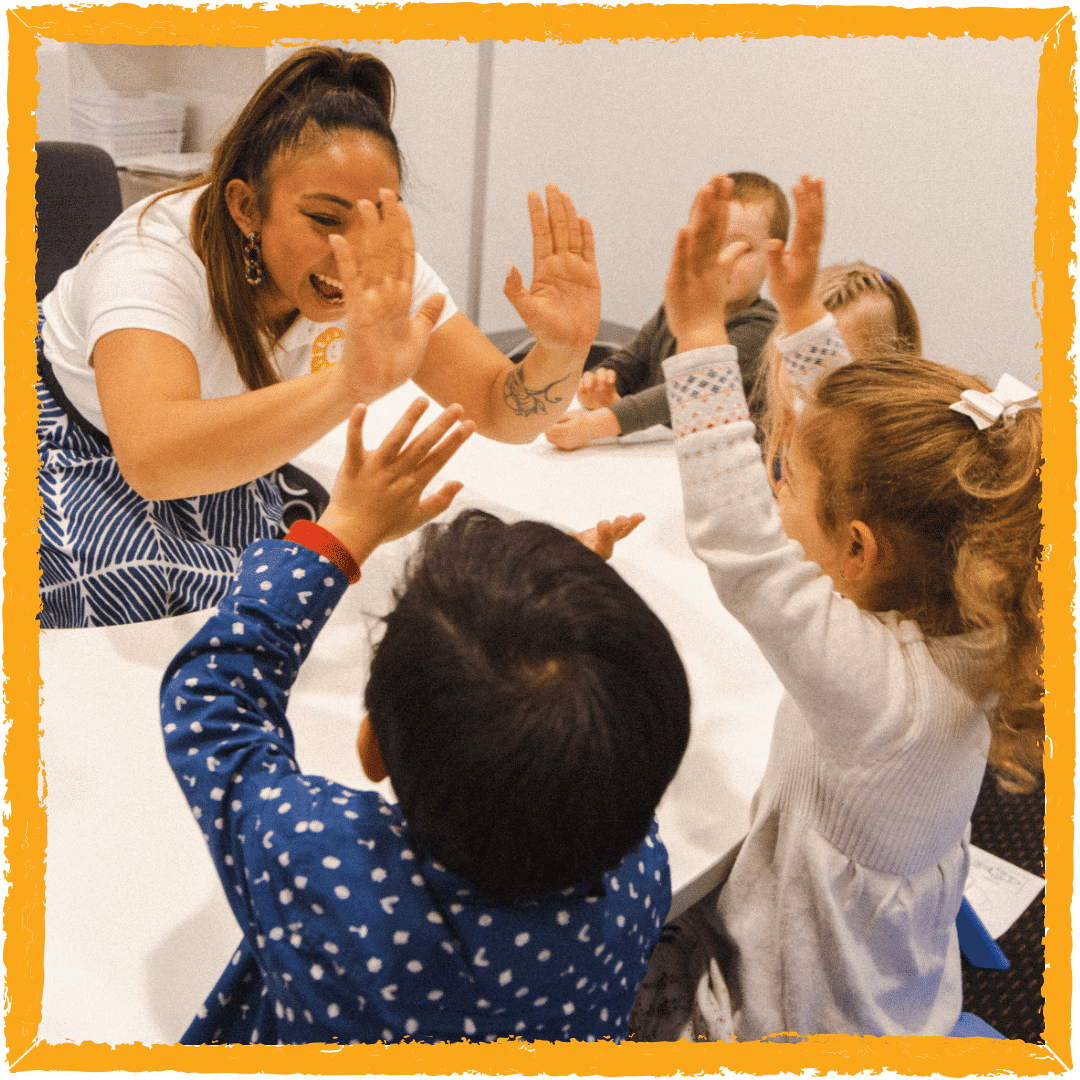
Nurture your baby’s growth from 0 to 6 months by mastering key infant developmental milestones through play, movement, and communication. Every interaction is an opportunity to help your child reach these vital markers during their most flexible stage of brain development. Explore our month-by-month roadmap to find practical ways to support your infant’s progress and book a trial class at 6 months old to see how Shichida turns these early behaviours into lifelong thinking habits.
Development in the first half-year is a gentle journey centred on emotional security and sensory curiosity. At Shichida, we believe that nurturing interaction matters far more than pressure or comparison. Every baby develops at their own pace, and our goal is to help you build the foundations of bonding, early communication, and confidence.
Parent Foundations: Supporting Healthy Development
Before looking at specific months, consider these nurturing experiences that support growth across the entire first year.
- Spend daily one-on-one bonding time with your baby.
- Use a warm voice, facial expressions, and gentle communication.
- Provide a variety of safe sensory experiences and opportunities for reaching.
- Ensure your environment is calm, supportive, and emotionally safe.
- The environment provides frequent opportunities for reaching and grasping.
- Responding to your baby’s sounds, cues, and attempts to communicate.
Birth to 3 Months: Bonding and Early Communication
In this stage, sensory pathways strengthen through sight, hearing, touch, and voice. Your baby begins learning through imitation and vocal play, especially when you mirror their sounds.
- Developmental Focus:
- Learning through imitation and vocal play, responding when parents mirror sounds.
- Benefiting from touch, cuddling and emotional warmth.
- Sensory pathways strengthening through sight, hearing, touch and voice.
- Early confidence supported through smiles, expressions and gentle words.
- Parents’ Checklist:
- I talk to my baby in a warm, calm voice.
- I mirror my baby’s sounds during early “conversations”.
- I use gentle touch, massage, and skin-to-skin comfort.
Around 3 Months: Social Awareness and First Responses
By the third month, hearing and vision begin to work together. You will notice your baby smiling in response to voices and making their first attempts to reach toward objects.
- Developmental Focus:
- Smiling in response to voices and interaction.
- Hearing and vision begin to work together.
- Early reaching toward nearby objects.
- Parents’ Checklist:
- I speak face-to-face and encourage eye contact.
- I combine voice, expression, and touch during play.
- I offer simple reaching and movement play.
3 to 4 Months: Sensory Play and Motor Readiness
Your baby is becoming more curious about textures, shapes, and materials. This is a key period for the early strengthening of hand-eye coordination and more accurate reaching.
- Developmental Focus:
- More accurate reaching toward objects.
- Curiosity about textures, shapes and materials.
- Early strengthening of hand-eye coordination.
- Parents’ Checklist:
- I offer safe toys within comfortable reach.
- My baby explores soft and varied textures.
- We encourage gentle stretching, grasping, and touch play.

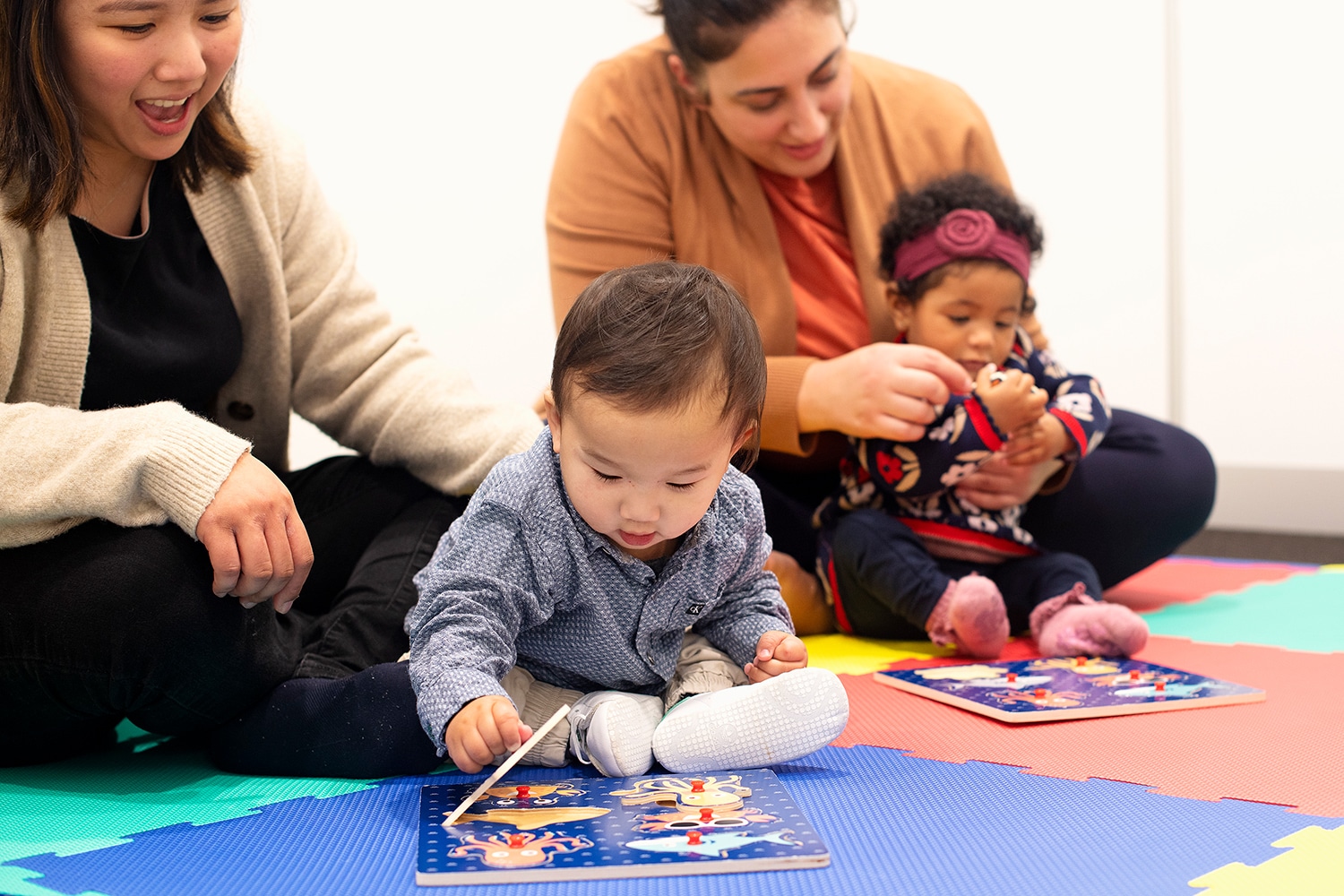
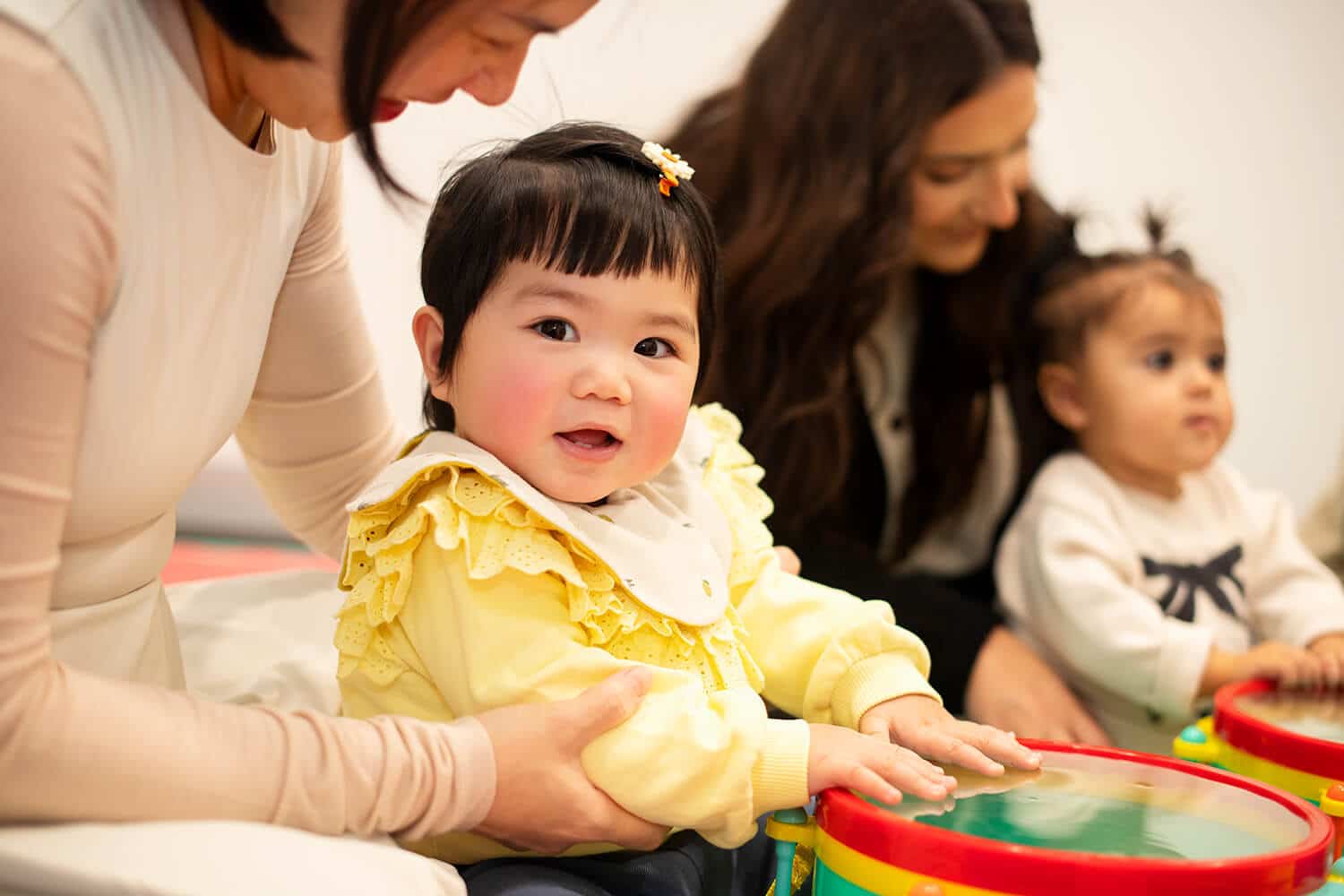
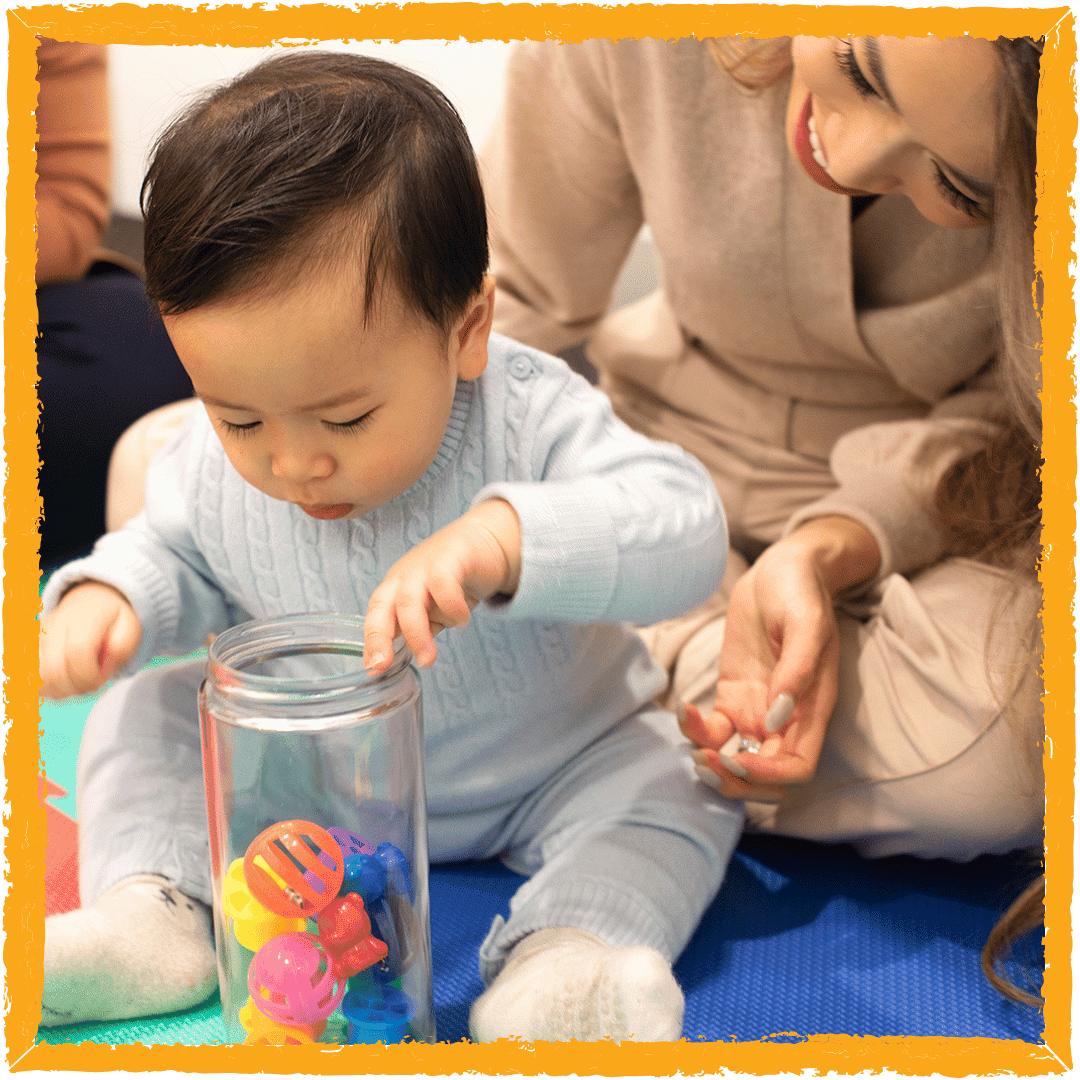
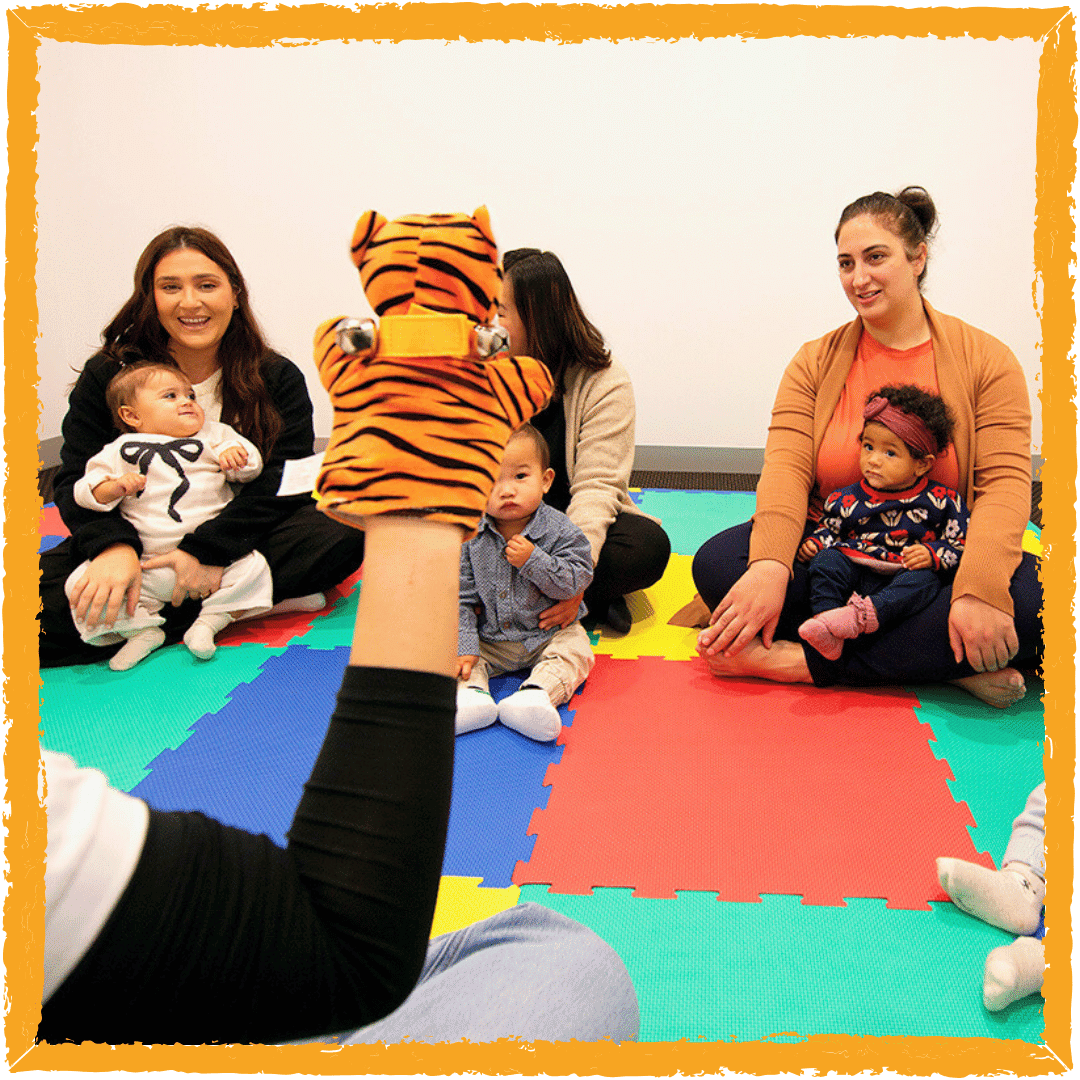
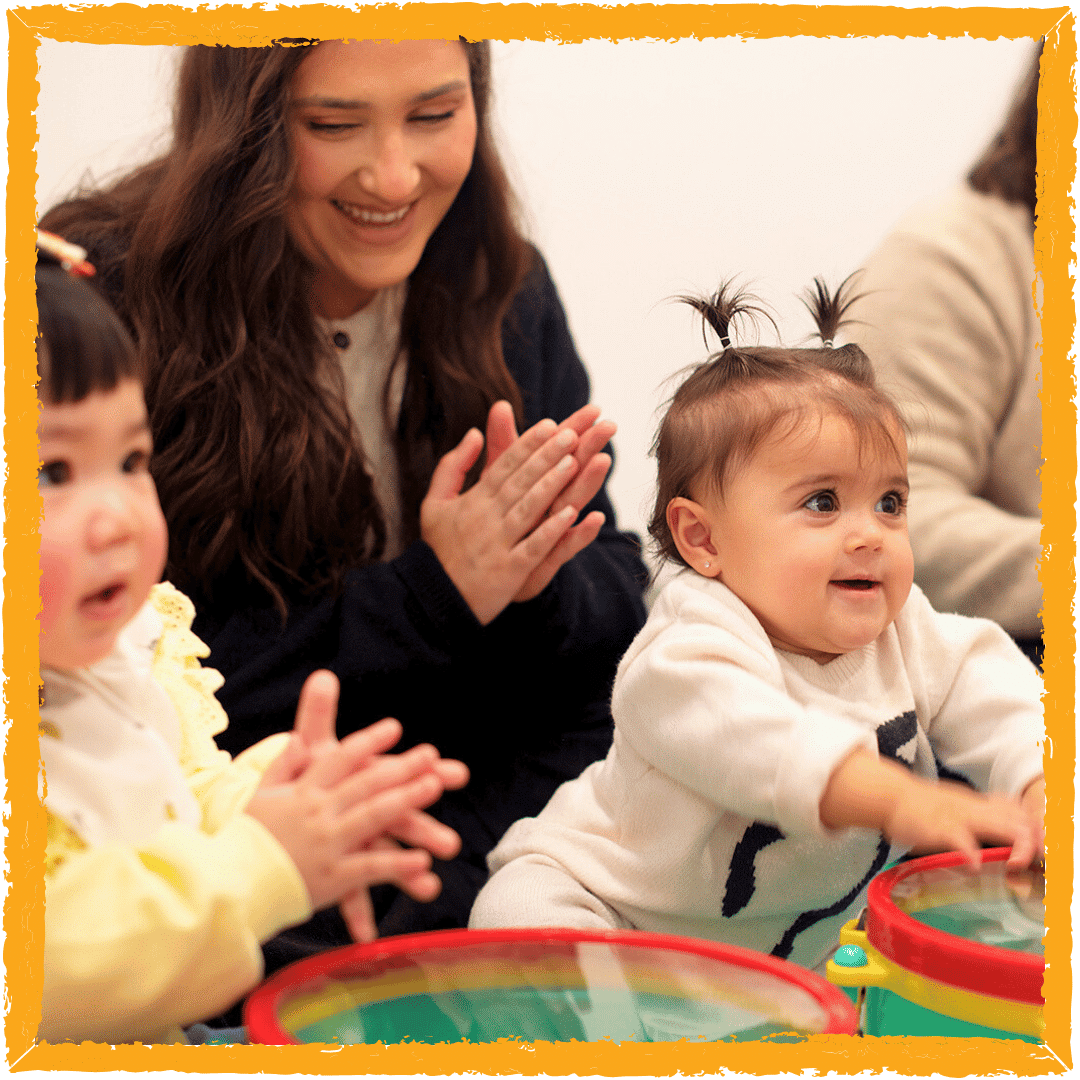
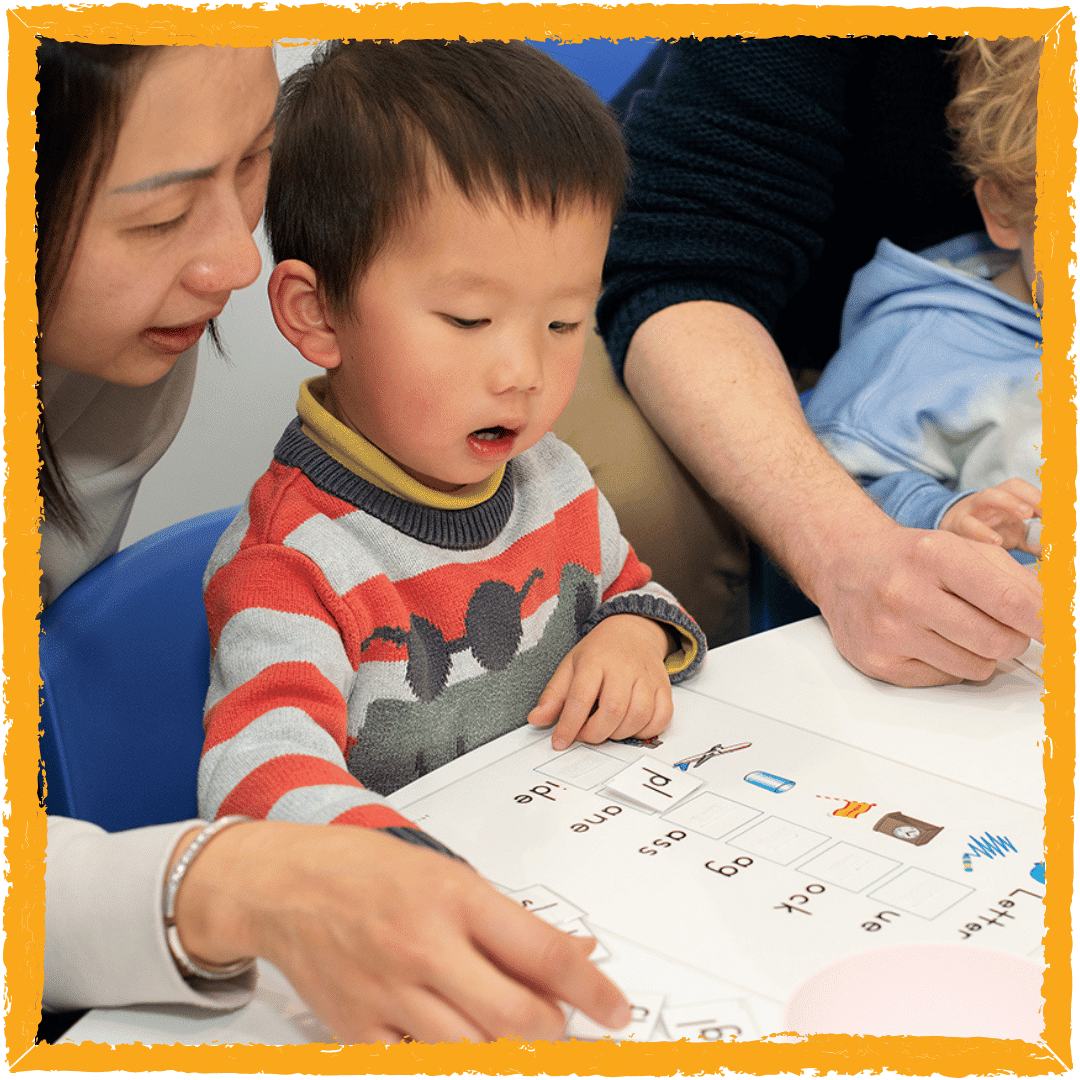
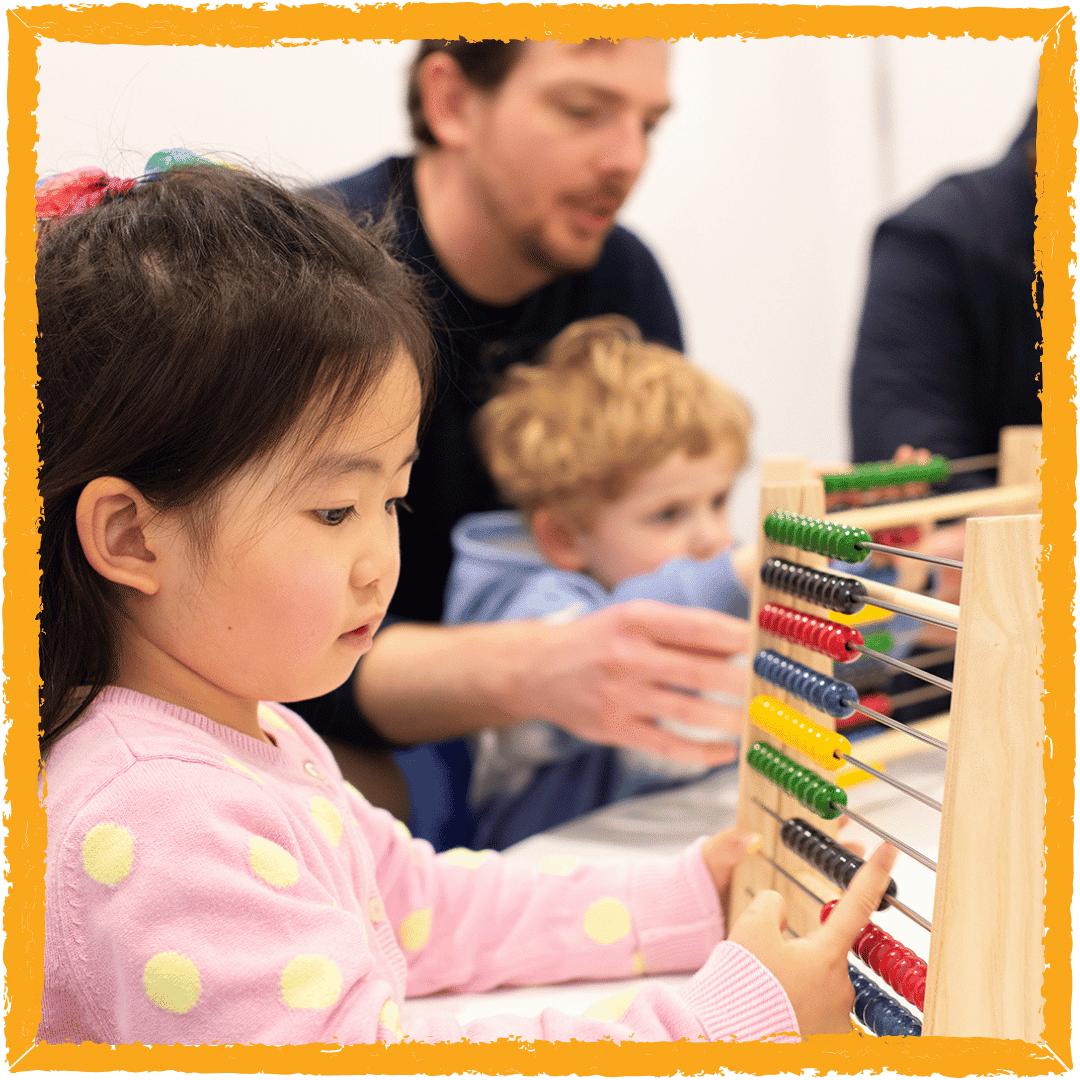
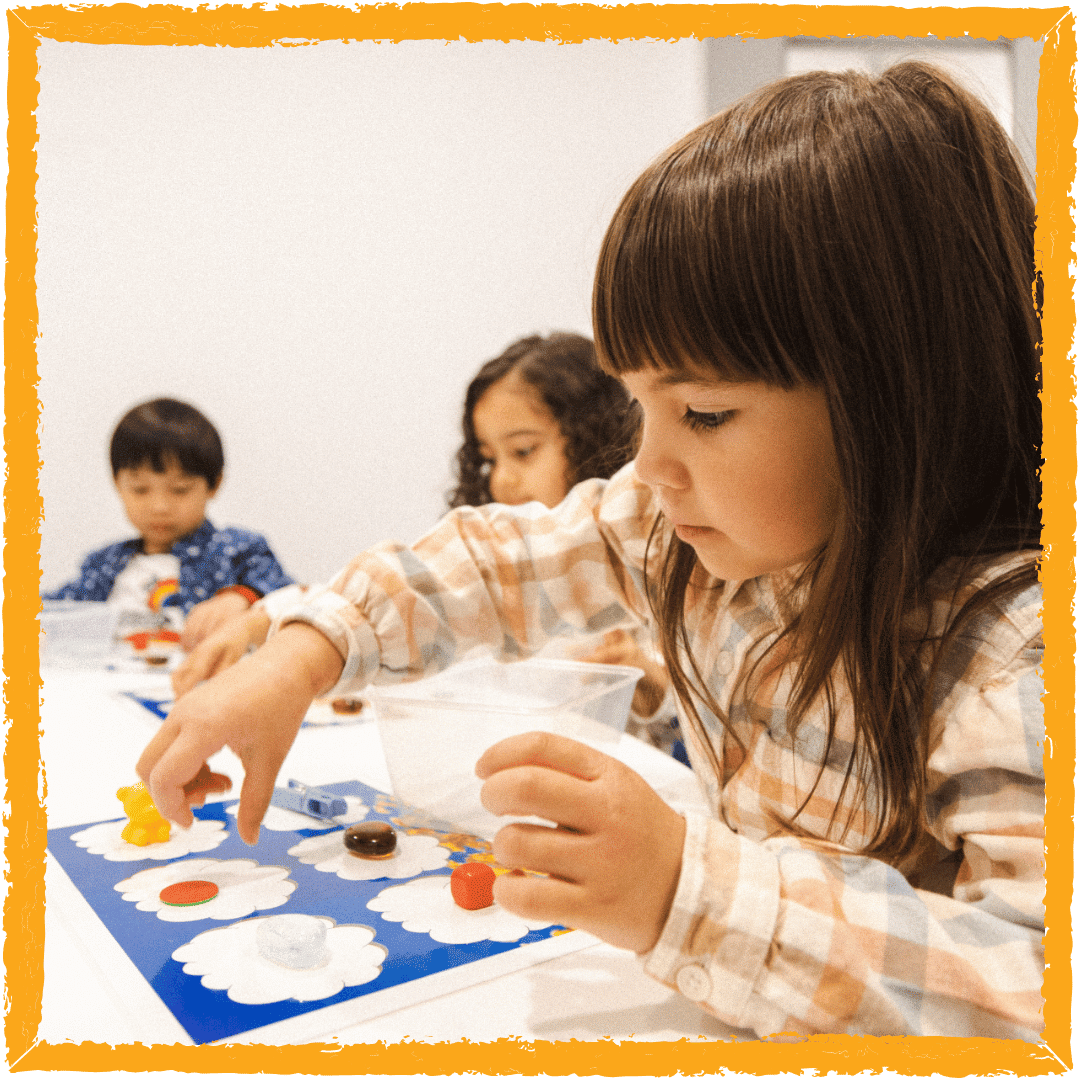
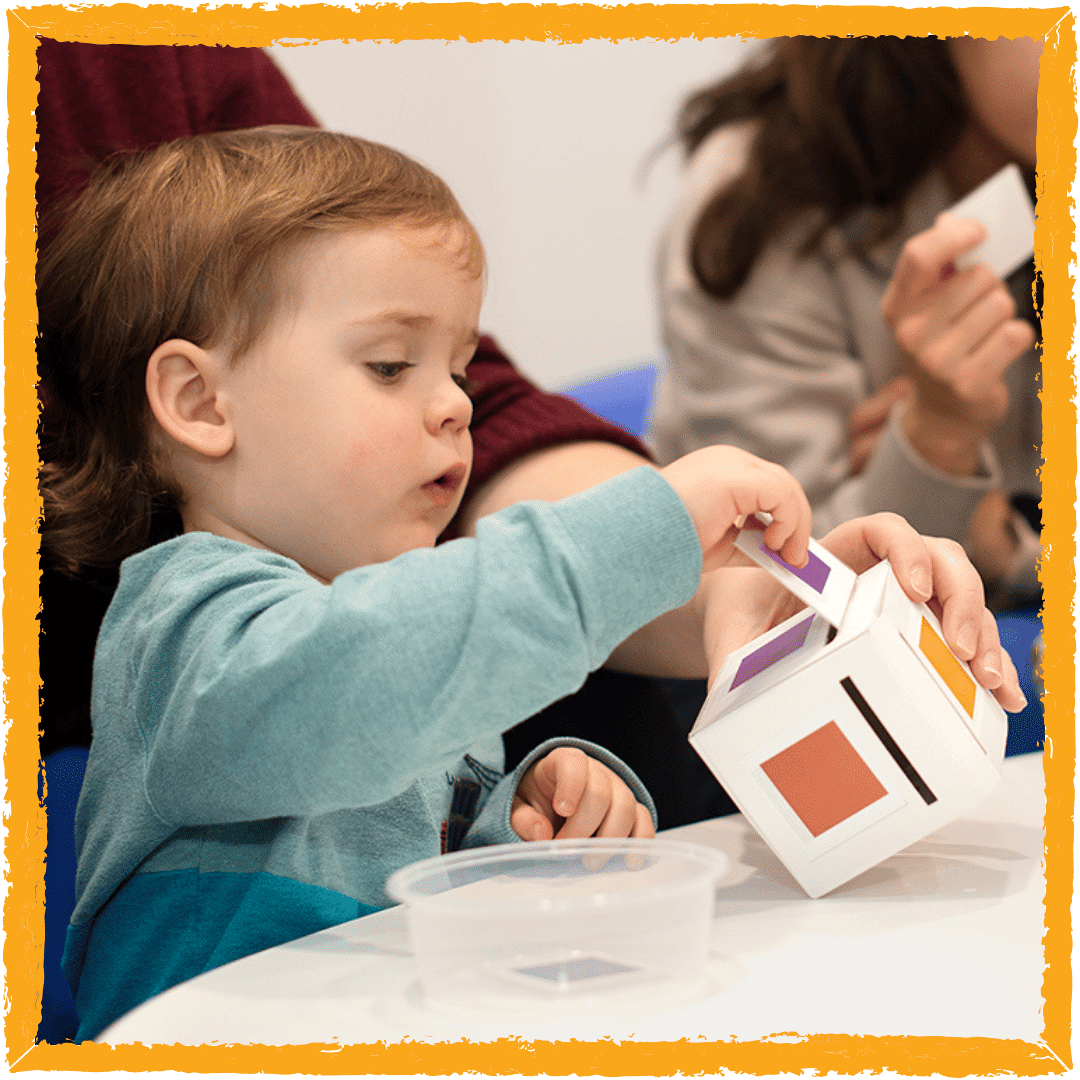
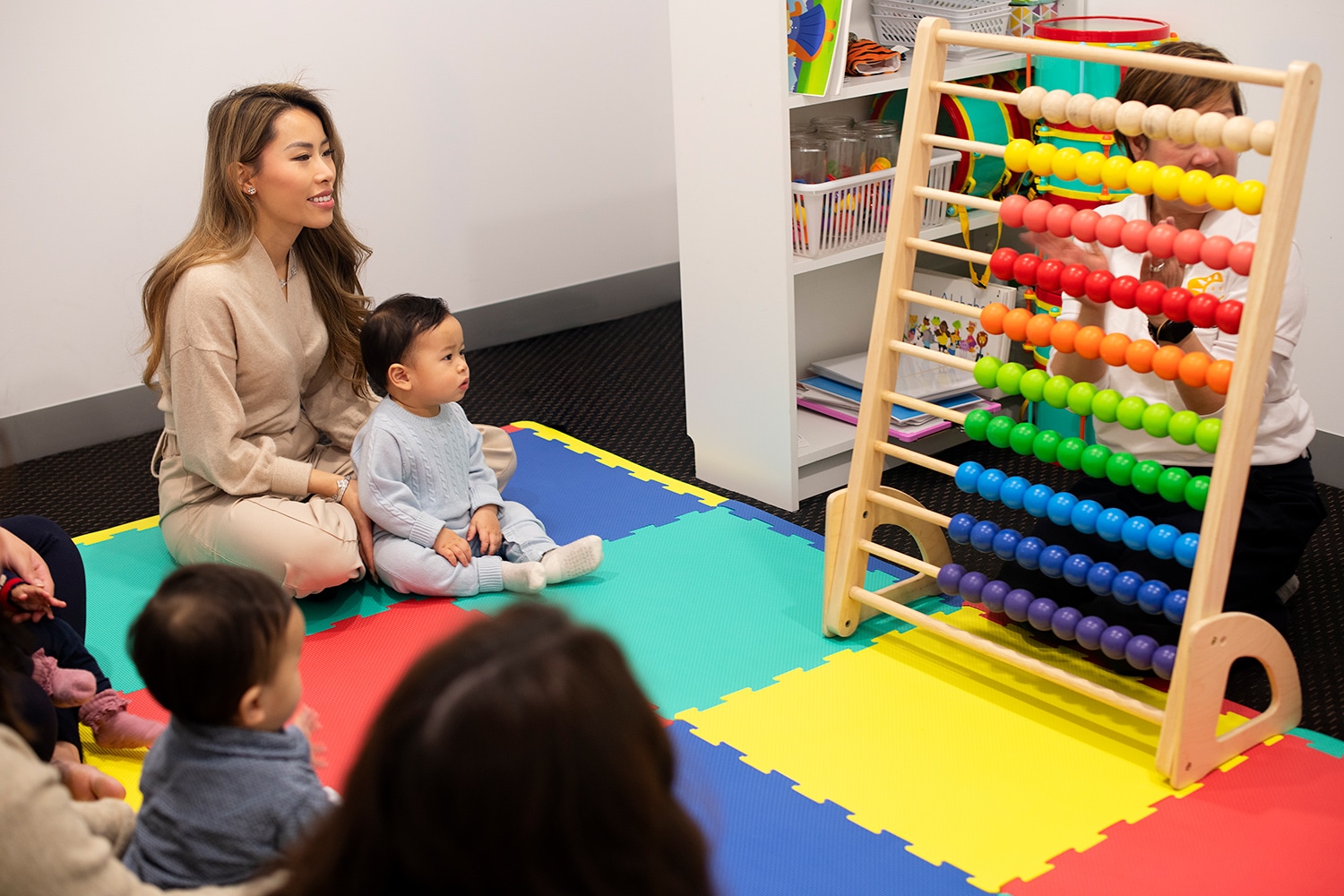
Babies practise grasping through play in our Shichida Baby Classes – building early fine motor milestones in a fun, supportive environment. Each activity is carefully designed to support age-appropriate developmental skills, which is why these classes are so loved by both babies and parents.
4 to 6 Months: Grasping, Curiosity and Attention
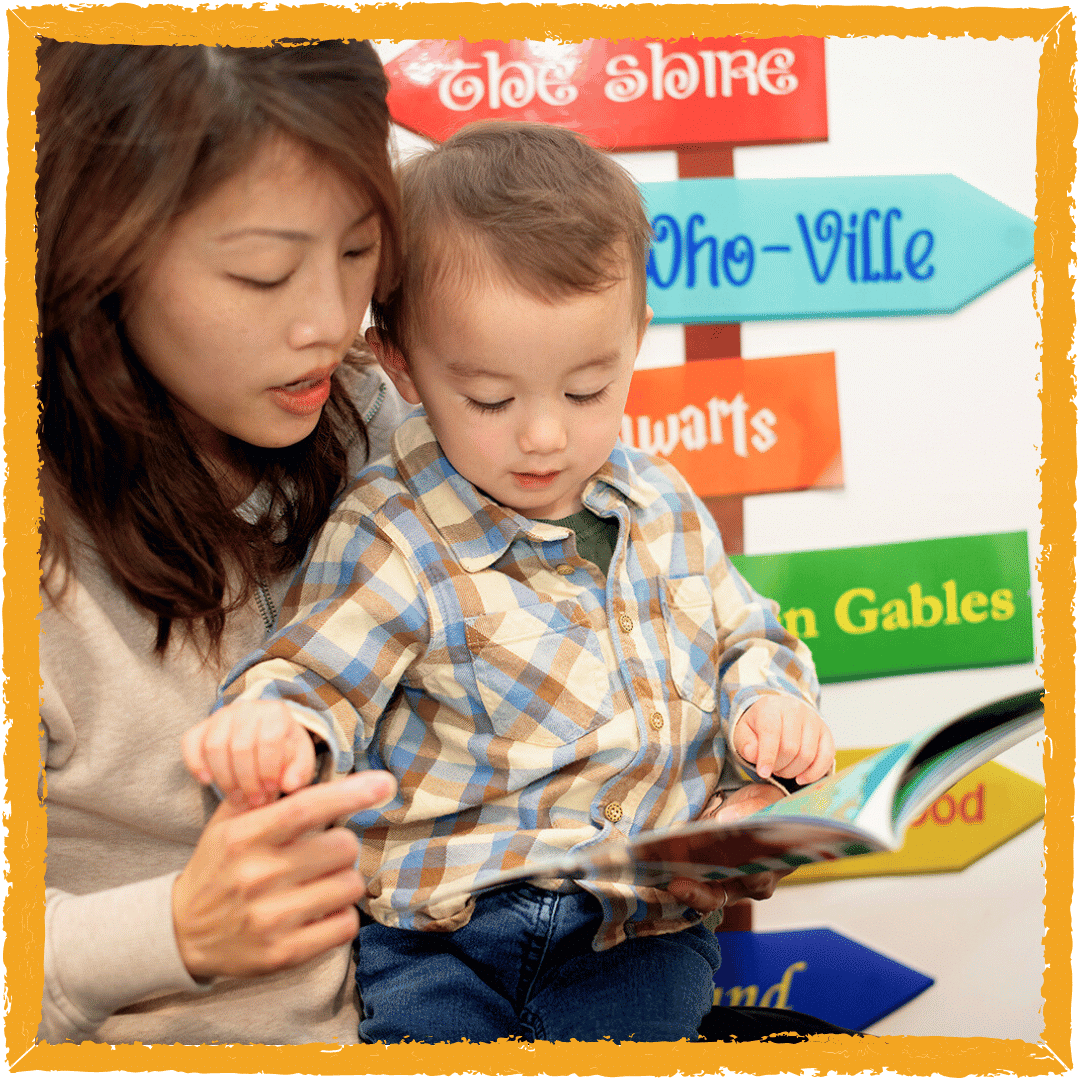
Between four and six months, memory begins to build through repetition and joyful interaction. Your baby will show a growing interest in books, songs, and repeated stories.
- Developmental Focus:
- Beginning to grasp objects with the whole hand.
- Showing interest in books, songs and repeated stories.
- Listening calmly during shared reading.
- Building memory through repetition and joyful interaction.
- Parent’s Checklist:
- I provide graspable objects for hand development.
- I repeat favourite songs, words, and routines.
- We enjoy simple picture books together.
Book a Shichida Trial Class to nurture your toddler’s learning through love-centred, sensory-rich experiences. Our classes support:
- Bonding and emotional security
- Sensory and right-brain development
- Curiosity, expression and early communication
- Meaningful parent-child connection
FAQ's: Infant Developmental Milestones
Babies develop at different paces, and progress often happens in bursts. Look for steady change over time (more eye contact, more reaching attempts, more engagement), rather than comparing your baby to others. If you ever feel concerned, it’s best to speak with your child health nurse or GP for personalised guidance.
In the early months, key milestones often include: bonding and calm connection, tracking with the eyes, responding to voices, early “conversations” (coos and gurgles), reaching and grasping, enjoying touch and textures, and growing attention during songs or simple play.
Keep it simple and consistent. Short, playful moments throughout the day work beautifully – talking face-to-face, singing, gentle touch and massage, offering safe objects to reach for, and repeating favourite songs or routines. These tiny interactions add up quickly.
Tummy time helps build head, neck, and upper-body strength, but it doesn’t need to be long to be helpful. Aim for short, supervised sessions each day and build gradually based on your baby’s comfort. Chest-to-chest tummy time counts too.
Safe sensory play at this age is gentle: different textures (soft cloth, crinkle fabric), high-contrast cards, music and rhythm, your voice, mirror play, and safe objects with varied shapes to touch. Always supervise closely and choose items designed for infants.
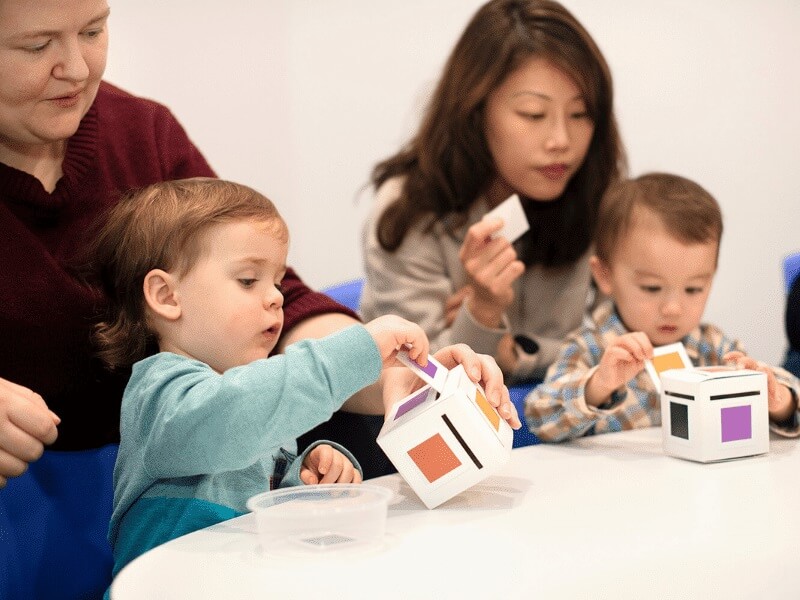
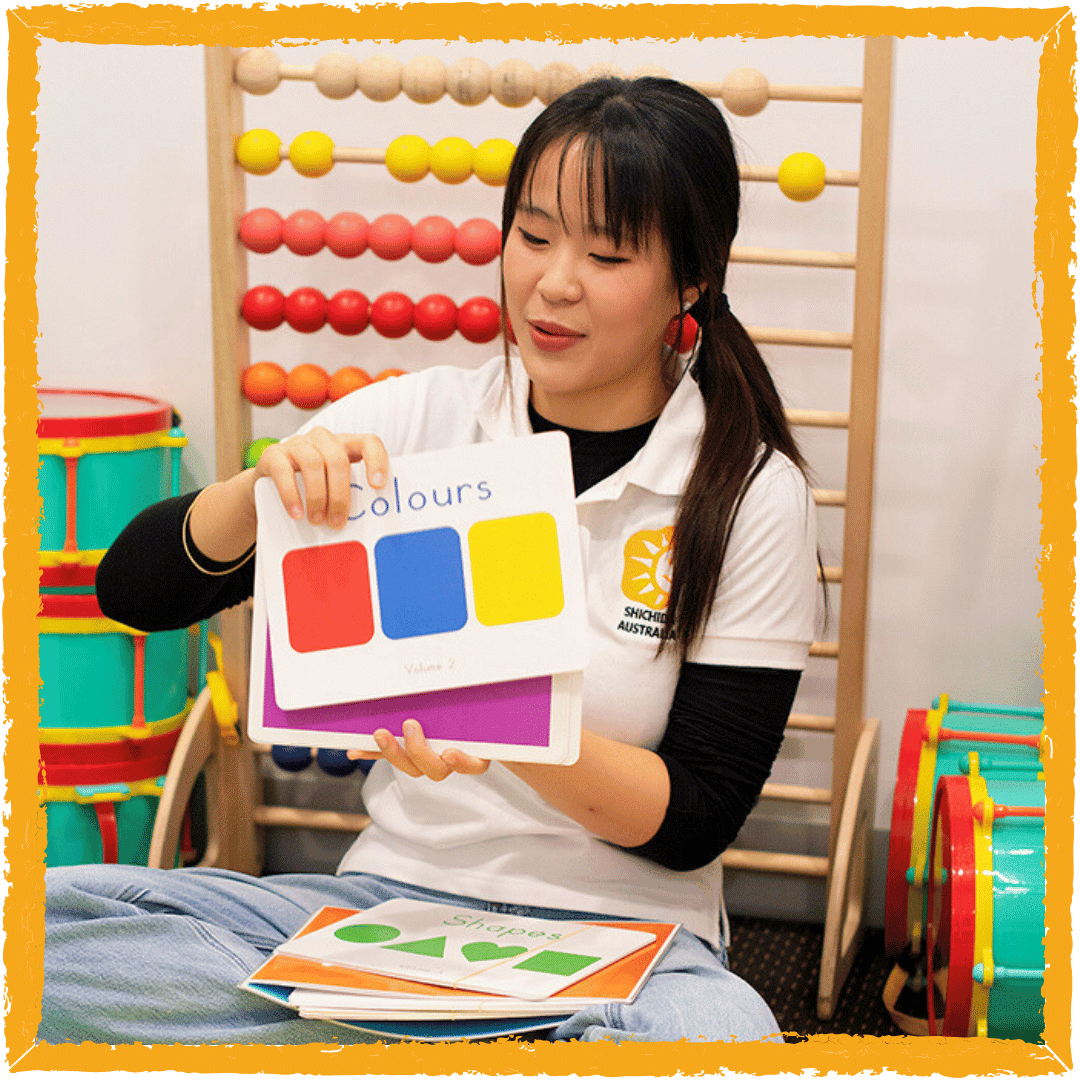
Our baby classes use gentle, play-based activities that support early milestones like reaching, grasping, tracking, listening, memory through repetition, and early communication – while keeping bonding and emotional security at the centre of every interaction.
Resources to Support Infant Developmental Milestones
Supporting infant developmental milestones doesn’t stop after class! Simple, intentional activities at home help reinforce bonding, sensory awareness, and early learning in a calm, familiar environment.

High-Contrast Infant Flashcards
High-contrast images and gentle visual input help strengthen early focus, visual tracking, and memory. When used briefly and playfully, high-contrast flashcards can support your baby’s developing attention while creating moments of shared interaction.
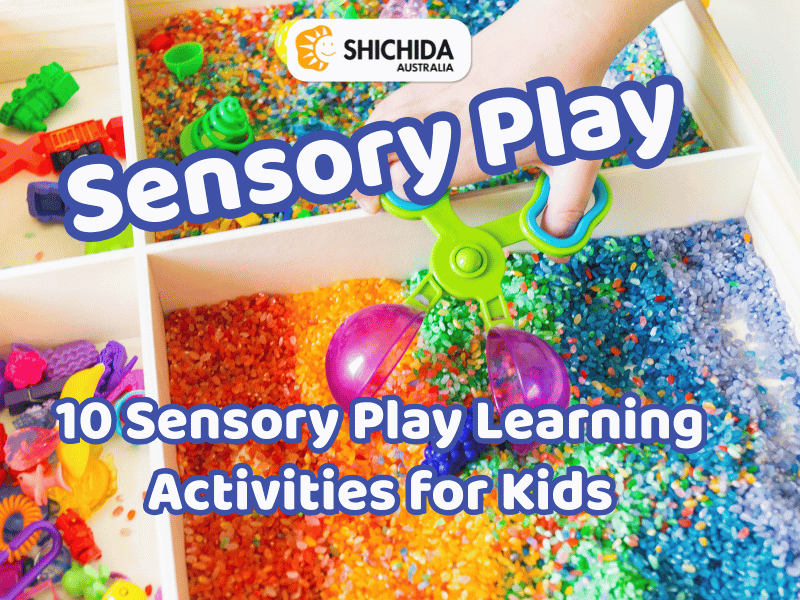
Sensory Play Guide
Sensory play supports how babies learn about the world through touch, sound, movement, and sight. Our sensory play guide shares safe, age-appropriate activities that support infant developmental milestones while nurturing curiosity, coordination, and parent-child connection.
Shichida Baby Classes
For parents who want guided support, our Shichida Baby Classes turn everyday movements and behaviours into meaningful developmental experiences. Classes are designed around infant developmental milestones while keeping bonding, joy, and emotional security at the centre.