Baby Eye Development Timeline of Complete Visual Growth
Key Takeaways
- Baby Vision Develops Rapidly in the First Year: From blurry shapes to full visual engagement, your baby’s eyesight progresses through predictable stages of focus, tracking, and depth perception.
- Eye Colour and Vision Milestones Follow Their Own Timelines: Most babies’ eye colour settles by 6 to 9 months, and visual milestones like eye contact and object tracking develop steadily week by week.
- Simple Daily Habits Support Healthy Vision: Tummy time, high-contrast toys, and face-to-face interaction help strengthen eye muscles and build visual skills from birth.
Your baby’s eyes are their windows to the world, but at birth, the view for them is fuzzy, dim, and changing all the time. It’s only natural to be anxious about their baby eye development, particularly in the first few months when the progress is often hard to notice. The good news is that most visual changes follow a predictable pattern. Understanding what to expect can help you assist your baby’s eyesight and identify any issues early on.
Here’s a complete baby eye development timeline, from birth to age one. This guide also explores how a baby’s eye colour develops, what to look out for each week, and simple ways to support healthy visual development.
Baby Eye Development Timeline at Birth
What to Expect
When babies are born, eye development is only just getting started. Newborns don’t view the world like we do. They can see only within a distance of 20 to 30 cm, enough to distinguish your face when you hold them close. They are sensitive to light and movement, and will even track large, slow-moving things, but they see them poorly and not in a coordinated way.
You will also notice that your newborn’s eyes may cross or drift. That is normal. In the newborn period, eye muscles are learning to function together.
Eye Colour Development in Babies
Most babies are born with blue or grey eyes, especially those of European descent – but that is not necessarily their permanent colour. Babies of Asian, African, and Hispanic backgrounds may be more commonly born with dark brown eyes that typically remain dark. This initial colour is due to low melanin levels in the iris at birth. As the baby grows, melanin production increases, and the eyes can gradually change to brown, green, hazel, or remain blue, depending on inherited traits.
By around six to nine months, most baby eye colour development is settled, although minor changes may still happen into toddlerhood – sometimes up to age three. Your child’s ultimate eye colour is controlled by genetics, but it’s not as simple as inheriting one gene from each parent. Eye colour is polygenic, meaning it’s influenced by multiple genes working together.
For a more in-depth explanation of how eye colour develops, the American Academy of Ophthalmology offers a useful breakdown of the process here.

The First Month: Baby Eye Development Milestones
In the first month, the baby eye development timeline involves:
- Focusing: Infants can focus on items 20-30 cm away, or roughly the distance to your face when feeding.
- Light and Contrast Sensitivity: They’re attracted to high contrast, such as black-and-white patterns.
- Facial Recognition: By the end of the first month, most babies begin to recognise familiar faces and take an interest in facial expressions.
- Eye Movement: Eye coordination remains irregular, but is slowly improving.
Eye Development at 3 Months: What’s Changing?
By three months, your baby’s vision becomes noticeably sharper. Eye muscles are stronger, so they can track moving objects more smoothly and follow toys or your face as you move.
The major developments at this point are:
- Enhanced focus and tracking
- Increased attention to bright colours and intricate patterns
- Early hints of depth perception, which underpin activities such as reaching for objects or reacting to your movement
This is when babies begin to smile back at visual stimuli, an indication they’re interacting more with their environment.
Baby Eye Development Stages from 6 to 12 Months

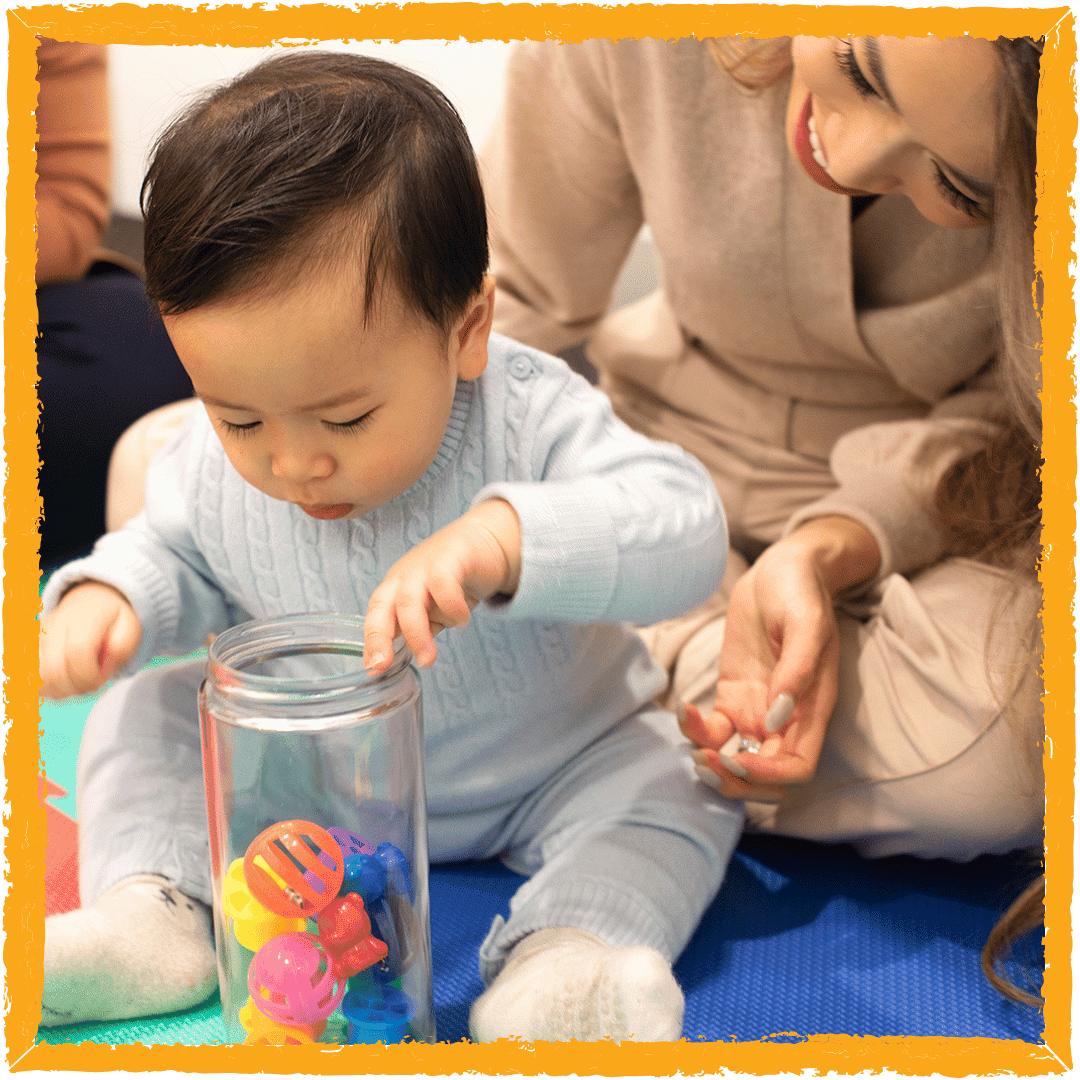
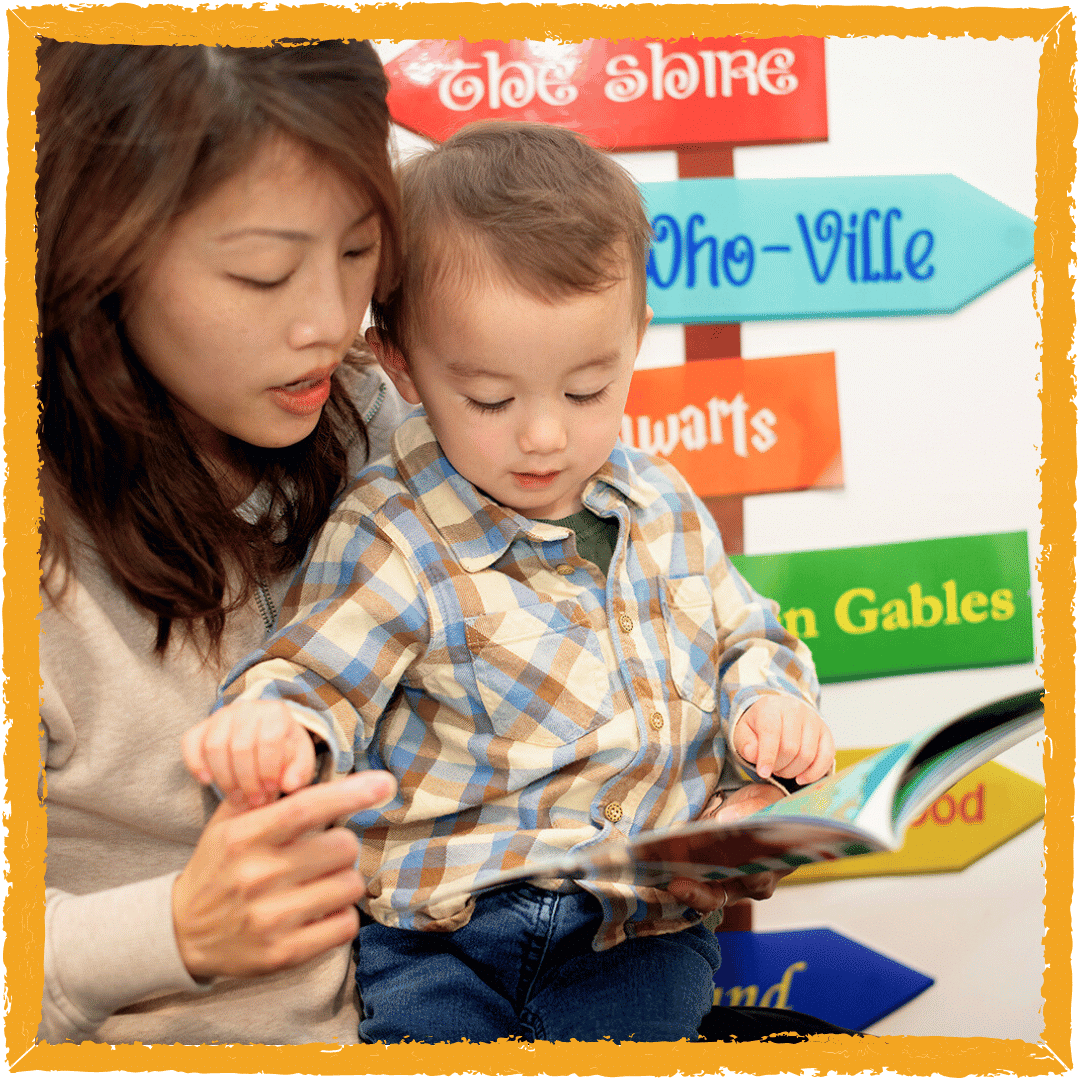
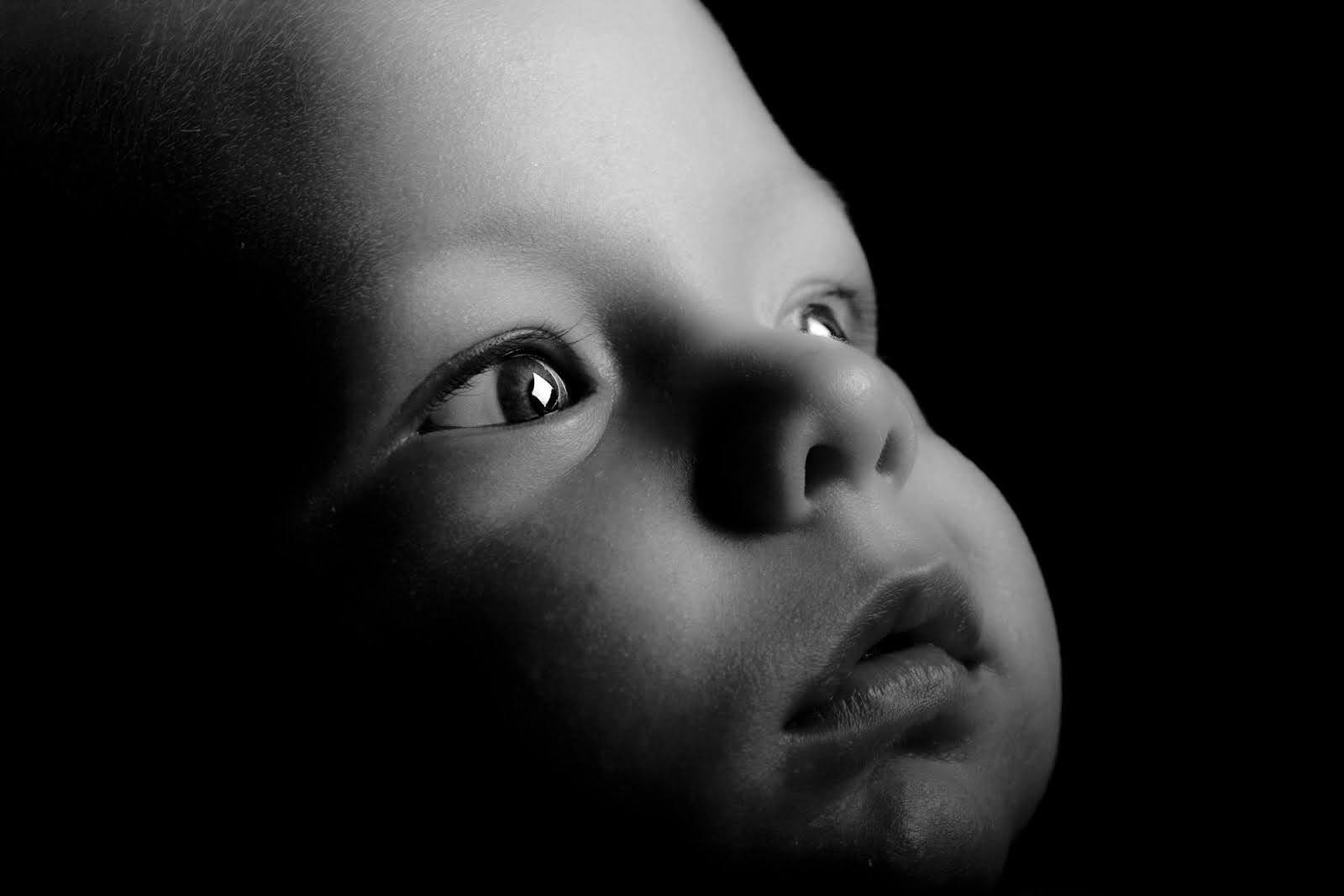
Photo from Pexels: That lingering gaze? A sweet sign of healthy baby eye development.
Between 6 and 12 months, your baby’s vision becomes more like an adult’s. They can now:
- See clearly across a room
- Recognise people and objects from a distance
- Notice smaller details
- Improve eye-hand coordination to grab, shake, or throw objects
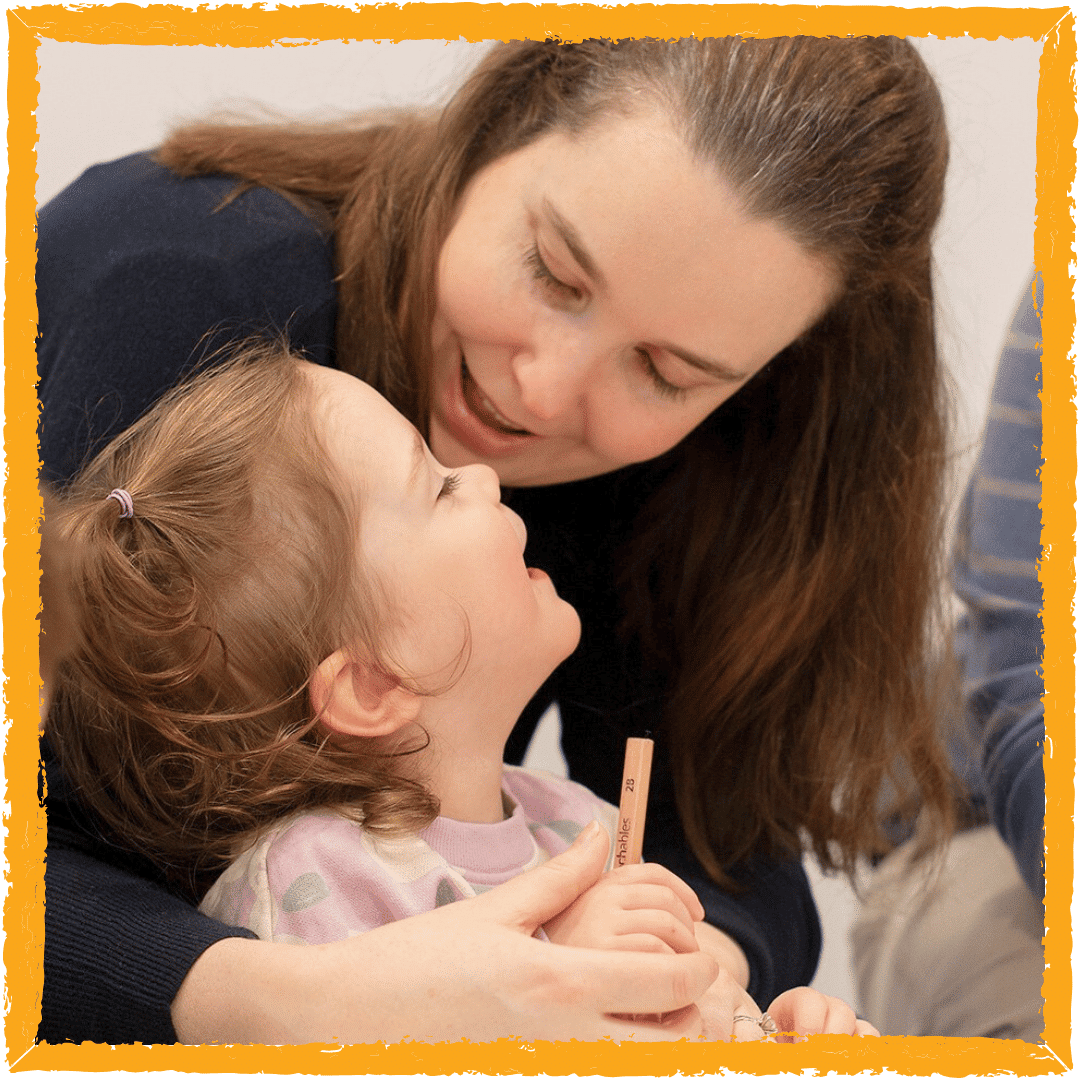
- Maintain steady eye contact, supporting bonding and communication
Around this age, your baby’s field of vision expands significantly, allowing them to take in more of their surroundings – a vital shift that supports mobility, social interaction, and learning. If you’re not sure you’re doing enough at home, Shichida Australia classes are a great place to start. Book a baby class trial and see what the Shichida Method can do for you and your little one!
By 12 months, the majority of babies are able to look at things that are both close and far away, and their stages of baby eye development are at a point where they are exploring confidently and interacting more purposefully with the world around them.
Baby Eye Development Week by Week: Key Milestones
Monitoring baby eye development week by week allows you to know what is normal and when changes can be expected:
- Week 1: Attention to faces and large forms up close
- Week 2: Begins following simple objects side to side
- Weeks 3-4: More frequent eye contact, begins locking onto shiny colours
- Weeks 5-8: Eye movements smooth out, depth perception starts to emerge and babies track moving objects bette
- Weeks 9-10: Improves tracking of smaller or faster-moving objects; starts visually exploring surroundings with more intent
- Weeks 11-12: Looks between two objects or people and begins coordinating vision with reaching and grasping
Keep in mind, that every baby is different. Some will reach these baby eye development milestones sooner and others later.
Common Concerns: How to Know If Your Baby’s Eye Development Is on Track
It’s only natural to ask whether your baby’s eyesight is developing as usual. Watch for these signs, which could mean it’s worth checking in with your health visitor or paediatrician:
- Repeated eye crossing or straying after the age of three months
- Not making eye contact or visually responding to familiar faces
- No enthusiasm for following moving objects
- One eye tilting inwards or outwards frequently
As per the NHS (UK), infants must have an eye test at 6-8 weeks, and parents must report any issues with their health visitor or GP.
In Australia, a routine eye check is part of your baby’s 6-8 week health check with a GP or child health nurse. This is included in the recommendations by the Australian Department of Health and documented in your baby’s Personal Health Record (also known as the “Blue Book” or “My Health and Development Record,” depending on your state).
If you have any concerns at any stage, it’s important to speak with your GP or local child health service.

How to Support Healthy Eye Development in Babies
You can aid your baby’s visual abilities with a few simple daily habits:
- Promote tummy time: This develops eye and neck muscles, helping babies hold up their head and improve visual tracking.
- Use high-contrast toys and images: Black-and-white patterns are particularly useful in the first few months.
- Read and sing to your baby: Your face and voice stimulate both hearing and vision.
- Play peek-a-boo and tracking games: Slowly move a toy in front of your baby’s face to encourage them to follow it.
- Offer colourful, textured toys: These stimulate vision and touch, supporting multi-sensory development. Joining a sensory baby class can also give you ideas and guided activities to build these skills in a fun, supportive environment.
For pregnant mothers, the question “what to eat for baby eye development during pregnancy” is important. A well-balanced diet rich in omega-3 fatty acids, vitamin A, and lutein supports healthy foetal eye development. Leafy greens, oily fish, eggs, and carrots are especially good choices.
Conclusion
Baby eye development is a wonderful and natural part of your child’s growth. From those initial fuzzy glimpses to full interaction with the world, your baby’s visual skills evolve rapidly during the first year. Most progress follows a general timeline, but remember – every child develops at their own pace.
Notice how your baby looks at the world, offer them engaging sights, and seek guidance if anything seems off. You are your child’s first teacher and most attentive observer.
Give Your Baby the Best Start with Shichida
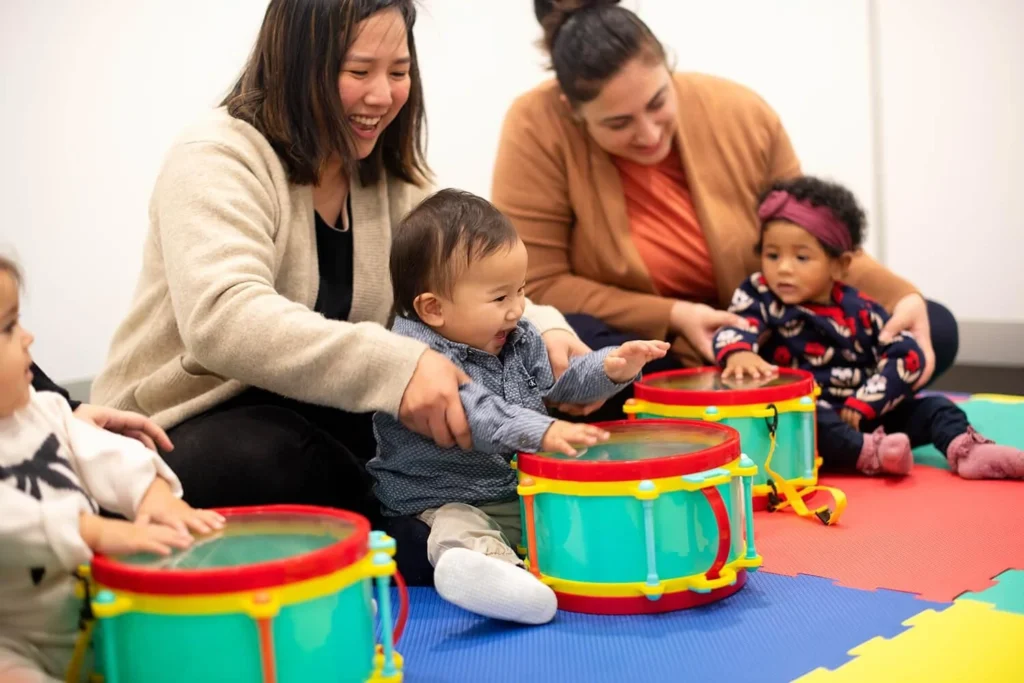
At Shichida Australia, our baby classes are designed to stimulate early brain development through sensory play, baby flashcards, music, and hands-on learning – all in a small, nurturing group setting.
You’ll learn simple, proven ways to support your baby’s eyesight, memory, and communication skills from the very beginning.
Book a trial class today and experience the Shichida difference – where bonding and brain development go hand in hand!
FAQs About Baby Eye Development Timeline
Baby eye development begins in the womb and continues rapidly after birth. At birth, babies can only focus on things 20–30 cm away, but their vision improves week by week throughout the first year.
In the early months, your baby should begin to make eye contact, follow moving objects, respond to bright colours, and gradually track things more smoothly. These are all signs of healthy baby eye development.
If your baby isn’t making eye contact by three months, doesn’t follow movement, or one eye frequently turns in or out, it’s a good idea to speak with your GP or child health nurse.
You can support baby eye development through tummy time, high-contrast toys, colourful objects, peek-a-boo, and reading together. Joining a sensory baby class can also help with guided visual and sensory stimulation.
Yes, many babies are born with blue or grey eyes, and their eye colour may change in the first year as melanin levels increase. By 6 to 9 months, most babies’ eye colour is close to final, but subtle changes can still happen into toddlerhood.
A healthy pregnancy diet rich in omega-3 fatty acids, vitamin A, lutein, and leafy greens can support foetal eye development. Good sources include salmon, eggs, spinach, and carrots.
During your baby’s 6–8 week health check, your GP or child health nurse will assess your baby’s eye movements, reaction to light, and ability to focus. It’s part of the Australian Department of Health’s recommended schedule.