Vocabulary Games for Kids: Fun Ways to Build Language, Memory and Confidence
Key takeaways
- Vocabulary games for kids are a fun way to build language skills, memory and confidence at home.
- The best vocabulary activities for kids use repetition, pictures, movement, songs, books and real-life objects.
- Babies can begin building vocabulary before they can speak clearly by listening to repeated words, songs and everyday routines.
- Toddlers and preschoolers benefit from simple language games such as picture matching, scavenger hunts, memory games, guessing games and flashcards.
- Shichida classes use songs, flashcards, stories, memory activities and teacher-led games to support early language development from 6 months old.
Developing kids’ vocabulary is a cornerstone of their early learning adventures. From birth, children begin to learn the words that will help them communicate with the world, and parents play a vital role in facilitating that growth. We step you through vocabulary games for kids strategies and activities you can use at home to help your child build a rich vocabulary.
For babies, toddlers and preschoolers, some of the best learning happens through play, songs, stories, flashcards, movement and everyday conversations.
Vocabulary games for kids help children connect words with meaning. They learn to name what they see, describe what they feel, follow instructions, remember new words and express themselves with more confidence. Whether your child is just beginning to copy sounds or already asking endless questions, simple vocabulary activities for kids can help build language skills in a fun and natural way.
In this guide, we share easy vocabulary games, books, songs and flashcard activities you can try at home, plus how Shichida supports early language development from as young as 6 months old.
Take a FREE Shichida Quiz
Designed for families with children up to 5 years old.
Why vocabulary matters for babies, toddlers and preschoolers
Vocabulary is one of the building blocks of communication. Long before children can read or write, they are listening, watching, copying sounds and connecting words with people, objects, actions and emotions.
A rich vocabulary helps children understand the world around them. It also helps them express their needs, follow instructions, enjoy stories and take part in conversations with more confidence.
For young children, vocabulary supports:
- Confident communication: Children can express what they want, need, see and feel.
- Listening and understanding: A stronger word bank helps children follow instructions, respond to questions and understand stories.
- Early reading readiness: Vocabulary helps children make sense of books, sounds, rhymes and sentence patterns.
- Memory and thinking skills: Learning new words helps children sort ideas, remember information and make connections.
- Emotional expression: Words help children name feelings, explain problems and communicate with others.
- School readiness: When children understand more words, they can take part more confidently in group learning, conversations and early literacy activities.
Vocabulary is not only about knowing more words. It is about helping children use language to think, connect, learn and express themselves.

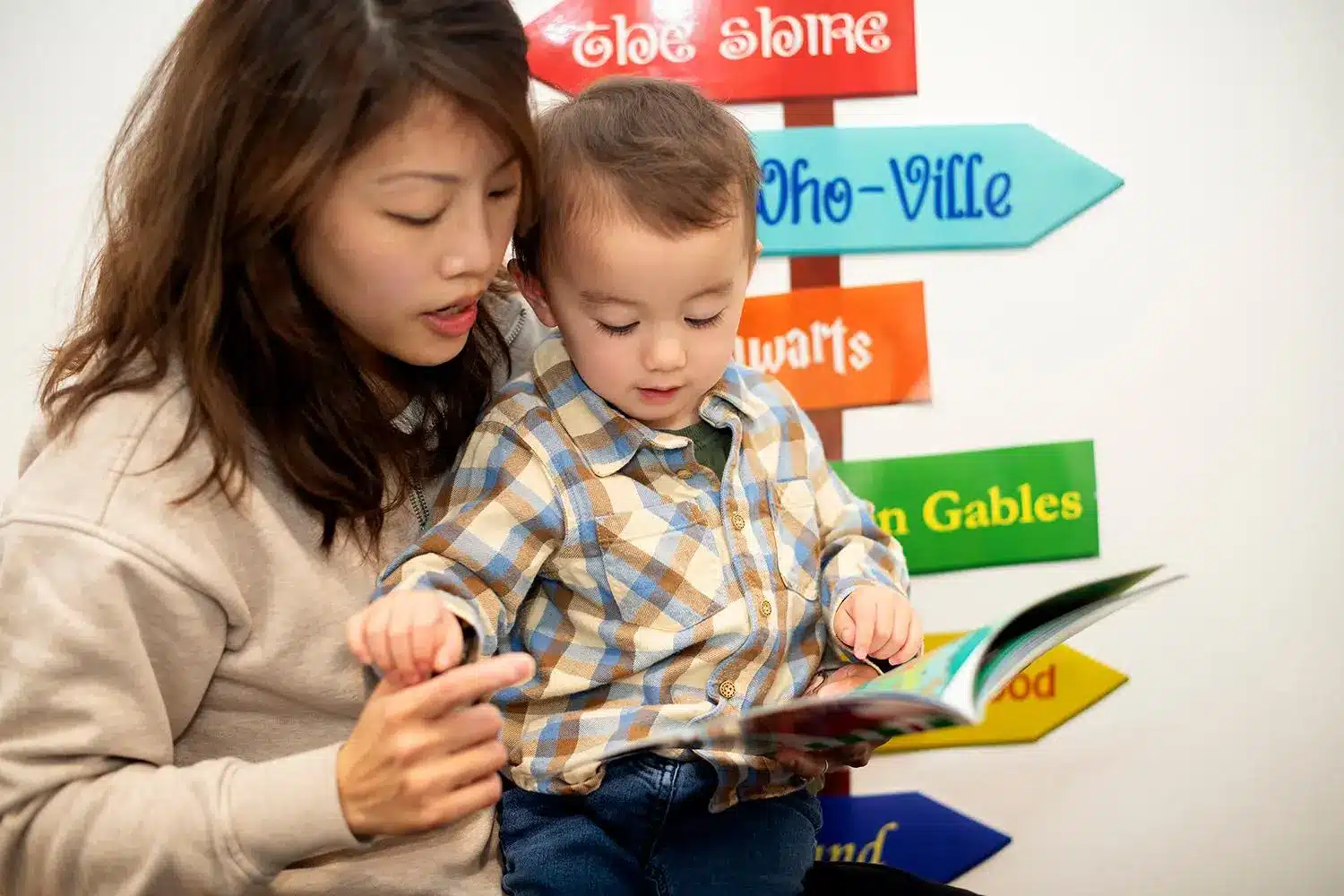
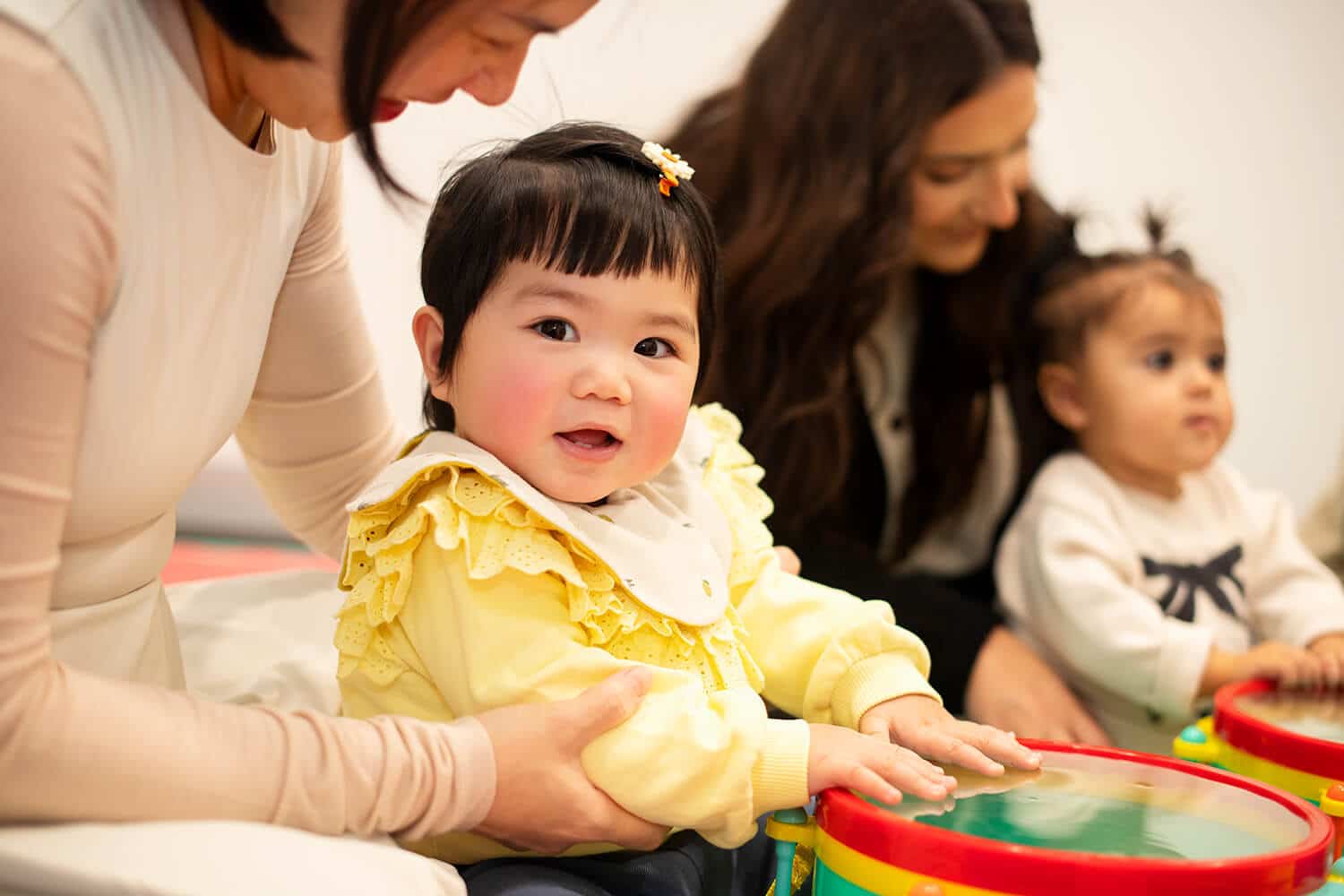
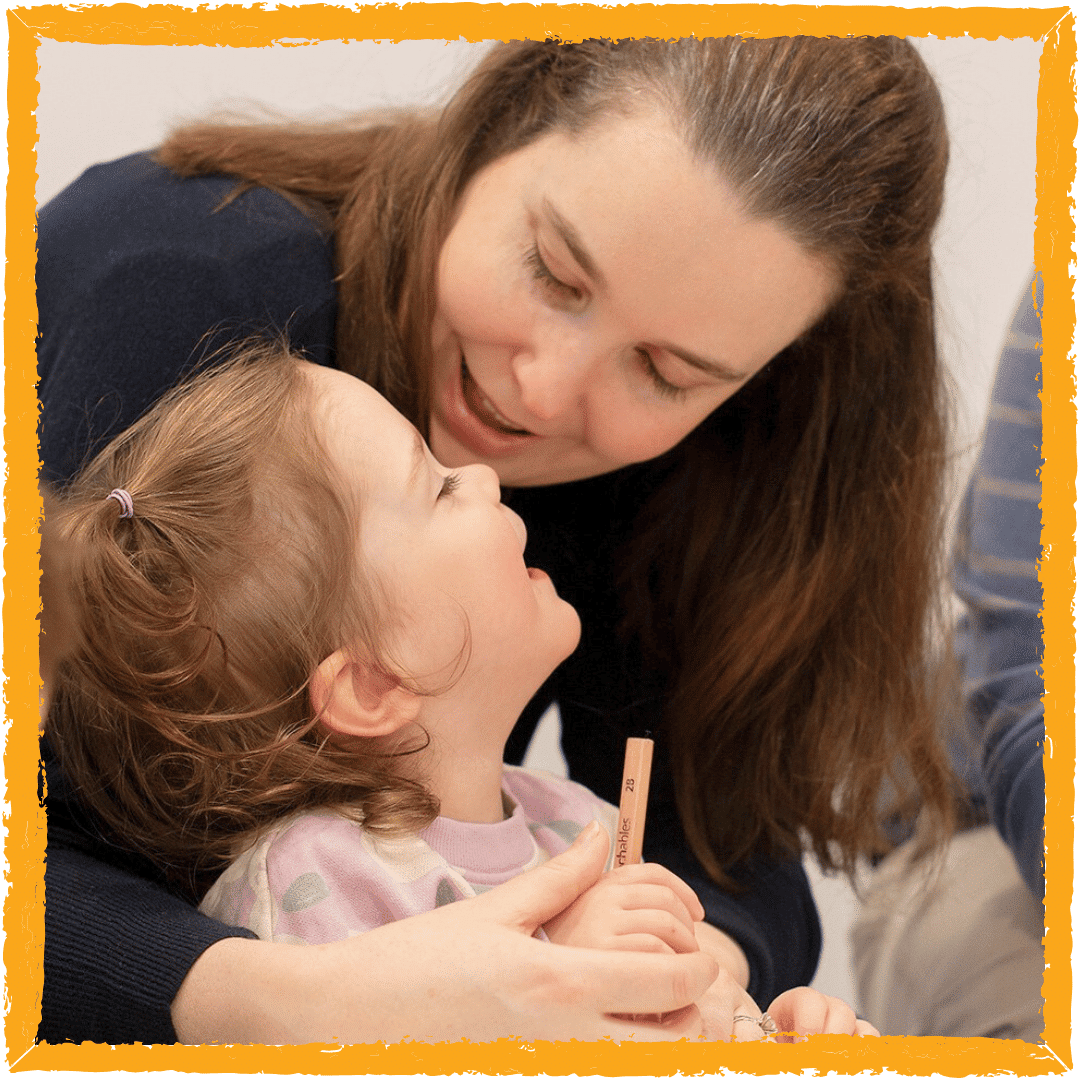
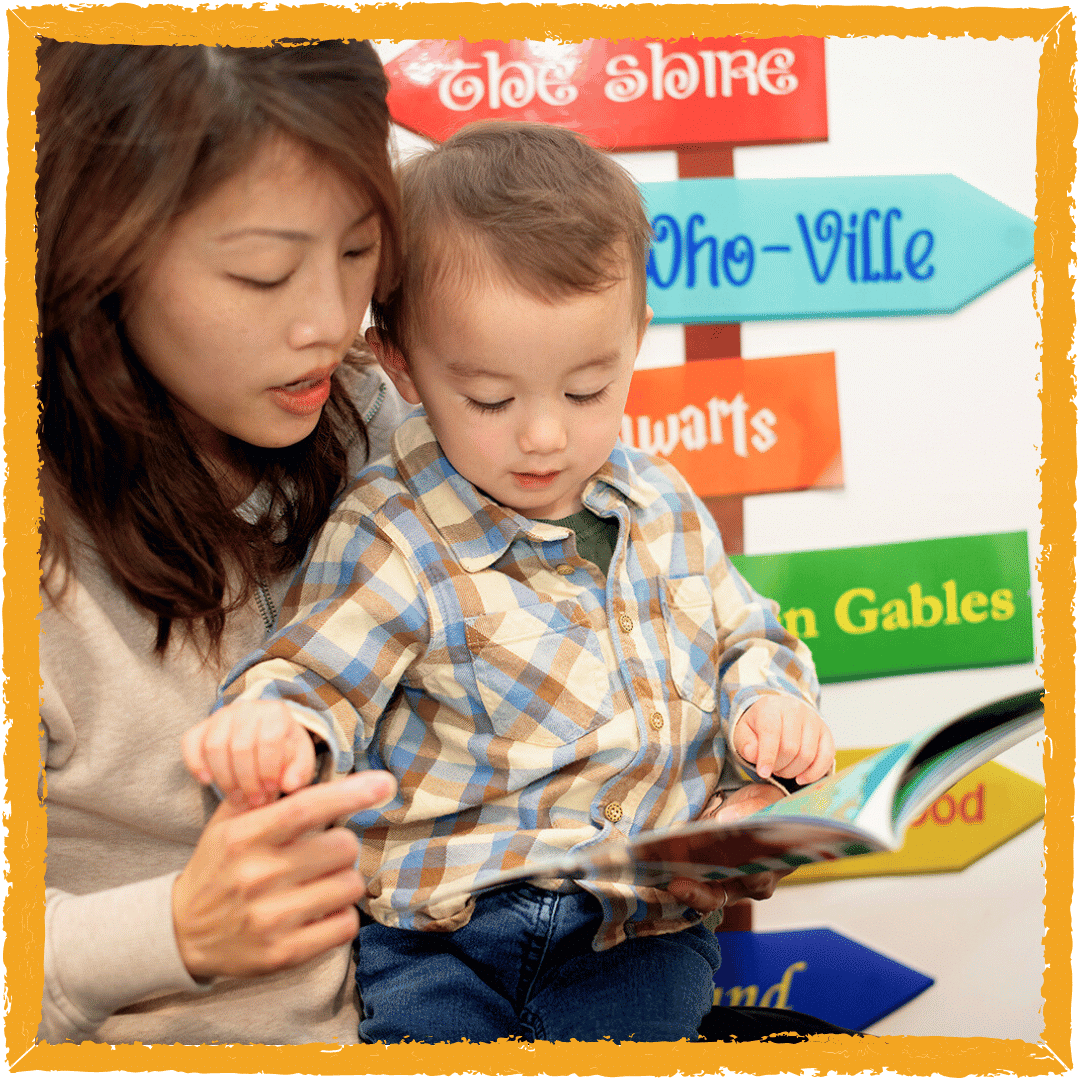
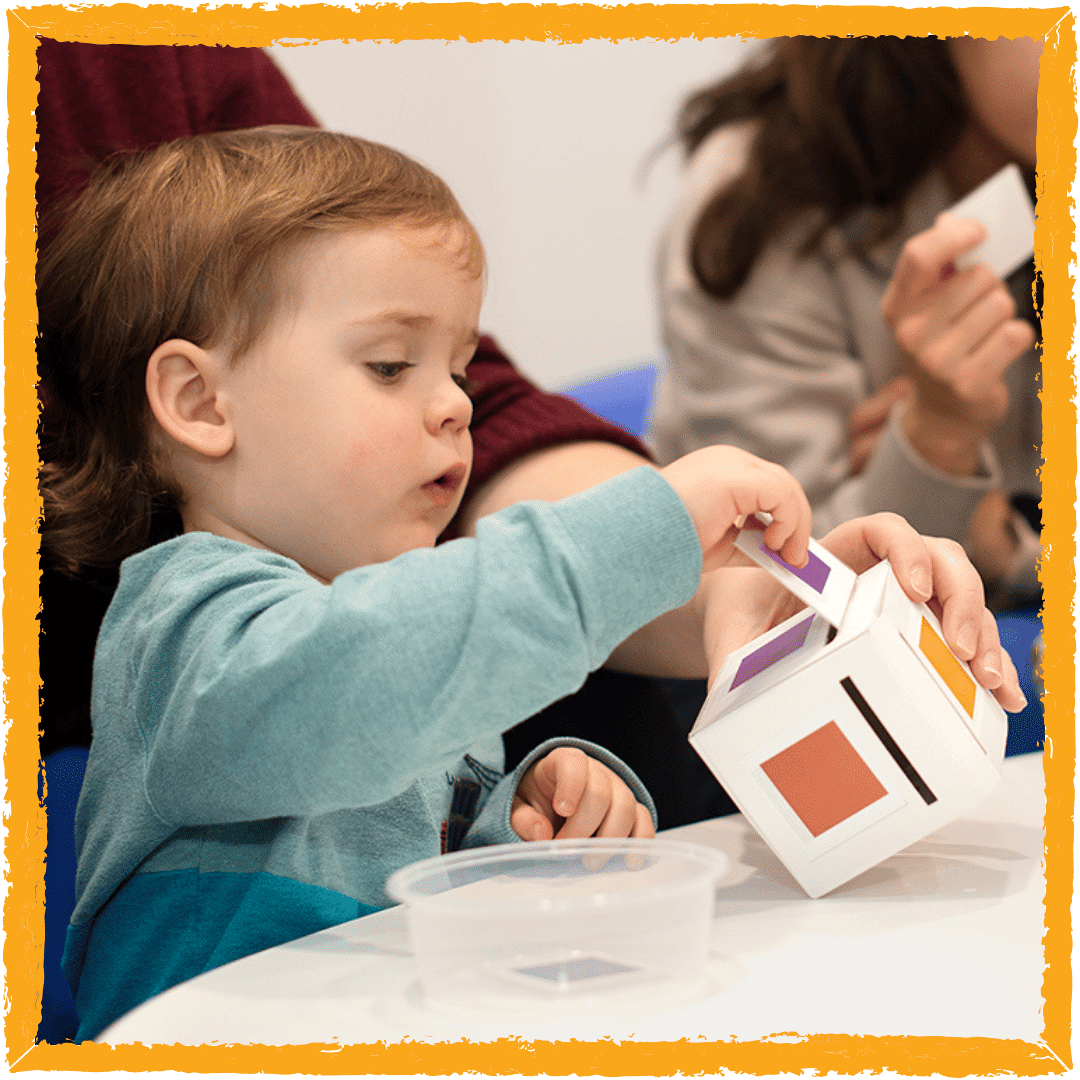
Image by Shichida Australia: Reading with toddlers is one of the easiest vocabulary activities for kids, helping build words, memory and early language skills.
How children learn new words
Children learn vocabulary through repeated, meaningful exposure. This means they need to hear words many times and connect those words to real experiences.
Young children build vocabulary when they:
- hear adults name objects, actions and feelings
- listen to songs and rhymes
- look at picture books
- copy sounds and words
- play naming games
- match words with pictures
- use gestures and movement
- see flashcards or visual prompts
- hear the same words in different situations
- talk with parents, teachers and other children
For babies and toddlers, vocabulary learning starts with simple words like “mummy,” “ball,” “up,” “more,” “dog,” “clap” and “bye-bye.”
As children grow, they begin to understand describing words, action words, position words, colours, shapes, emotions and categories.
That is why vocabulary games for kids work so well. They turn word learning into a playful experience children want to repeat.

Image by Shichida Australia: Flashcards for vocabulary help children connect pictures with words while building memory, focus and early language skills.
Different ways to teach kids vocabulary
There are many ways to teach vocabulary to kids. The most effective approach is to make words meaningful, visual and fun.
Interactive teaching
Interactive vocabulary learning uses conversation, questions, role-play and hands-on activities. Children are more likely to remember words when they use them in real situations.
For example, instead of simply saying “apple,” you can let your child hold an apple, smell it, describe its colour, count apple slices and say whether it tastes sweet or crunchy.
Contextual teaching
Contextual teaching means introducing words in everyday situations. You can teach vocabulary during mealtimes, bath time, story time, shopping trips, walks, playtime and family routines.
For example, when getting dressed, you can name clothing items, colours, body parts and actions: “Sock on,” “Where is your foot?” “Blue shirt,” “Zip up.”
Visual teaching
Pictures, flashcards, objects, books and diagrams help children connect words with meaning. Visual learning is especially helpful for babies, toddlers and preschoolers because they are still building the link between what they hear and what they see.
This is why picture cards, flashcards, matching games and books are so useful for vocabulary building activities.

Word and picture matching games helps children connect vocabulary with meaning through visual learning and play.
Vocabulary games for kids
Vocabulary games for kids make word learning playful, active and memorable. You can use these games at home with toddlers, preschoolers and early primary-aged children.
Word Charades
Word Charades is a simple vocabulary game that helps children connect words with actions.
Choose a simple word such as “jump,” “sleep,” “brush,” “swim” or “crawl.” Act it out without speaking and ask your child to guess the word.
You can also swap roles and let your child act out the word. This helps them understand meaning through movement, memory and expression.
Vocabulary Scavenger Hunt
A Vocabulary Scavenger Hunt helps children connect words with real objects around them.
Ask your child to find something soft, round, red, shiny, heavy, tiny or noisy. You can also search for categories such as animals, food, clothing or toys.
For example, you might say, “Can you find something that is blue?” or “Can you find something we use at bath time?”
This game helps children understand describing words, categories and everyday vocabulary.
Memory Match
Memory Match is one of the easiest vocabulary games for kids because it supports both word recognition and memory.
Create pairs of cards using pictures, words or word-picture combinations. Place the cards face down and take turns flipping two cards at a time to find a match.
For younger children, use fewer cards and simple pictures. For older preschoolers, add written words to build early reading awareness.
Word Bingo
Word Bingo helps children listen carefully and match words with meaning.
Create a bingo card with pictures or words. Call out a word, clue or description and ask your child to find the matching image.
For example, say, “Find something you wear on your feet,” and your child can mark “shoes.”
This game supports active listening, word recognition and vocabulary comprehension.
Word Guessing Game
The Word Guessing Game helps children listen to clues, think critically and recall words.
Describe a word without saying it. For example, “I am thinking of an animal. It says moo. It gives us milk.”
Your child guesses the word: “Cow!”
You can make the clues easier or harder depending on your child’s age.
Picture Word Match
Picture Word Match is a useful vocabulary activity for toddlers and preschoolers.
Use picture cards and matching word cards. Ask your child to match each picture to the correct word.
For toddlers, start with familiar items like cat, ball, cup, car and apple. For preschoolers, add colours, actions, emotions and simple describing words.
This activity helps children connect spoken words, printed words and pictures.
What’s Missing?
What’s Missing? is a fun memory game that also supports vocabulary recall.
Place three to five objects in front of your child. Name each one together. Ask your child to close their eyes while you remove one object.
Then ask, “What’s missing?”
This simple game helps children remember object names and practise recalling words.
Mystery Bag Game
The Mystery Bag Game is a great language game for toddlers and preschoolers because it uses touch, guessing and description.
Place familiar objects in a bag. Your child reaches in, feels one object and describes it before pulling it out.
You can ask:
- Is it soft or hard?
- Is it big or small?
- Is it round?
- What do you think it is?
This game builds vocabulary through sensory play and helps children use describing words.
Name 3 Things
Name 3 Things is a quick vocabulary game you can play anywhere.
Ask your child to name three things in a category.
For example:
- Name three animals.
- Name three things you eat.
- Name three things that are red.
- Name three things you see at the park.
This activity helps children build vocabulary, memory and quick thinking.
Looking for more ideas, guidance or a fun class to join with your child? Try a Shichida class. Each lesson includes 20 to 25 fast-paced activities that support memory, early literacy and numeracy, focus, critical thinking and more. It is fun for kids and parents alike. Book a trial class and see what Shichida is all about.
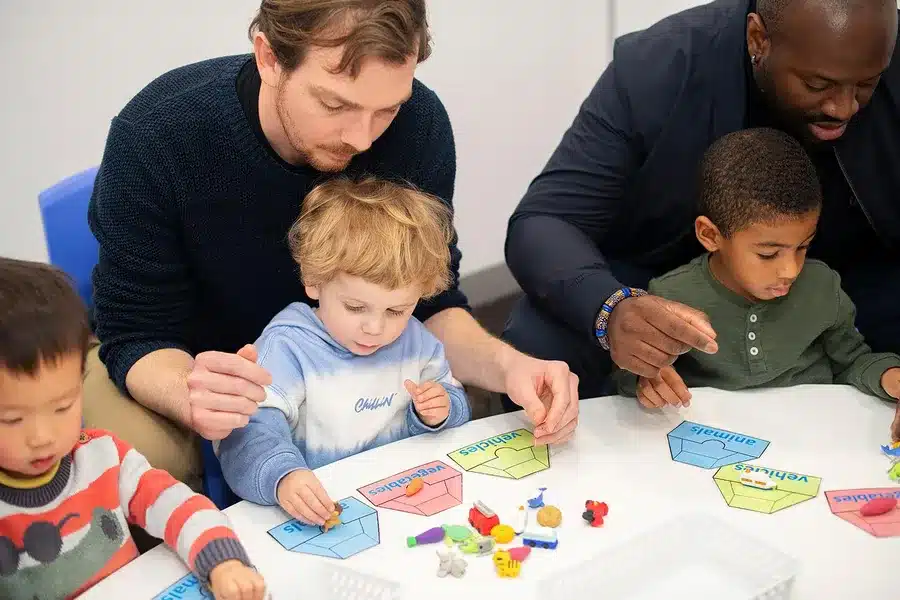
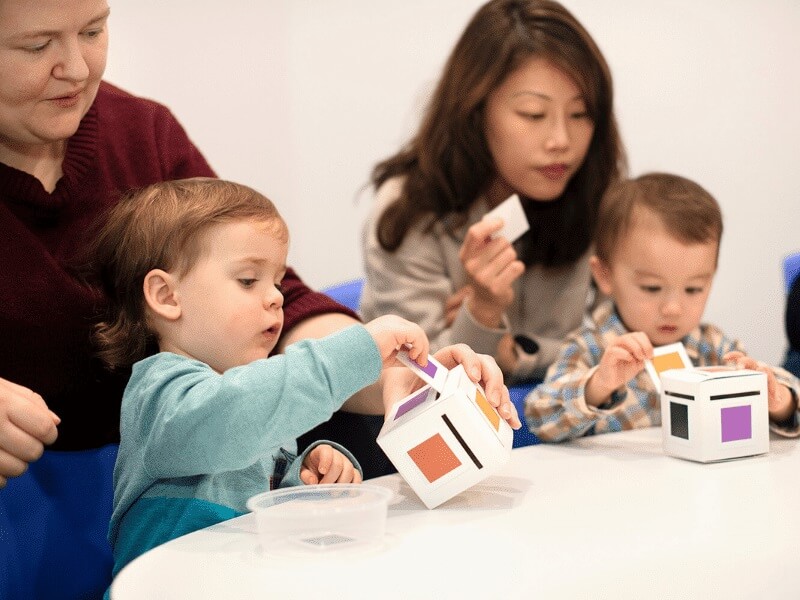
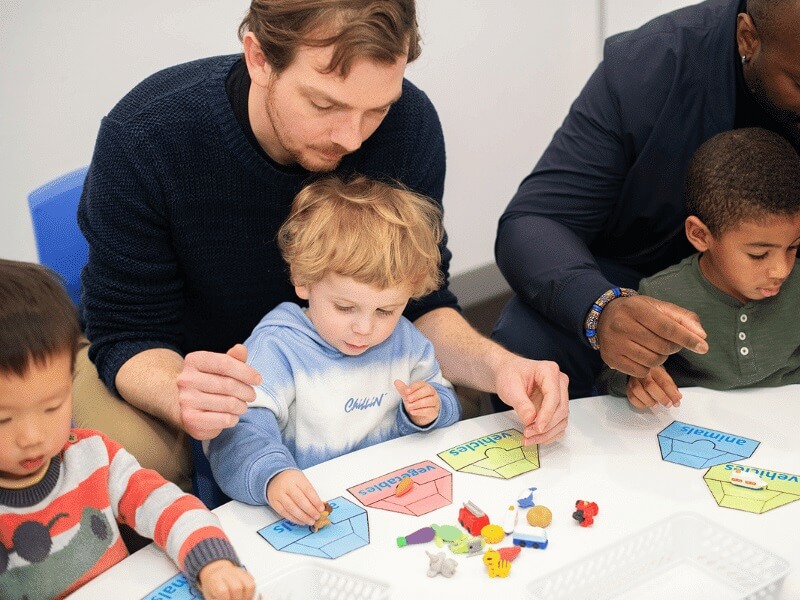
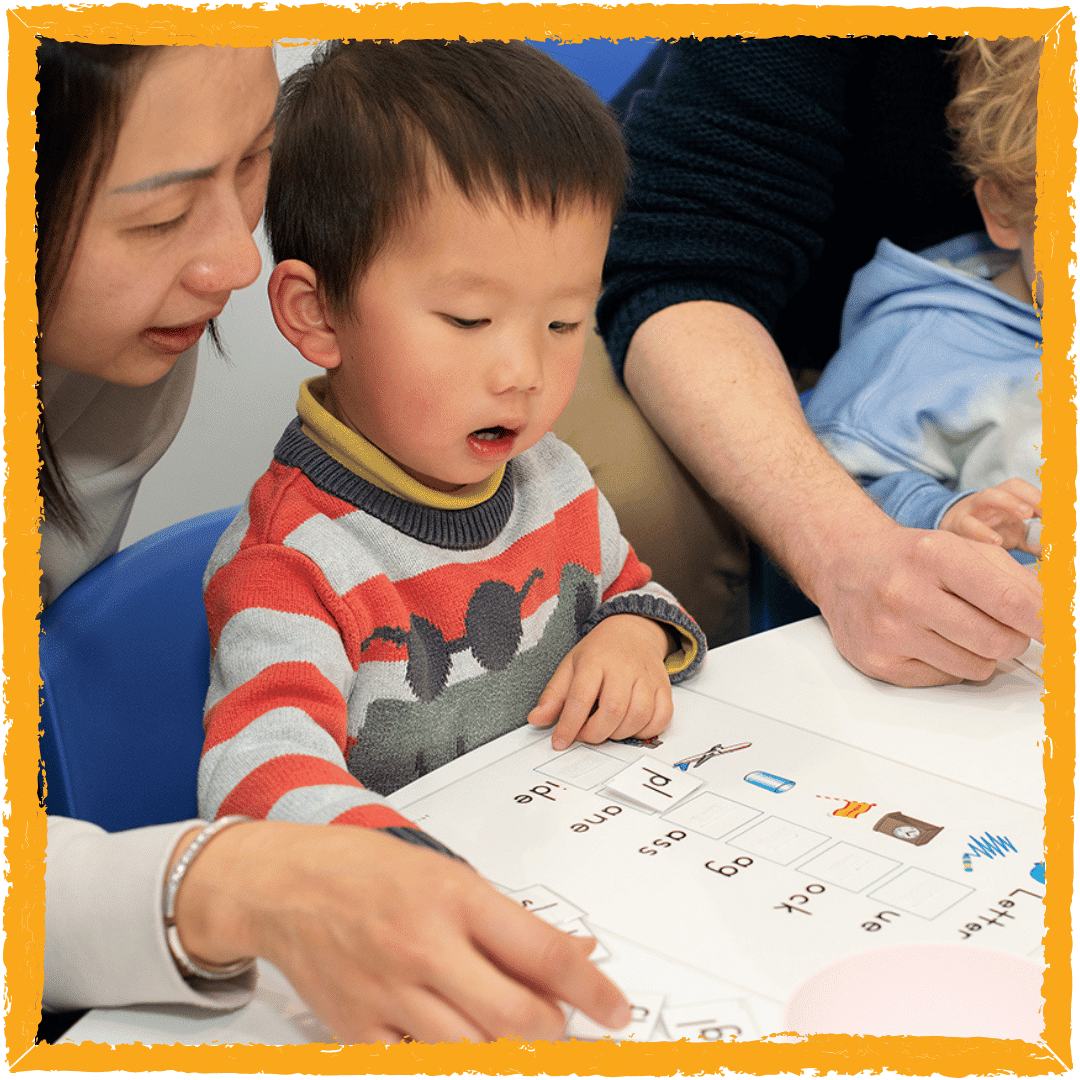
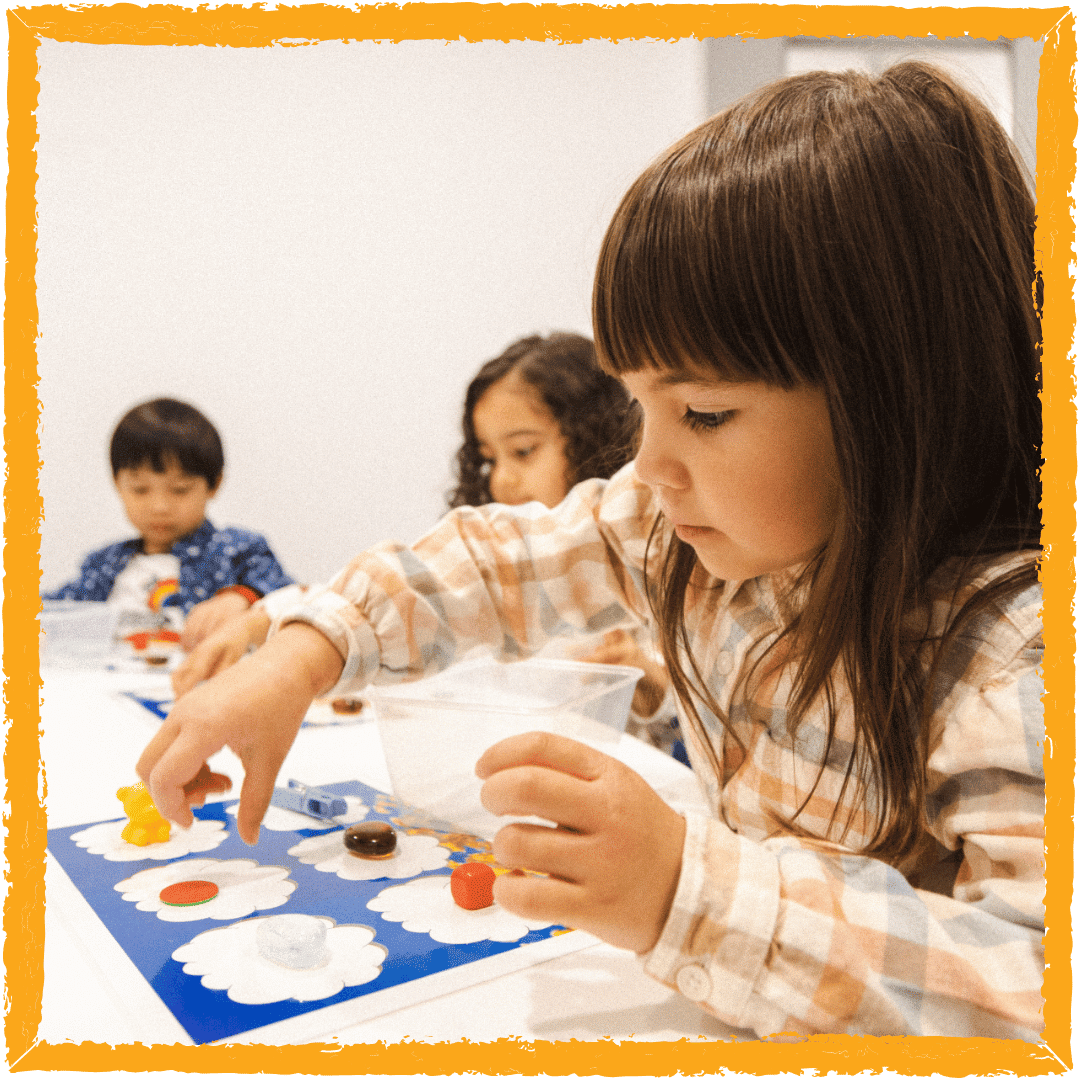
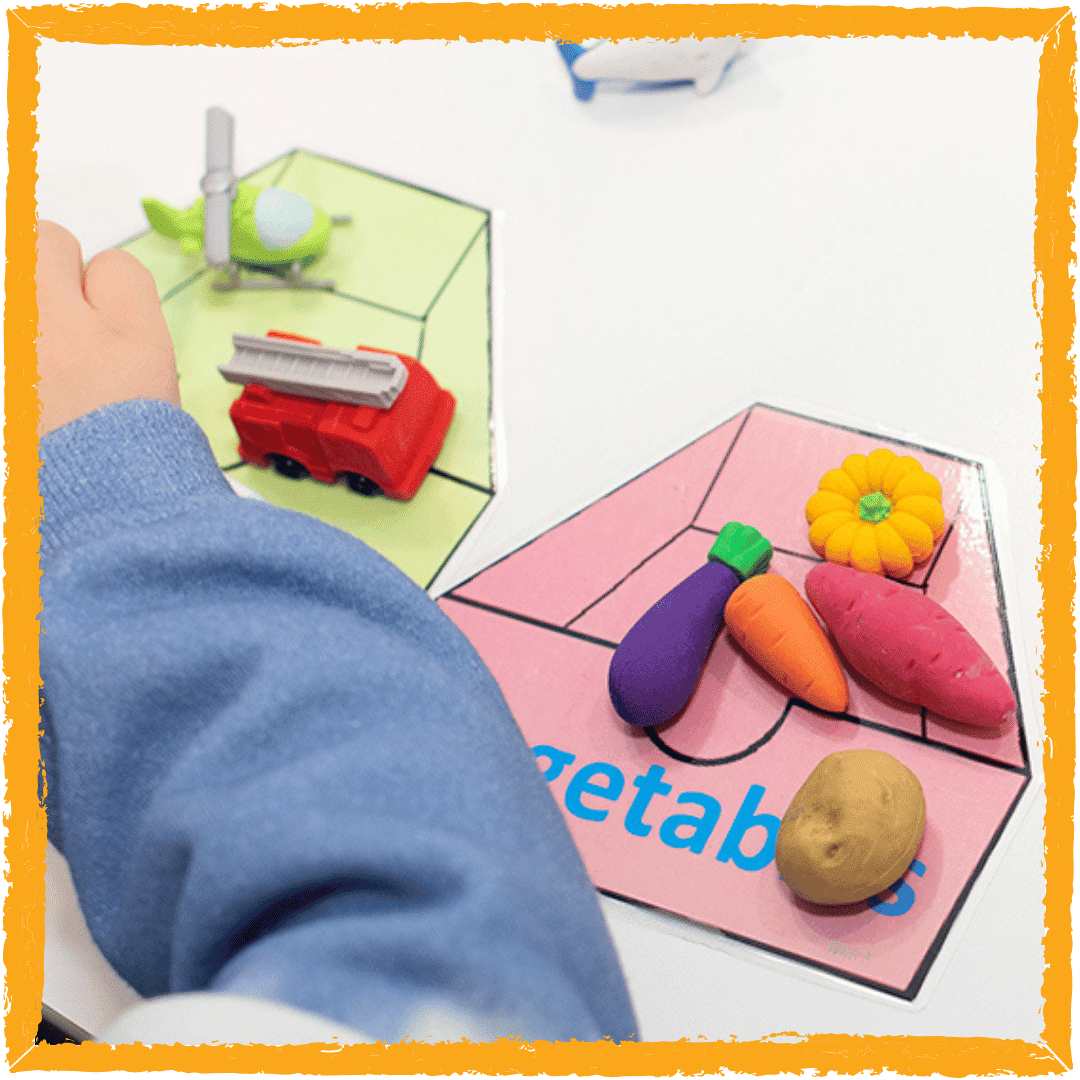
Image by Shichida Australia: Category matching games help preschoolers build vocabulary, describe objects and sort words into meaningful groups through hands-on play.
Vocabulary activities for babies
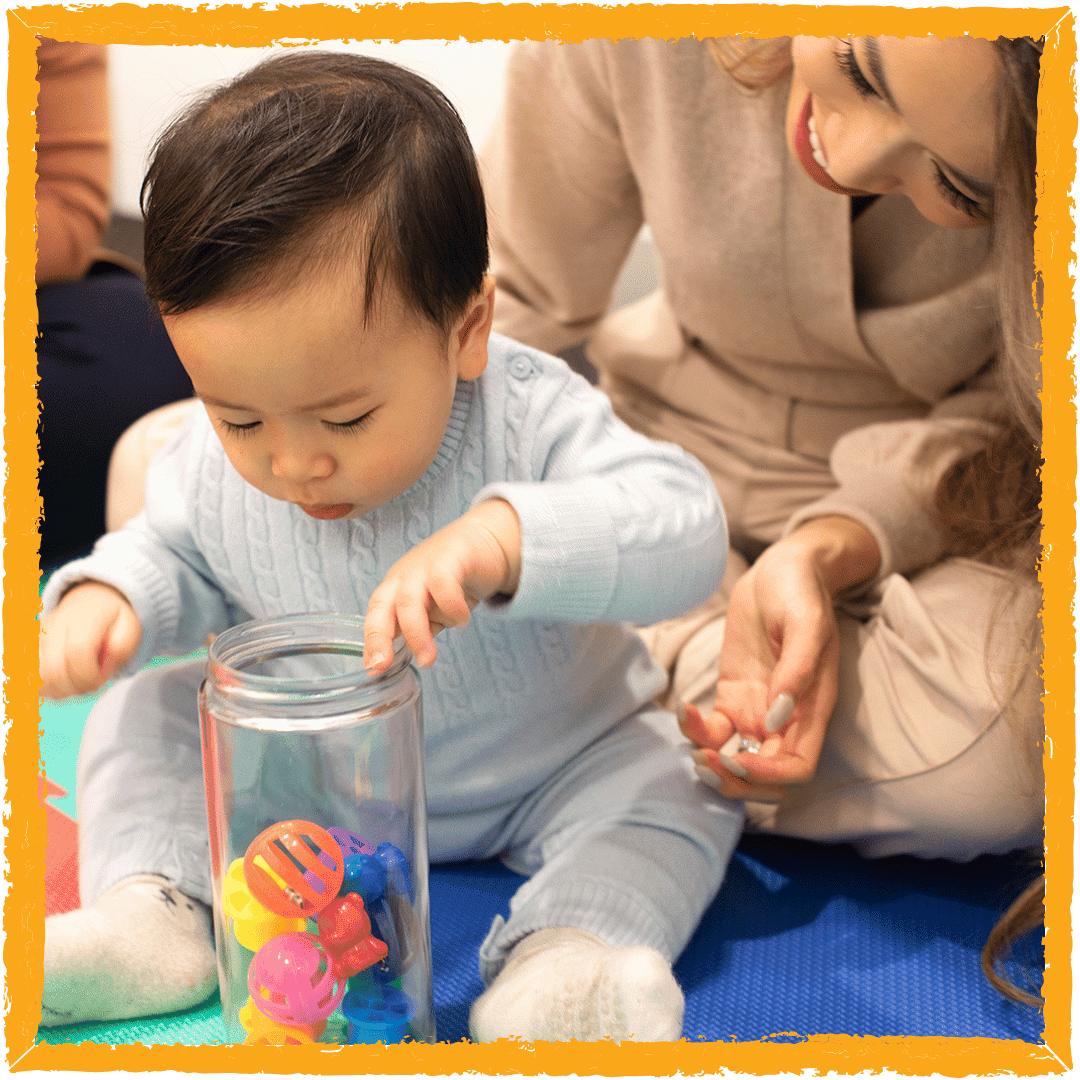
Babies begin learning language long before they can speak clearly. From around 6 months, babies are watching your face, listening to your voice, copying sounds and connecting words with routines.
Try these simple vocabulary activities for babies.
Talk through daily routines
Name what you are doing during everyday moments.
For example:
“Nappy change.”
“Wash hands.”
“Milk.”
“Socks on.”
“Up.”
“Down.”
“All done.”
These repeated words help babies connect language with familiar routines.
Sing the same songs often
Repetition helps babies recognise sounds and patterns.
Songs with actions are especially useful because they connect words with movement.
Read board books
Choose books with clear pictures and simple words.
Point to the pictures and name what you see.
For example, “Dog,” “Baby,” “Ball,” “Car,” “Apple.”
Use picture cards
Show simple picture cards and say the word clearly.
Keep it short and happy.
For example: “Dog,” “Apple,” “Car,” “Baby.”
Picture cards and flashcards for vocabulary can help babies hear words repeatedly while seeing a matching image.
Copy sounds
When your baby babbles, copy the sound back.
This teaches turn-taking, listening and early conversation skills.
Use gestures with words
Wave when saying “bye-bye,” lift your arms for “up,” clap when saying “clap,” and point when naming objects.
These small moments help babies build early vocabulary through connection, repetition and play.
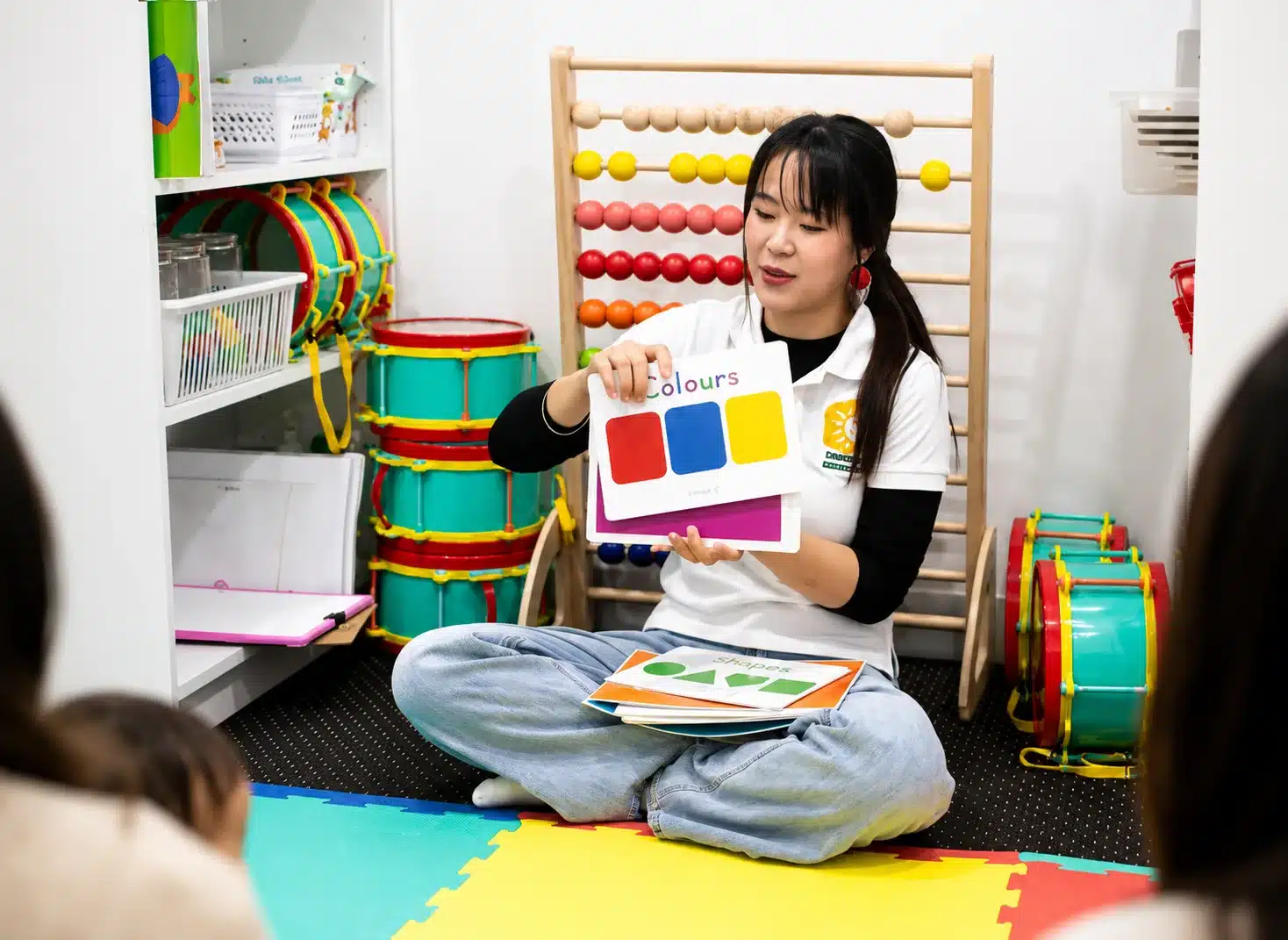
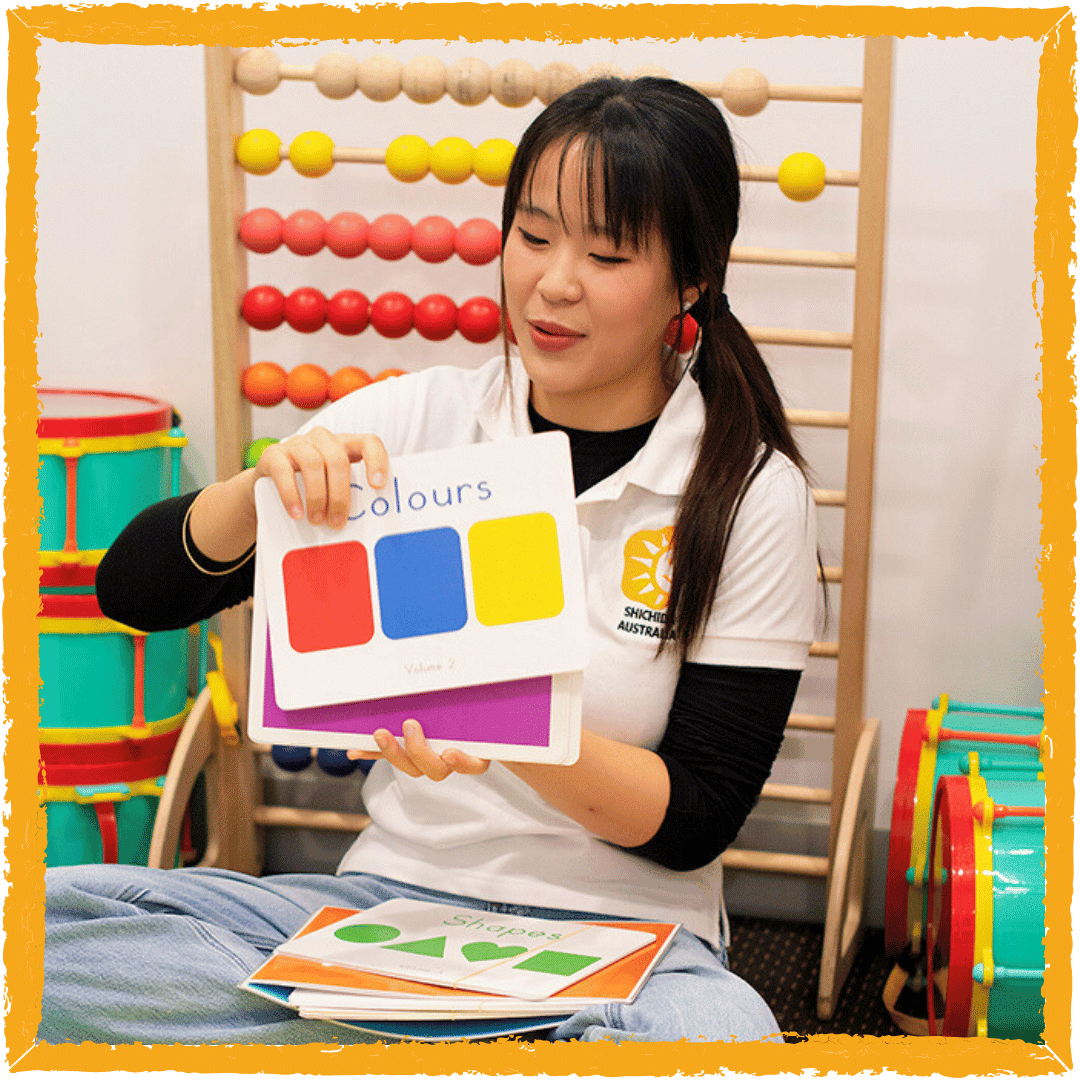
Image by Shichida Australia: Colour flashcards support early vocabulary for babies by connecting colour names with visual learning, listening and repetition.
Vocabulary games for toddlers
Toddlers learn best through short, simple and repeated activities. At this age, vocabulary games should feel like play. Try these vocabulary games for toddlers at home.
Point and Name
Point to objects around the room and name them: “chair,” “book,” “cup,” “door,” “ball.”
Then ask, “Where is the ball?” or “Can you find the cup?”
This helps toddlers connect words with objects they see every day.
Body Part Songs
Sing songs that name body parts, such as head, shoulders, knees and toes.
Touch each body part as you sing to help your toddler connect the word with the action.
Download free body parts flashcards here.
Animal Sounds
Show animal flashcards or toys and say the animal name and sound.
For example:
“Cow says moo.”
“Dog says woof.”
“Duck says quack.”
Animal sound games are simple, fun and easy for toddlers to copy.
Colour Hunt
Choose one colour and find things around the room that match it. Find free colour flashcards here.
For example, “Let’s find something yellow.”
This builds colour vocabulary and observation skills.
Action Word Game
Use simple action words like jump, clap, roll, crawl, wave, sleep and run.
Say the word, then act it out together.
This helps toddlers learn new words through movement and repetition.
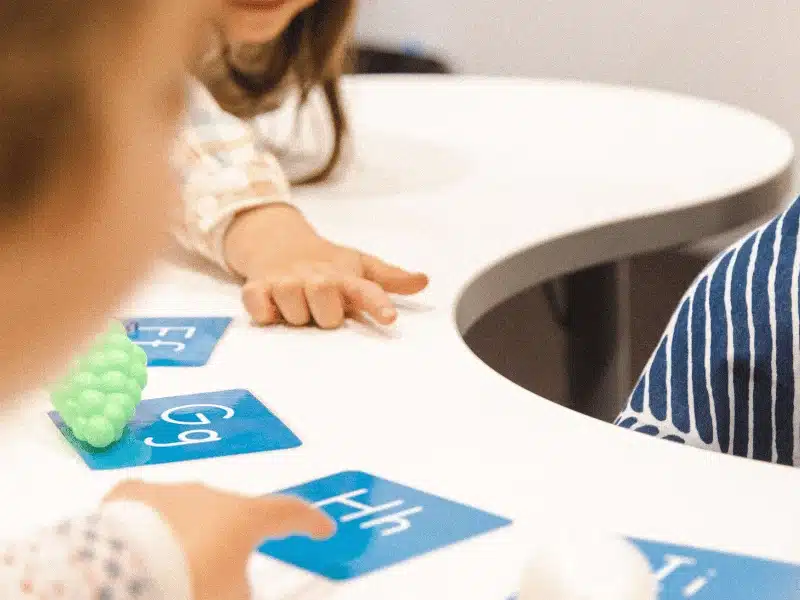
Image by Shichida Australia: Phonics matching games help children build vocabulary, sound recognition and early reading confidence through play.
Vocabulary games for preschoolers
Preschoolers are ready for richer vocabulary games that involve clues, categories, memory and storytelling.
Try these vocabulary games for preschoolers to help your child use words with more confidence and meaning.
Opposite Words
Say a word and ask your child to say the opposite.
Start with simple pairs such as:
- hot and cold
- big and small
- up and down
- happy and sad
- fast and slow
This helps children understand word relationships.
Describe and Guess
Ask your child to describe an object without saying its name.
For example, “It is round. You can kick it. We play with it outside.”
The answer is “ball.”
This game builds describing skills, listening and vocabulary recall.
Sorting Game
Give your child picture cards or toys and ask them to sort them into groups.
For example:
- animals
- food
- clothes
- vehicles
- colours
- shapes
Sorting games help children understand categories and make connections between words.
Story Card Game
Use picture cards and ask your child to make a simple story.
You can start with three cards and ask, “What happened first?” “What happened next?” and “How did the story end?”
This builds vocabulary, imagination and sentence structure.
Emotion Words
Use facial expressions or picture cards to teach words like happy, sad, angry, excited, worried and surprised.
Ask your child, “When do you feel excited?” or “What does a worried face look like?”
This helps children build emotional vocabulary and express themselves more clearly. Get free emotions flashcards here.

Image by Shichida Australia: Opposite word matching games help children build vocabulary, compare meanings and strengthen early language skills.
Other vocabulary activities for kids
Vocabulary games are not the only way to build your child’s word bank. Songs, books, flashcards, activity books and everyday conversations all help children hear and use new words in meaningful ways.
The key is repetition. Children need to hear words many times before they can understand and use them confidently.
Music and rhythm for kids
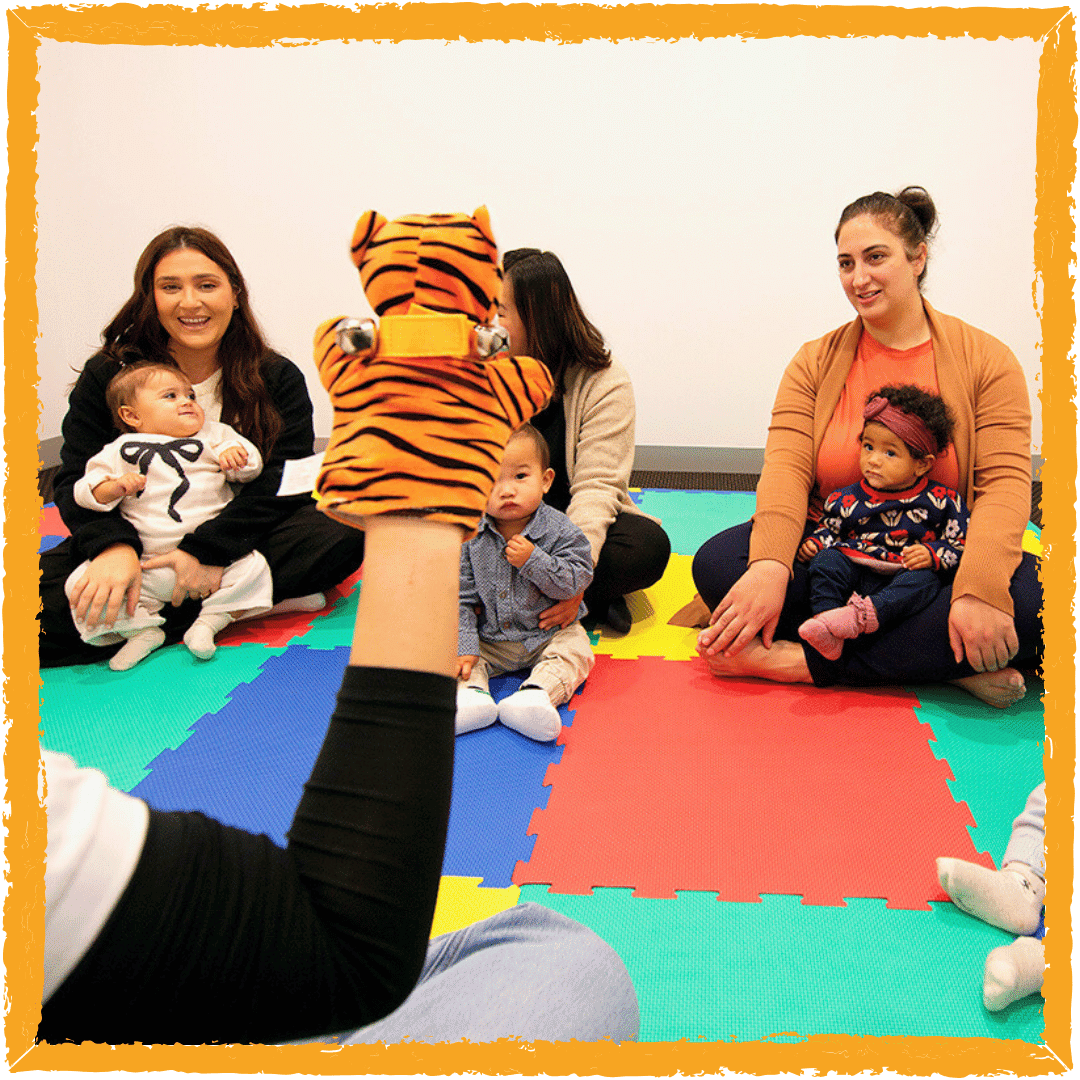
Songs are one of the easiest ways to build vocabulary because they combine rhythm, repetition, actions and emotion. Songs can also be paired with flashcards.
When children sing, they hear the same words again and again. This helps them remember sounds, phrases and sentence patterns.
Songs can also support:
- listening skills
- memory
- pronunciation
- phonemic awareness
- rhythm and timing
- confidence
- early literacy skills
Action songs are especially useful for babies, toddlers and preschoolers because they link words with movement.
For example, when children sing about clapping, jumping, waving or pointing, they connect language with physical action.
Shichida’s Sing Together! is designed to make learning the alphabet and vocabulary words joyful through songs, rhythm and interactive activities.
Activity books for kids
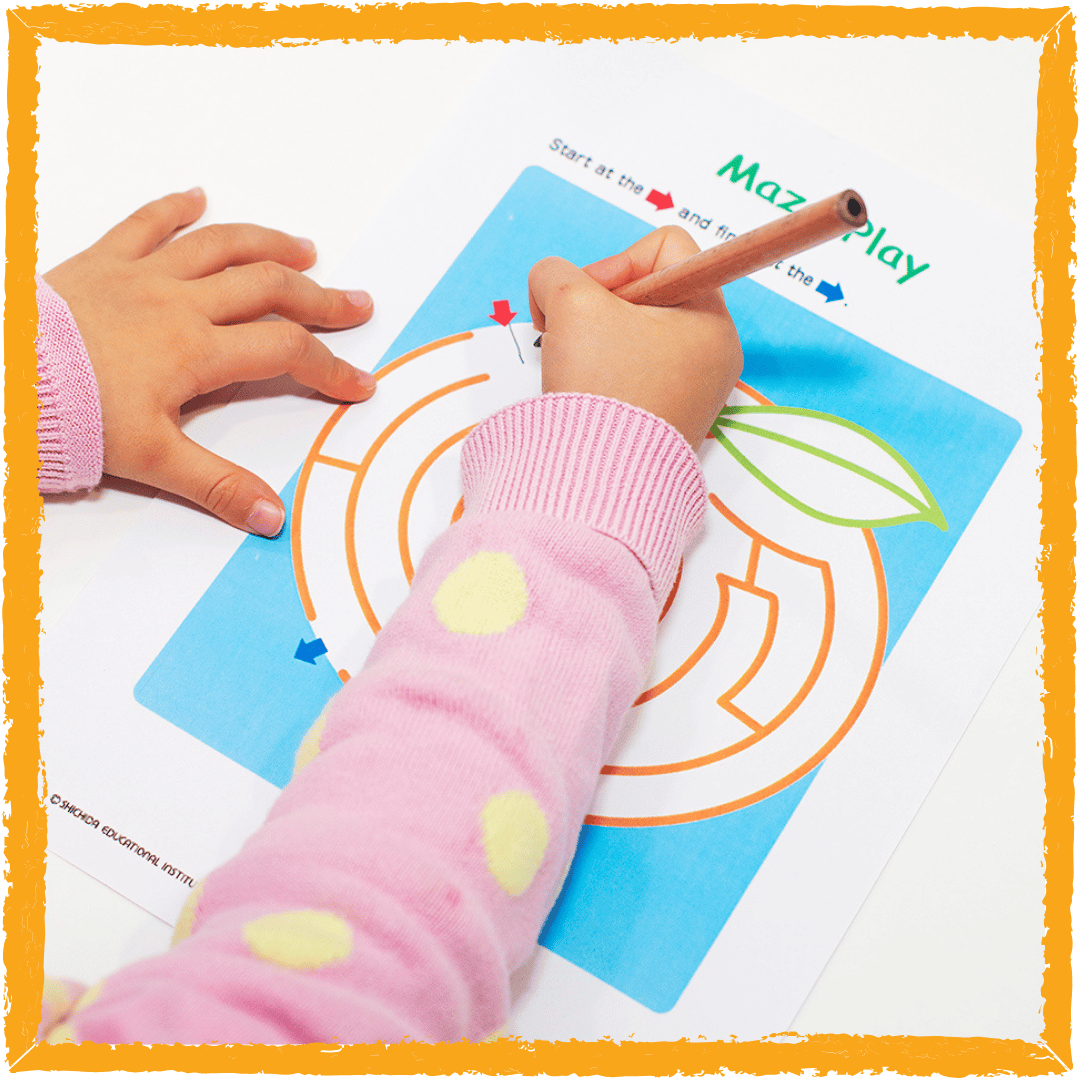
Activity books can help children practise vocabulary through tracing, matching, colouring, puzzles and simple writing activities.
For preschoolers, activity books can support:
- word recognition
- pencil control
- letter awareness
- visual matching
- early writing confidence
- focus and concentration
The English Vocabulary Workbook uses a simple three-step process: tracing, copying and independent writing. This helps children practise English writing skills while connecting words with meaning.
Vocabulary books for kids
Books are one of the best tools for building vocabulary. They introduce children to words they may not hear in everyday conversation and help them understand how words are used in context.
Reading with your child helps build:
Word exposure: Books introduce children to a wide range of words, sentence patterns and expressions.
Understanding: Stories help children work out what words mean through pictures, characters and events.
Knowledge: Books introduce new topics such as animals, food, weather, transport, feelings, family and nature.
Imagination: Stories help children picture ideas, describe scenes and talk about what might happen next.
Connection: Reading together gives parents and children a calm, shared language experience.
Vocabulary books for kids – Toddlers Ages 1-3
Speak Up Stories
Speak Up Stories help children improve English reading comprehension and conversation skills through reciting picture books with frequently used phrases. Children can also listen to double-speed and quad-speed versions, supporting listening, memory and language processing.
Dear Zoo by Rod Campbell
This lift-the-flap book introduces young children to animal names and simple describing words.
Brown Bear, Brown Bear, What Do You See? by Bill Martin Jr. and Eric Carle
This book introduces colours, animals and repeated sentence patterns through rhythm and bright illustrations.
Peek-a-Who? by Nina Laden
This interactive board book invites toddlers to guess which animal or object is hiding, supporting word recognition and playful prediction.
Vocabulary books for kids – 4 years and upwards
The Very Hungry Caterpillar by Eric Carle
This classic picture book introduces days of the week, numbers, food words and sequencing.
The Gruffalo by Julia Donaldson
This story introduces descriptive language, animal characters and rich vocabulary through rhyme and storytelling.
The Wonky Donkey by Craig Smith
This funny rhyming book introduces new words through rhythm, humour and repetition.
Speak Up Stories
Speak Up Stories are also available for children aged 4 years and upwards, helping children practise reading comprehension, conversation and listening skills.
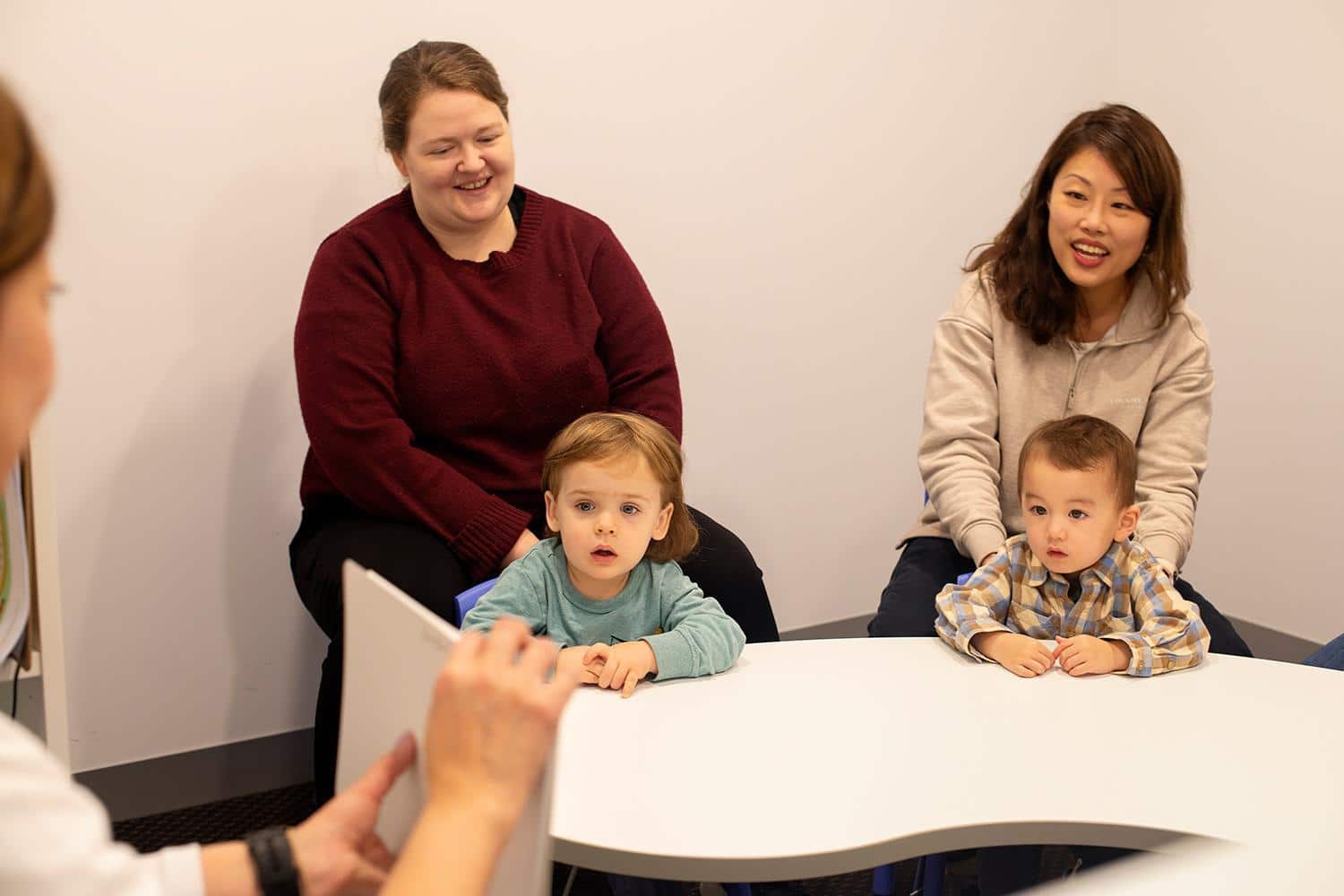
Image by Shichida Australia: Flashcards for vocabulary help toddlers build word recognition, focus and memory through repeated visual exposure.
Using flashcards to teach vocabulary
Flashcards are a powerful way to teach vocabulary because they give children quick, repeated exposure to words and images.
When used in a fun and positive way, flashcards can support vocabulary development, memory and early reading confidence.
Increased exposure and repetition
Children often need to see and hear a word many times before they understand and use it. Flashcards make it easy to repeat words in short, focused bursts.
Fast word recognition
High-speed flashcards help children process words and images quickly. This can support fast recognition, reading readiness and confidence.
Visual learning
Flashcards connect words with images, helping children understand meaning. This is especially useful for babies, toddlers and preschoolers who rely strongly on visual cues.
Active focus
Short flashcard sessions can help children practise attention and concentration without making learning feel long or tiring.
Easy to use at home
Flashcards are simple for parents to use during short moments in the day. You can use them before story time, after breakfast or as part of a quick learning routine.
Flexible vocabulary practice
You can choose flashcards based on your child’s age, interests and learning stage. For example, you might focus on animals, foods, colours, shapes, transport, emotions or action words.
Shichida Australia offers flashcards designed to introduce children to a wide range of words, images and ideas in a fast, engaging way.

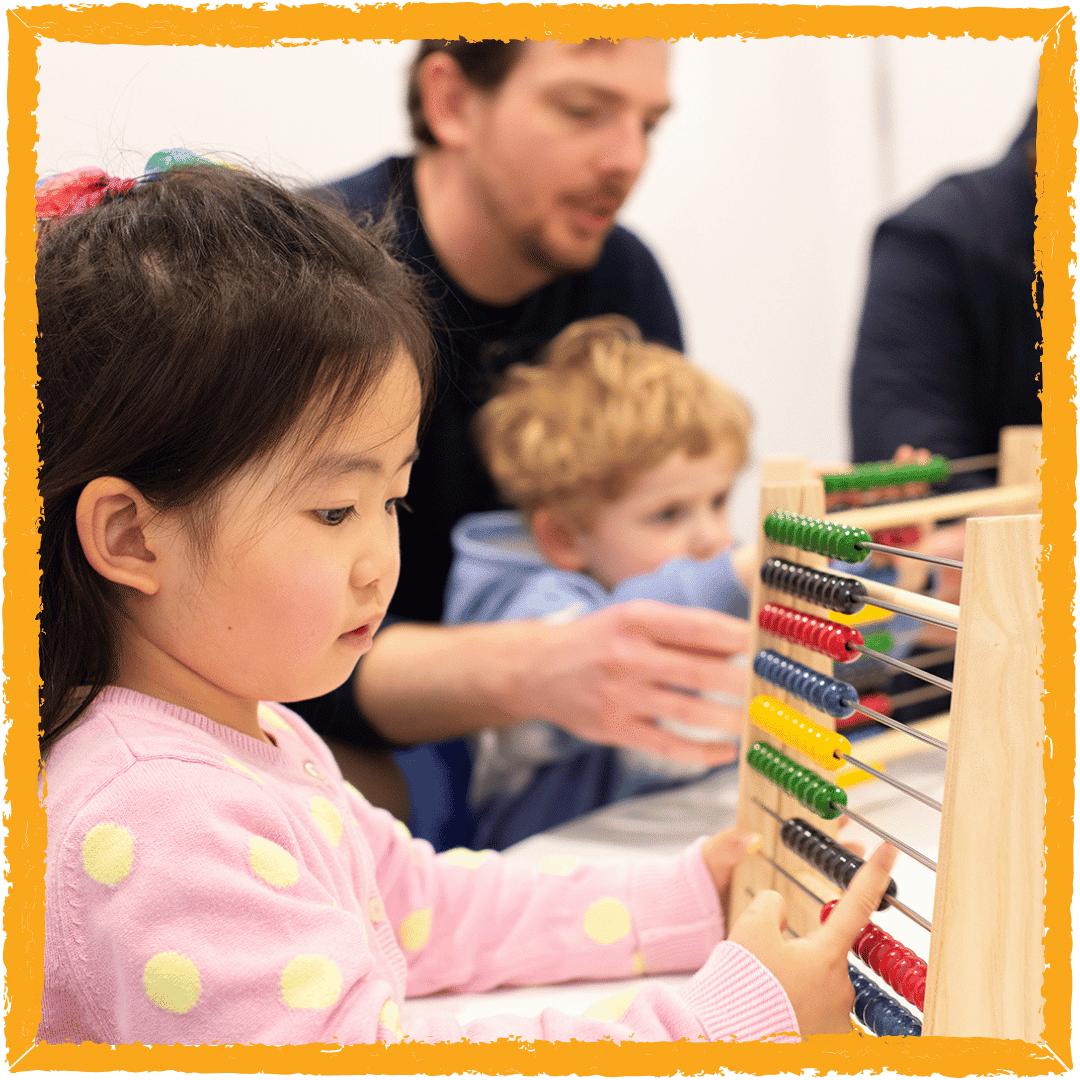
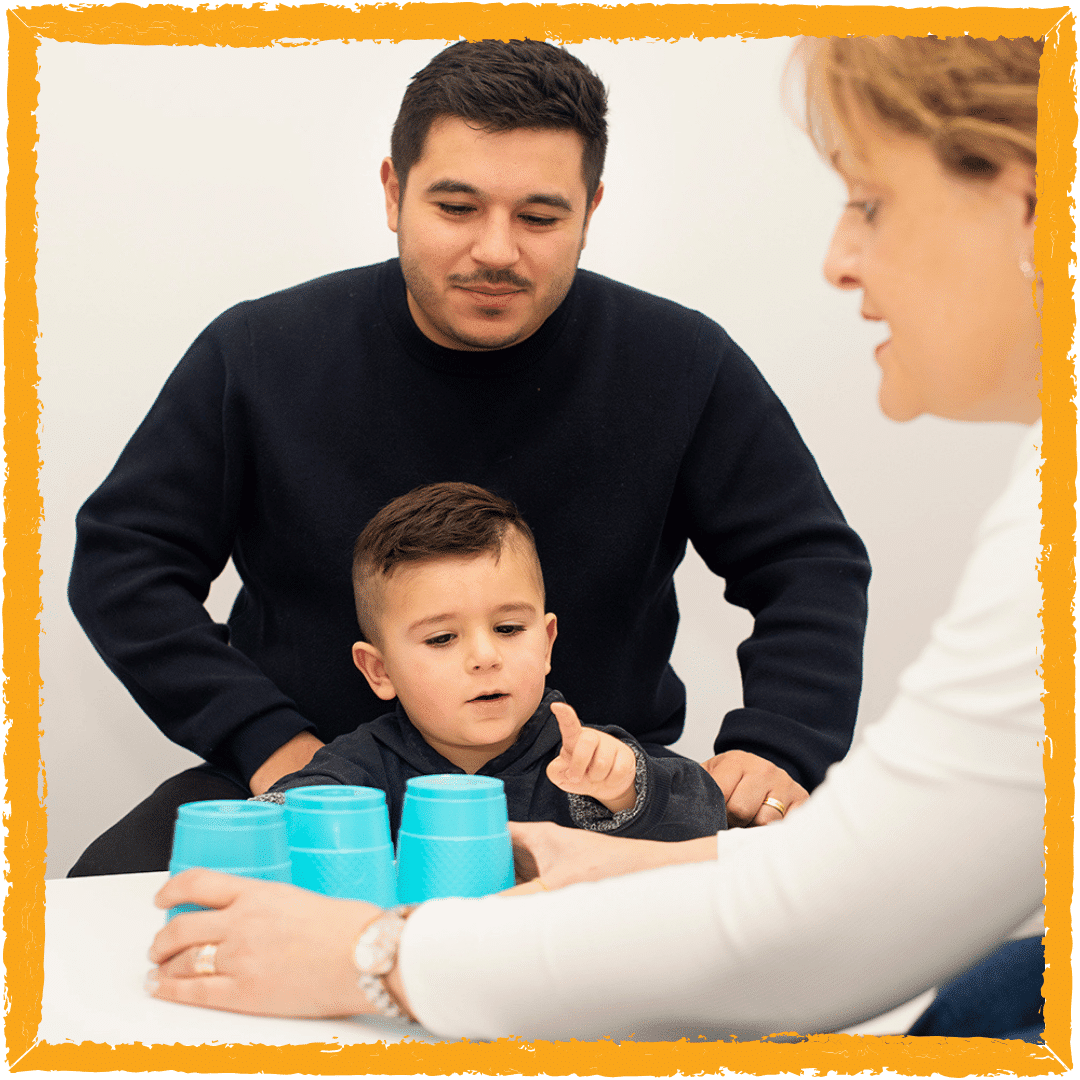
Image by Shichida Australia: Word games for preschoolers help build vocabulary, listening skills and early literacy through playful parent-child learning.
How Shichida helps children build vocabulary
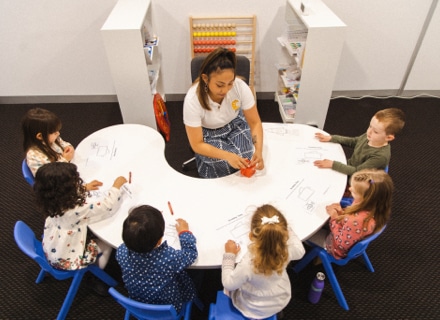
At Shichida, vocabulary building is part of a wider early learning experience. Children are introduced to words through songs, flashcards, memory games, picture prompts, stories and teacher-led activities that keep learning fast, fun and engaging.
Rather than teaching vocabulary as a stand-alone skill, Shichida helps children connect words with images, sounds, actions and real-life meaning. This supports listening, memory, concentration, confidence and early communication skills.
For babies, toddlers and preschoolers, this repeated and joyful exposure can make a big difference. Children begin to recognise words, respond to instructions, express ideas and build the foundations they need for reading, writing and clear communication later on.
Parents also learn simple ways to continue vocabulary-building at home, so the learning does not stop when class ends.

Image by Shichida Australia: In Shichida classes, children learn antonyms through flashcards that pair opposite words with engaging pictures.
Book a Shichida trial class
Want to help your child build vocabulary, memory and confidence through fun early learning activities?
Shichida classes are designed for children from 6 months to 9 years, with age-appropriate activities that support language, memory, focus, problem-solving and early learning skills.
If your child is between 6 months and 5 years old, a trial class is a great way to see how vocabulary-building, songs, flashcards and hands-on activities work together in a real Shichida lesson.
Book a trial class and see how much your child can absorb through play.
FAQs About Vocabulary Games for Kids
Some of the best vocabulary games for kids include word charades, picture word matching, memory match, scavenger hunts, word bingo, guessing games and sorting games. These activities help children connect words with pictures, actions, objects and meanings.
You can teach vocabulary to your toddler by naming objects, singing songs, reading picture books, using flashcards, playing animal sound games and talking through daily routines. Keep the activities short, repeated and playful.
Preschoolers often enjoy category games, opposite word games, describe-and-guess games, story cards, rhyming games and memory games. These activities help children use words with more confidence and meaning.
Yes. Babies can begin learning vocabulary before they can say words clearly. They listen to familiar sounds, recognise repeated words, watch facial expressions and connect language with routines, people and objects.
Flashcards can help children learn vocabulary when they are used in a fun, positive and age-appropriate way. They give children repeated exposure to words and images, which supports memory, recognition and early language development.
Shichida supports vocabulary development through songs, flashcards, stories, memory games, visual prompts, movement and interactive class activities. Children are exposed to words in a fun and repeated way, helping them build language, memory and confidence.